
Report Card Behind the Changing Chairs
A healthy bureaucracy is one that can replace people without losing sight of its goals.
Surabaya (ANTARA) - City Hall is more than a place where officials occupy offices and sign documents. It is where policy direction is turned into well-maintained roads, functioning schools, accessible health services, social assistance that reaches the right recipients, and resolved problems for residents.
For this reason, the news that 13 heads of regional government agencies within the Surabaya City Government have been replaced in the past year deserves closer reading than simply a question of who occupies which chair.
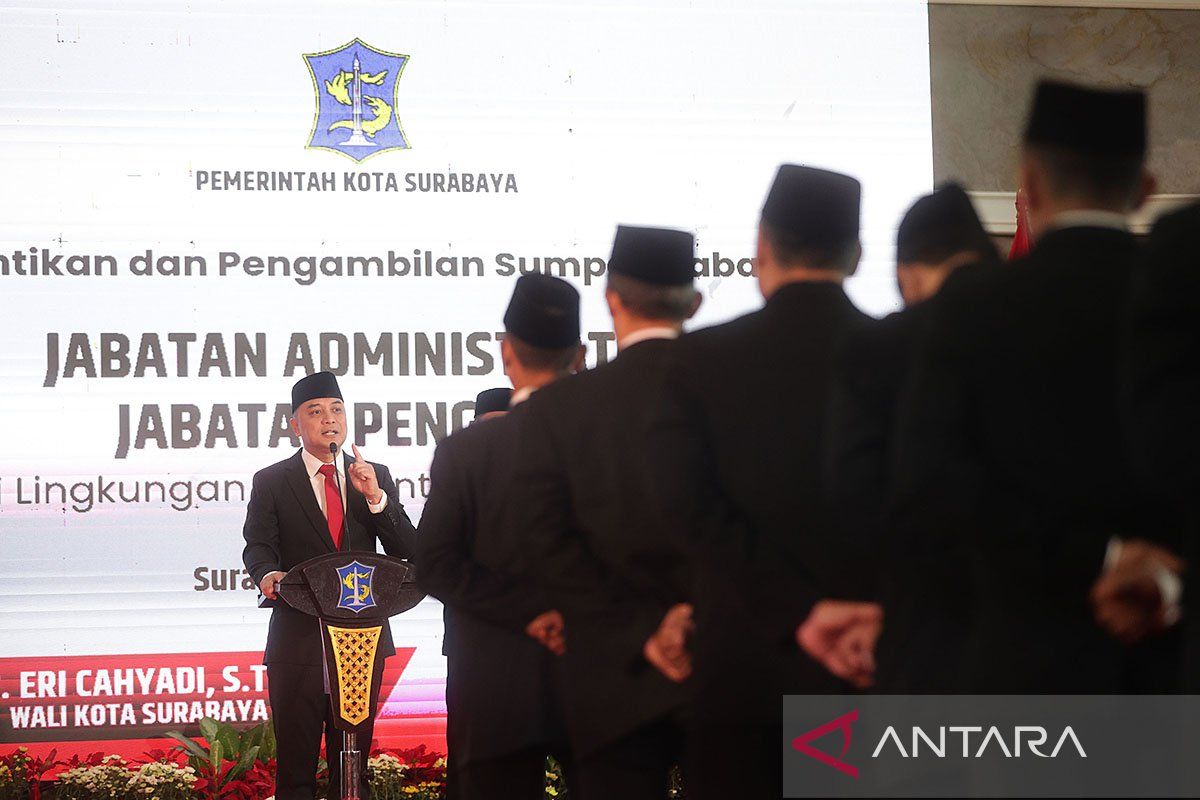
Mayor Eri Cahyadi explained on 7 October that the replacements were linked to performance evaluations and the achievement of the output and outcome targets that the agency heads had promised.
The figure of 13 also shows that Surabaya’s bureaucracy is moving quite quickly. However, that number cannot automatically be interpreted as 13 officials who failed.
The record of restructuring throughout 2026 shows rotations driven by organisational renewal, structural adjustments, filling vacant posts, preparing for retirements, and performance evaluations alike.
On 2 January, for example, the city government inaugurated 69 officials. A number of leadership positions in regional agencies changed, including the Regional Research and Innovation Agency, the Water Resources and Highways Agency, the Cooperatives, Micro, Small and Medium Enterprises and Trade Agency, and the Education Agency.
Other changes included the Library and Archives Agency, the Public Housing and Settlement Areas and Land Agency, and the Investment and One-Stop Integrated Services Agency. The reshuffle was also linked to structural efficiency and bureaucratic renewal.
Two months later, 78 officials were inaugurated again, including seven senior high-ranking officials at the primary level. A number of agency heads were moved again in line with organisational needs.
The city government described these rotations as part of efforts to accelerate performance and ensure continuity of leadership, including preparing for officials approaching retirement.
The real question, therefore, is not whether officials change often or rarely. It is whether each change makes the organisation better able to work for residents.