
Replacing Sugar with Stevia: What Are the Effects of Long-Term Consumption?
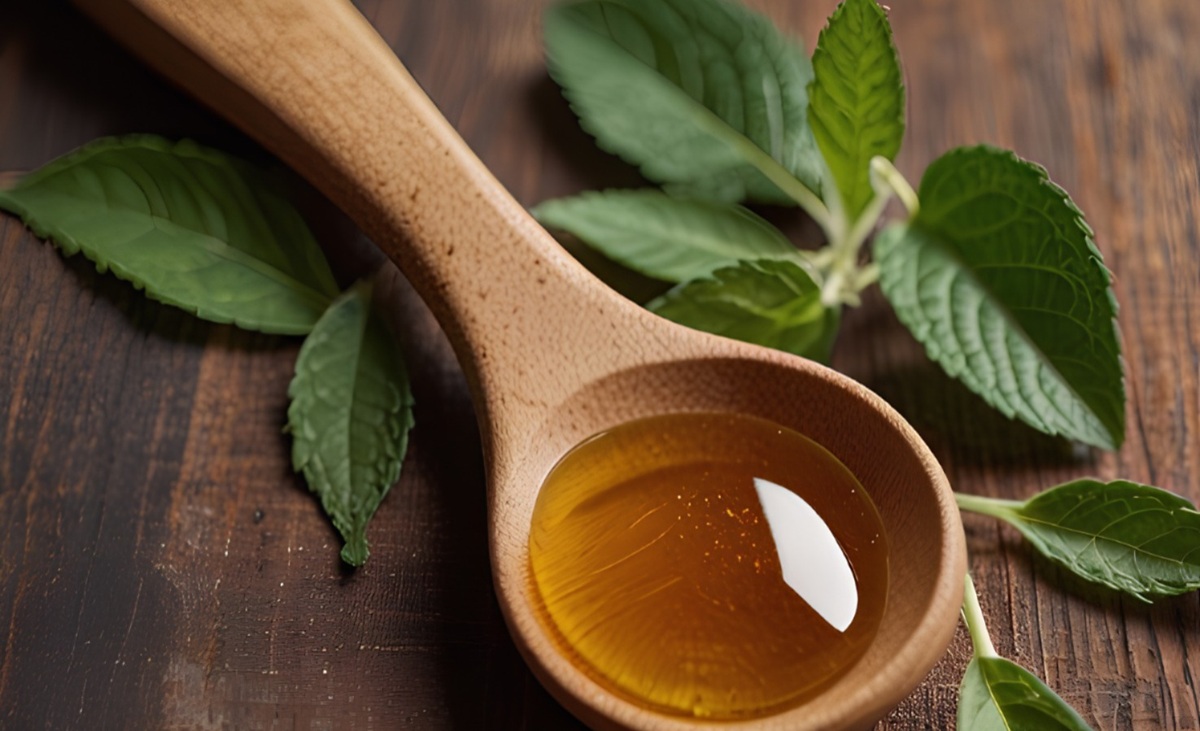
Efforts to reduce daily sugar consumption often prompt people to switch to sugar substitutes, one of which is stevia. This ingredient attracts much attention because it offers a strong sweet taste while containing far fewer calories than ordinary granulated sugar.
Nevertheless, questions have arisen about the safety of sugar substitutes when consumed routinely over the long term.
Stevia is a natural sweetener extracted from the Stevia rebaudiana plant. The extract contains the principal sweetening compounds known as steviol glycosides, whose sweetness far exceeds that of sucrose or table sugar. As a result, only a very small amount is needed to achieve an equivalent level of sweetness.
Regarding safety, the United States Food and Drug Administration (FDA) has stated that purified steviol glycosides have been granted generally recognised as safe status for use as a sweetener in foods and beverages.
The acceptable daily intake (ADI) for steviol glycosides has been established by the Joint FAO/WHO Expert Committee on Food Additives (JECFA). According to JECFA guidelines, the ADI limit for steviol glycosides is set at 4 milligrams per kilogram of body weight per day, calculated as steviol. This figure serves as a benchmark for the amount considered safe to consume every day throughout a person’s lifetime without posing any appreciable health risk.
Although classified as safe, the label “natural sweetener” on a product’s packaging does not mean the sweetener can be consumed without limit. Many sweetener products on the market are blended with other additional ingredients. For this reason, consumers are advised to remain careful in checking product compositions and to limit portion sizes.
On the other hand, the public is also reminded that the use of sugar substitutes does not automatically make a food or drink healthier overall.
Citing the Mayo Clinic, sugar substitutes are generally not associated with serious health problems as long as they are consumed in reasonable amounts. These ingredients can also serve as a useful alternative for cutting calorie intake from daily sugar.
However, the World Health Organization (WHO) has urged that non-sugar sweeteners should not be used as the primary strategy for long-term weight control. Based on the scientific evidence it has compiled, the WHO has found that non-sugar sweeteners do not provide significant long-term benefits for weight loss. Instead, the WHO recommends that people reduce their overall consumption of sweetened foods and beverages.
Ultimately, stevia and various other alternative sweeteners can indeed serve as tools to help reduce dependence on table sugar. Nevertheless, excessive consumption is still not recommended. The best approach to building a healthy and sustainable long-term diet is to train the palate and gradually accustom oneself to less sweetness.
Stevia is a low-calorie sweetener alternative that is friendlier to blood sugar levels than sugar. It is important to understand the differences, benefits, and safe consumption limits for stevia as set out by the WHO.
Stevia belongs to the category of natural sweeteners. Its compounds, steviol glycosides, are extracted and purified from the leaves of Stevia rebaudiana.
According to reports from Healthline and Alodokter, stevia is a natural sweetener extracted from the leaves of the Stevia rebaudiana plant, which originates from South America.
Beyond its sweet taste, the nutritional content of stevia offers many benefits.
Land available for stevia cultivation in Indonesia remains extensive, particularly by utilising idle and suboptimal land at altitudes of 700 to 1,500 metres above sea level.
Research has shown that consumption of low-calorie and zero-calorie sweeteners may accelerate the decline of cognitive ability and memory.