
Replacement for Freon Found, Air Conditioners and Refrigerators Set to Change
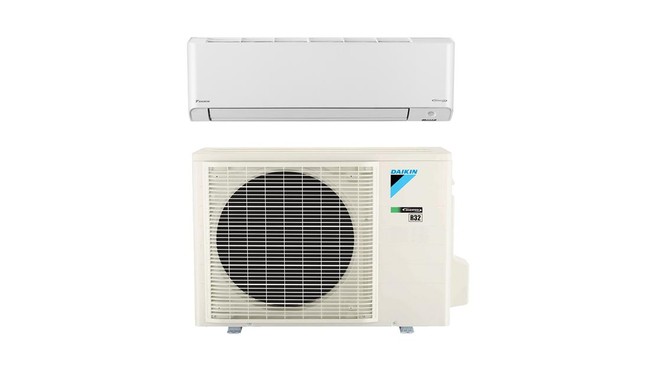
Air conditioners and refrigerators are set to undergo a transformation in the future. After decades of relying on Freon as a refrigerant, a more environmentally friendly cooling agent has been identified.
This shift is driven by global efforts to reduce greenhouse gas emissions. The Freon used in air conditioners and refrigerators is widely cited as a potential driver of global warming.
Researchers have successfully developed an alternative method to lower room temperatures without relying on risky chemicals such as hydrofluorocarbons (HFCs), commonly known as Freon. Instead, the research utilises salt as the primary component of the cooling system.
According to IFL Science, conventional cooling technology essentially works by absorbing and then discharging heat from a room using a specialised heat-conducting liquid. This liquid is then evaporated into a gas and circulated through a closed system before being condensed back into a liquid to repeat the cooling process.
This process is so effective that it has become the standard technology for refrigerators, air conditioning units, and even water dispensers. However, the materials used pose significant environmental hazards.
Researchers from the Lawrence Berkeley National Laboratory at the University of California, Berkeley, have developed a new way to absorb and transfer thermal energy. The model they use utilises the way energy is stored and released when a material changes shape, similar to how ice turns into water.
When room temperature rises, ice melts. Simultaneously, the melting ice absorbs heat from its surroundings, thereby cooling the room. To find an alternative cooling process, researchers focused on finding a way to “melt ice” without increasing the temperature. The method discovered involves adding energy-containing particles known as ions.
An example of this melting process using ions is when salt is used to prevent ice from forming on roads during winter in temperate countries. This shape-changing cycle is named the “ionocaloric cycle.”
“There has been no successful alternative solution that creates cold, works efficiently, meets safety aspects, and does not have a negative impact on the environment. We believe the ionocaloric cycle has potential,” said Drew Lilley from the Lawrence Berkeley National Laboratory.
The research team has tested salts made using iodine and sodium to melt ethylene carbonate. The liquid produced using this carbon dioxide is also used in lithium-ion batteries. This means the production process is not only zero-emission but potentially negative-emission.
In the trials, temperatures changed by up to 25 degrees Celsius with a charge of only 1 volt. Researchers are now working to create a practical system that can be applied commercially. One area of development is identifying the most effective “salt” for extracting heat from a space. In 2025, researchers discovered that the most efficient salt is nitrate-based.