
Repeated Power Outages Occur, UGM Expert Points to Weaknesses in Coal Supply Regulations
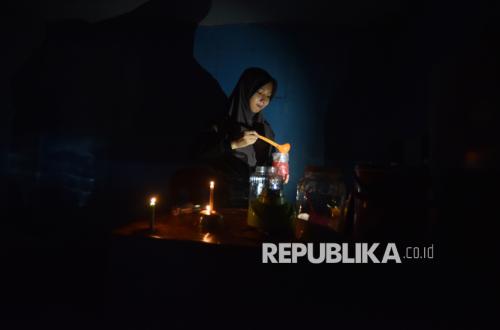
Recurring power outages in several regions have drawn public criticism, contradicting earlier assurances from Minister of Energy and Mineral Resources (ESDM) Bahlil Lahadalia that energy supplies, including coal for power plants, were secure and blackouts would not occur.
Energy Economics Analyst from Gadjah Mada University (UGM), Fahmy Radhi, stated that the outages could be caused by two factors. “The occurrence of the blackout could be due to two things. Firstly, a shortage of coal supply could indeed happen, although the government has denied this,” he said in Jakarta on Friday (19/6/2026).
For Fahmy, the repeated power outages indicate a problem in the coal supply chain to PLN’s power plants. He noted that, from a regulatory standpoint, the government has mandated coal supply obligations through the Domestic Market Obligation (DMO) scheme. Under these rules, mining companies are required to allocate 20 percent of their production for domestic needs at a government-set price. However, Fahmy believes there is a fundamental weakness in the implementation of the rule because it does not regulate the delivery schedule to PLN in detail.
“As far as I know, the DMO rule only states that within one year, every coal entrepreneur must supply 20 percent of their coal to PLN at a predetermined price. But there is no time limit on when they must supply it,” he said.
He explained that this condition allows mining companies to delay fulfilling their domestic obligations when international coal prices are high. Fahmy noted that companies cannot be entirely blamed for choosing to export during periods of high global prices. “Usually, entrepreneurs only fulfil their obligations after observing the development of world coal prices. If prices remain high, they will choose to export first because it is more profitable, and only meet their DMO obligations towards the end of the year,” he added.
Fahmy suspects that this mismatch in supply timing potentially causes coal shortages at power plants, leading to blackouts. He also criticised the government’s communication for not providing a complete explanation to the public regarding the cause of the outages. “Especially the Ministry of ESDM, which is most responsible, makes explanations that sometimes confuse the public. It is stated that it is not a coal supply issue, yet blackouts occur in almost all regions. Until now, it has not been explained whether the problem is technical or indeed due to coal supply,” he said.
According to Fahmy, if there is indeed a delay in coal supply, the impact would be enormous. This is because the majority of national power plants still depend on the commodity. “If it is true, blackouts can occur because almost 56 percent of PLN’s power plants still use coal. If the supply is disrupted, it can certainly cause blackouts,” he continued.
Fahmy assessed that Minister Bahlil Lahadalia’s statement that the government has coal supply contracts with mining companies is true. However, these contracts only regulate obligations within a one-year period without regulating periodic distribution. “There is no detailed schedule on when to supply, so when demand is high, supply may not be available,” he said.
Fahmy urged the government to immediately evaluate and revise the DMO rules to not only regulate the amount of supply obligation but also the timing of delivery. He believes that setting a periodic supply schedule would provide certainty for PLN in maintaining coal stocks and reduce the risk of operational disruptions at power plants. “Perhaps the rule needs to be detailed, especially regarding the schedule. Within that one year, when exactly must they deliver. If they fail to meet the established schedule, entrepreneurs should be subject to sanctions, either in the form of fines or sanctions against their business permits,” he said.