
Repeated Blackouts Risk Hampering Data Centre Investment in Indonesia: DEN
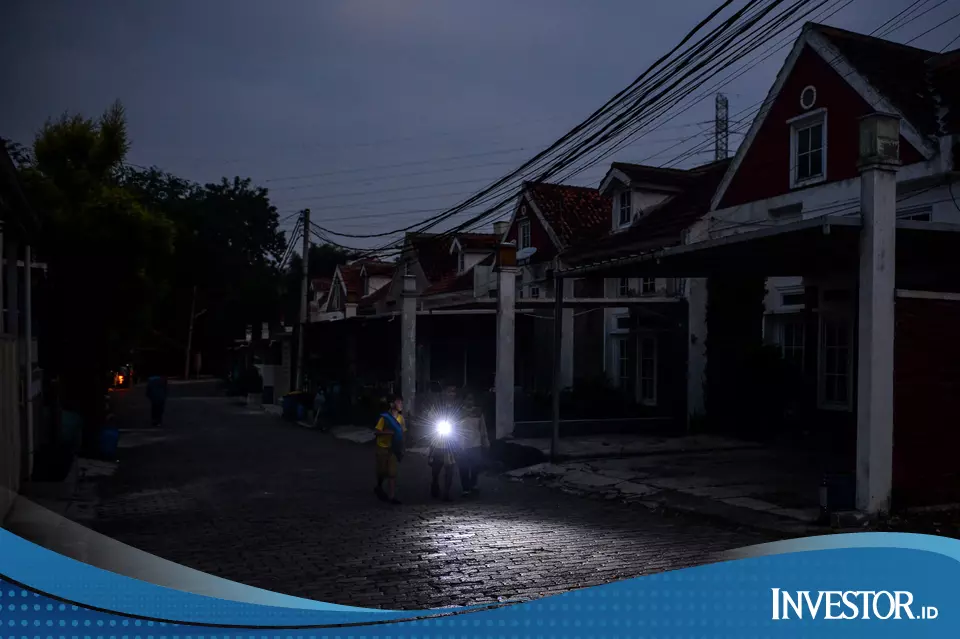
The National Energy Council (DEN) has cautioned that the reliability of electricity supply is a determining factor for Indonesia’s investment competitiveness, especially for the digital industry such as data centres. Repeated and poorly managed blackouts are considered likely to reduce investor interest in committing capital to the country.
DEN member Satya Widya Yudha stated that the data centre industry requires a large-capacity, reliable power supply without interruption, including stable operational temperatures. “One of their requirements is reliability. Data centres need large amounts of power. They could choose not to invest in Indonesia if this issue is not managed,” Satya said on Sunday.
According to Satya, the reliability of the electricity system can be measured through two main indicators: the System Average Interruption Duration Index (SAIDI) and the System Average Interruption Frequency Index (SAIFI). While the average outage duration improved to 0.77 hours per year in 2025, the frequency of disruptions actually increased from 6 times in 2024 to 7.45 times in 2025. He assessed that improving both indicators is crucial to ensure Indonesia’s investment competitiveness does not fall behind neighbouring countries.
Beyond the impact on investment, Satya noted that blackouts also disrupt the economic activities of the public, particularly micro, small, and medium enterprises (MSMEs). Consequently, DEN is urging state electricity company PT PLN (Persero) to provide more transparent information regarding the duration and frequency of outages so that business operators can prepare anticipatory measures. “For example, if a blackout lasts 15 minutes, those running restaurants or MSMEs can imagine to what extent they need to prepare contingencies,” Satya said. He noted that business sectors such as restaurants, food stalls, lodgings, and hospitality are highly dependent on a stable electricity supply. Unscheduled outages have the potential to degrade service quality and harm business operators.
On a broader scale, Satya assessed that Indonesia’s dependence on fossil fuels, such as coal and gas, could increase risks to national energy security as primary energy reserves decline in the future. To address this, DEN is pushing for the acceleration of new and renewable energy development, including nuclear power plants (PLTN), as part of a strategy to maintain long-term electricity supply reliability. “We have included nuclear power plants in the national energy policy, alongside other alternatives such as maximising geothermal,” he stated. Satya added that Indonesia has a geothermal potential of approximately 24 gigawatts (GW), yet the utilised capacity is only around 3 GW. He believes optimising these domestic energy sources is an important step to strengthen energy independence while ensuring the sustainability of the national electricity supply.