
Rental Business Tax Plan Could Raise Costs for Tenants
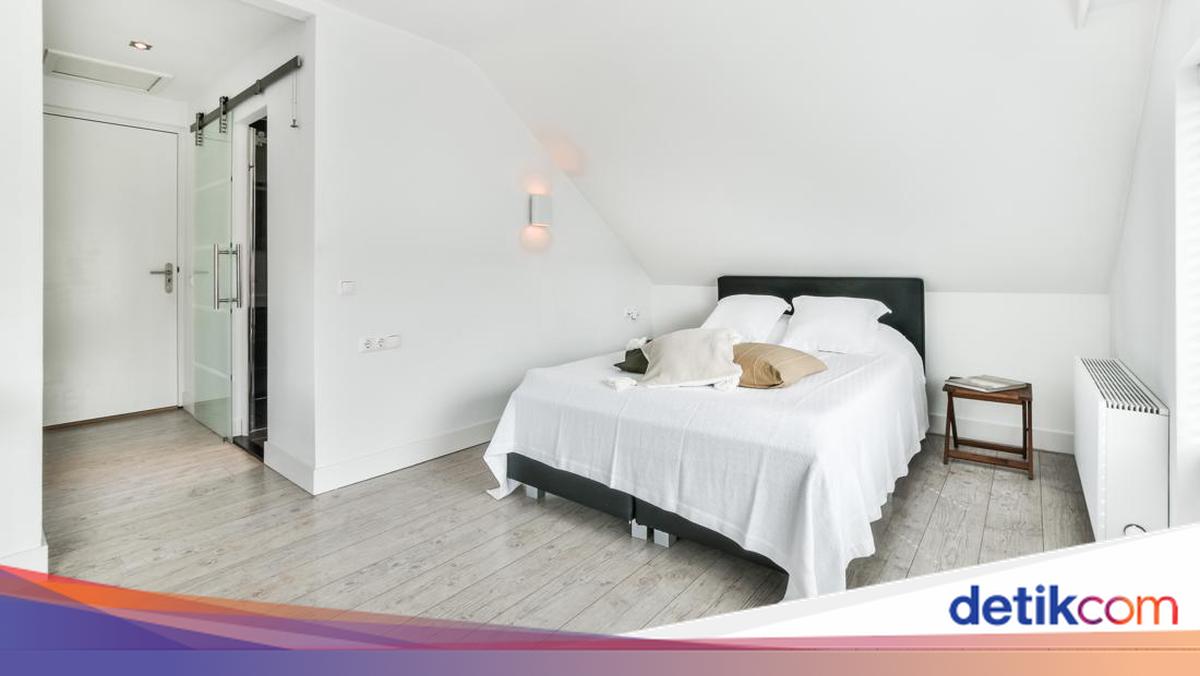
The government plans to impose a tax on rental home businesses. This is considered likely to have a direct impact on lower-income tenants, as rental prices will become more expensive.
Hamas (not his real name) is the owner of a 13-unit rental property in Depok. He admitted he would not be able to pay the tax if the policy is implemented, because the income from his rental business is modest. Hamas said he currently only charges a rental rate of around Rp 800,000 per month. Therefore, if there is an additional tax, he will inevitably have to raise the rental prices.
The profit from one unit must also cover Land and Building Tax (PBB), water costs, and maintenance. Moreover, some tenants are unable to pay their rent on time. “If there is a tax, the rent will go up,” he told detikcom on Friday (7/8/2026). He hopes the government will not impose a tax on the rental home business, as the profits are not substantial. From the tenant’s perspective, many cannot afford to pay high prices and most are looking for cheap rates. “Do not introduce a tax; not everything has to be taxed. There are many competitors and sometimes the price does not match what renters are looking for, because they usually want a nice place but at a cheap price,” explained Hamas, who has been running this business since the 1980s.
A similar sentiment was expressed by Helma (not her real name), the owner of a 3-unit rental property in Cilandak. She only started this business around 2023 and still finds it difficult to maintain her rental income because many tenants haggle. If rental homes are indeed taxed, Helma will have no choice but to increase the rent. Currently, her financial burden is already quite large from a rental income of Rp 1.6-1.8 million, which must cover water bills, maintenance, and damage repairs, not to mention late payments. “I will be honest with the tenants. ‘How about I raise the rent? Because this is being taxed. I am also being taxed for my rental home business.’ I will ask them and definitely offer it; I would not just raise it unilaterally. I will explain it first; it is better to explain it,” said Helma.
Meanwhile, Ebi (not his real name), the owner of a 30-unit rental property in Muara Enim, South Sumatra, acknowledged the same issue. Even before this news, his rental business was already subject to a 7 percent tax due to a local government policy for accommodations with more than 10 units, which is paid from his profits. It would be impossible if there were another tax and he had to bear it from his profits; he would end up making a loss. In addition to the tax burden, he also covers operational costs such as employee salaries, cleaning, marketing, water bills, and building maintenance. He considers it a success just to have survived over the last four years. Since opening in 2022, occupancy has only been sufficient in the last two years. Currently, 40 percent of the units are occupied. “For monthly operations, it is just enough. I do make a profit, but it is limited. Just enough to survive. For expansion, it is quite difficult,” he said.
Previously, the Director of State Budget Formulation at the Directorate General of Budget, Ministry of Finance, Rofyanto Kurniawan, revealed that in the 2027 state revenue policy, the plan is to expand the targets for tax collection, one of which is from rental home owners. He noted that there are several groups and sectors where tax absorption is considered not yet optimal. He disclosed this during the Public Consultation on the 2027 State Budget Bill, themed “Grow Higher, Prosper Faster,” on Thursday (6/8/2026). “For example, if someone owns more than one house, it is impossible for them to live in all of them. Surely some are rented out or leased,” said Rofyanto.
Source: jawawa.id (https://jawawa.id/newsitem/rental-business-tax-plan-could-raise-costs-for-tenants-1786240338)
Originally published by detikBali (https://www.detik.com/bali/bisnis/d-8610372/usaha-kontrakan-mau-dipajaki-pengontrak-kena-imbas), translated from Indonesian