
Remnants of Glamorous French Aristocratic Life in Batavia Found in Harmoni
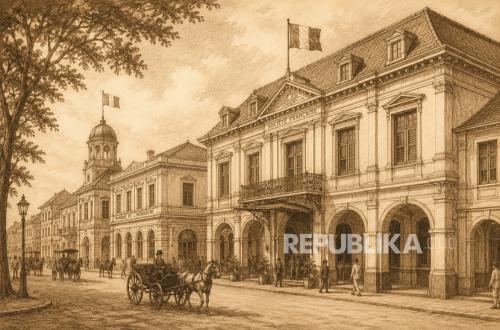
Batavia truly imitated Europe. The rows of buildings in the Harmoni area of Central Jakarta are a case in point. At the end of the 19th century, when it had a population of only 116,000, Batavia was nicknamed the gem of the East.
Not only was the population density low in the European quarter, but a similar atmosphere prevailed along the southern edge of the city, which at that time did not extend beyond Kebon Sirih in Central Jakarta. Back then, Batavia, as the capital of the Dutch East Indies, had more of a rural feel than the industrial and port city of Surabaya, which had a population of 147,000 and a faster pace of life.
Today, one has to struggle to drive from Harmoni (now Jalan Majapahit) to Glodok via Jalan Gajah Mada (formerly Molenvliet West) because of the hopeless traffic congestion. In that era, the Harmoni area lay close to what is now Monas, which during the French period was dubbed the Champs de Mars. It was later renamed Koningsplein (King’s Square) when Dutch rule was restored, although the people called it Gambir Square.
Thanks to the period of French rule (1808–1812), Batavia had its own French quarter, including the Harmoni area. French citizens also lived in Risjwijk Straat (derived from the word risjk, meaning rice fields, and wijk, meaning an open field). At the time, Risjwijk was an outlying district of Batavia’s Saint Honore.
At the very end of the row of shops stood the famous tailor Oger Freres (Oger Brothers). Here, one could obtain clothing following the latest fashions from Paris (the building is now occupied by the Nitour travel agency).
Source: jawawa.id (https://jawawa.id/newsitem/remnants-of-glamorous-french-aristocratic-life-in-batavia-found-in-harmoni-1784681484)
Originally published by Republika (https://news.republika.co.id/berita/tijglg282/sisasisa-kehidupan-glamor-bangsawan-prancis-di-batavia-ada-di-harmoni), translated from Indonesian