
Remembering the Vast Influence of Ayatullah Syahid Sayyid Ali Khamenei
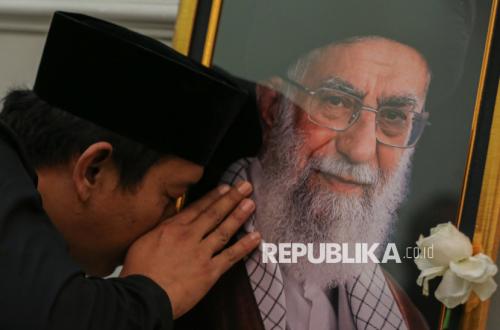
More than four months have passed since the criminal attacks by the United States and the Zionist regime of Israel against the Islamic Republic of Iran began on 28 February 2026. These brutal and illegal attacks, which clearly violated Article 2(4) of the United Nations Charter, resulted in the martyrdom of the Supreme Leader of the Islamic Revolution of Iran, His Eminence Ayatollah Al-Uzma Sayyid Ali Khamenei, along with a large number of senior officials and more than 3,500 innocent Iranian children, women, and civilians.
Ayatollah Al-Uzma Syahid Sayyid Ali Khamenei (may God have mercy on him) was one of the most influential political and religious figures in the contemporary world. During his more than three decades of leadership, he played a central role in directing the macro-policies of the Islamic Republic of Iran, developing national capabilities, strengthening the political and economic independence of the Islamic Republic, and shaping the anti-hegemony discourse in the West Asian region and the pursuit of justice globally.
One of the most important axes of the martyred Leader’s political thought was ‘maintaining the country’s comprehensive independence.’ This independence was not a form of isolationism, but a concept of active, influential presence without dependence on other powers in the international system. Having dedicated 65 of his 86 years to the path of Iran’s independence, freedom, progress, and self-sufficiency, he consistently believed that political, economic, cultural, and scientific independence is the primary prerequisite for safeguarding the honour and security of any nation, and that dependence on foreign powers weakens a country’s ability to make independent decisions and opens the door for foreign intervention in domestic affairs.
Based on the principle of ‘comprehensive national independence,’ during his 36-year leadership, the Islamic Republic of Iran successfully built a deep bond between ‘Iranian identity’ and ‘Islamic values,’ while achieving self-sufficiency in various fields such as nanotechnology, biotechnology, nuclear technology, medicine and healthcare, radiopharmaceuticals, the defence industry, and aerospace. These achievements not only enabled Iran to withstand the pressure of Western sanctions but also placed it among the few countries possessing such advanced technologies, including ranking among the top ten nations globally. Evidence of this comprehensive independence includes attaining the fourth to sixth global ranking in nanotechnology, eleventh globally and first among Islamic countries in biotechnology, a position as one of the top ten producers of radiopharmaceuticals, and, most importantly, victory against the aggressive attacks by the United States and the Zionist regime in the Twelve-Day War (13–24 June 2025) and the Ramadan War (28 February to 7 April 2026), relying entirely on domestic defence capabilities under the visionary leadership of Ayatollah Al-Uzma Syahid Sayyid Ali Khamenei.
The political thought of the martyred Ayatollah Sayyid Ali Khamenei was not confined to Iran’s geographical borders; it exerted a profound influence on seekers of justice and freedom throughout the Islamic world and on the global stage. ‘Freedom and dignity of nations’ is a transnational concept in his political thought. In his view, freedom has a broader meaning than mere individual liberty; it refers to the freedom of nations from hegemony, occupation, colonialism, and the pressure of foreign powers. He consistently believed that no country should be under the political, economic, or cultural domination of major powers, and that every nation has the right to freely determine its own destiny.
Support for the Palestinian struggle, as a priority of the Islamic Republic of Iran’s foreign policy, can be defined and interpreted within the framework of this principle of ‘freedom and dignity of nations.’ The martyred Ayatollah Sayyid Ali Khamenei viewed Palestine as the beating heart of the Islamic world and believed that all Islamic countries are obliged to support the struggle of the oppressed Palestinian people until the country achieves full independence. He considered dialogue and negotiation with the Zionist regime to be futile and consistently championed the establishment of an independent Palestinian state, the cessation of the occupation of Palestinian territories, and the protection of the rights of the Palestinian people. He believed that the only path to Palestine’s independence is the holding of a referendum by the true Palestinian people—not by the Zionist immigrants who perpetrated the usurpation and occupation—both those inside Palestine and those outside it. This view was consistently explained and presented as the official stance of the Islamic Republic of Iran on the Palestinian issue.
The ‘urgency of unity among Muslims’ is another transnational concept in the religious and political thought of the martyred Leader. He viewed the honour and identity of the Muslim Ummah as transcending national and geographical boundaries. He consistently stressed the importance of Islamic unity and the need to avoid sectarian strife in the Islamic world as the only path to the progress and excellence of Muslim societies.
Source: jawawa.id (https://jawawa.id/newsitem/remembering-the-vast-influence-of-ayatullah-syahid-sayyid-ali-khamenei-1783655570)
Originally published by Republika (https://analisis.republika.co.id/berita/thxu80393/mengenang-luasnya-pengaruh-ayatullah-syahid-sayyid-ali-khamenei), translated from Indonesian