
Remembering Indro, the Elephant Captain Who Guarded Tesso Nilo from Conflict
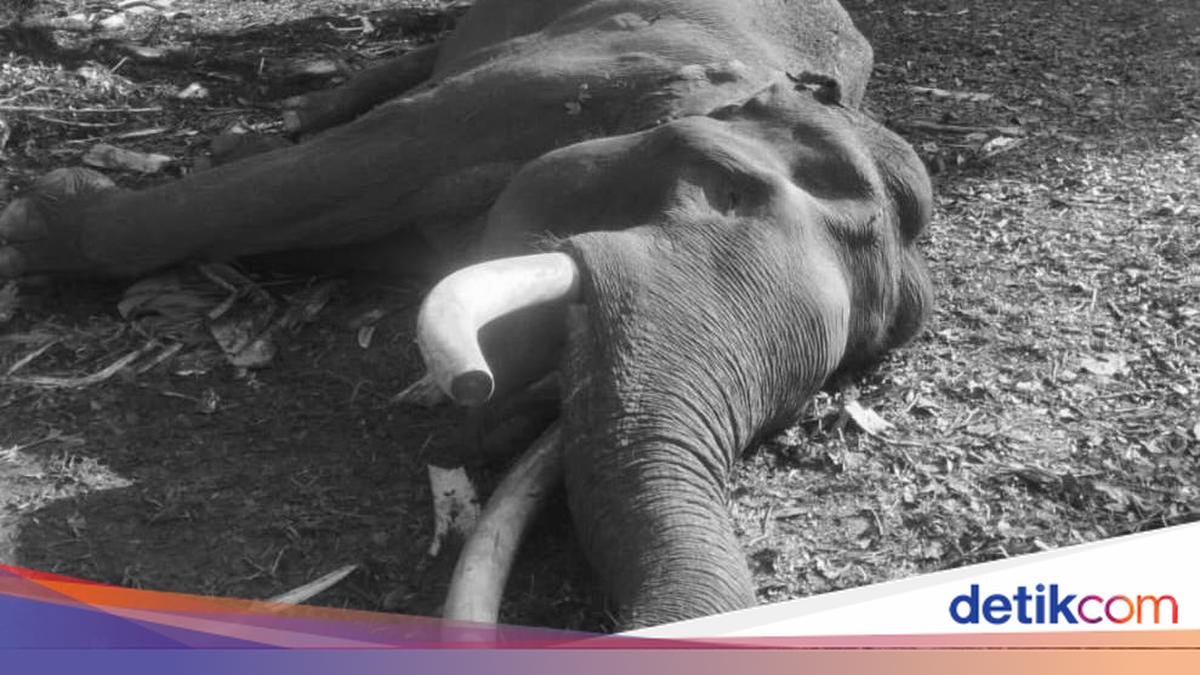
The conservation world is once again in mourning. A Sumatran elephant in Tesso Nilo National Park, Pelalawan, Riau, has been reported dead. The death of the elephant, named Indro, has shocked animal lovers and environmental activists, especially as the area recently lost another elephant. Indro was reported dead on Monday, 29 June 2026, at around 03.45 WIB. The male elephant died at the age of 45. Indro had long served in supporting the Tesso Nilo National Park Flying Squad in mitigating human-wildlife conflict around Tesso Nilo.
Riau Police Chief Expresses Condolences
Riau Police Chief Inspector General Pol Herry Heryawan also expressed his condolences over the death of Indro, who was known as the ‘captain’ guarding against human-wildlife conflict in TNTN. “The passing of Indro, the Sumatran elephant who for decades was part of the Tesso Nilo National Park Elephant Flying Squad, leaves deep sorrow for all nature and wildlife lovers. His dedication to helping mitigate conflict between humans and elephants is invaluable service,” said Inspector General Herry Heryawan via his Instagram account. According to the Police Chief, Indro’s death serves as a reminder that preserving nature, including wildlife and its ecosystems, is a shared responsibility. Therefore, the Riau Police’s Green Policing initiative exists to strengthen collaboration in maintaining the balance between humans, nature, and all living creatures that are part of the Lancang Kuning earth. “Farewell, Indro. The trail of your dedication will always be a reminder that every life in nature has meaning and must be protected together,” concluded Inspector General Herry.
Balai Taman Nasional Tesso Nilo revealed that the cause of Indro’s death was health complications. Indro died during the musth phase. “Gajah Indro was declared dead after receiving intensive medical treatment by a joint team from the Riau Natural Resources Conservation Agency and the Tesso Nilo National Park Office due to health complications triggered by a decrease in appetite following the musth phase,” stated the Tesso Nilo National Park Office. For context, the musth phase is a natural biological cycle in adult male elephants characterised by a surge in testosterone levels, up to ten times the normal amount. During this phase, elephants exhibit more aggressive behaviour, urine drips from the preputium, and an oily secretion emerges from the temporal glands located beneath the skin on both sides of the head, between the eyes and ear holes. The musth phase indicates that the elephant is ready to reproduce, signifying new hope for the regeneration of this protected wildlife species. The Tesso Nilo National Park Office explained that Indro’s musth phase was first observed on 25 April 2026, with behavioural changes becoming more aggressive from 1 May 2026, marked by the discharge of fluid from the genital area. “On 6 May 2026, secretion fluid from the musth holes in the temple area began to appear and was visibly wet,” the statement added. As the musth phase progressed, Indro became increasingly aggressive. By early June, at the security tethering location, the elephant could no longer be approached, did not respond to commands from the mahout, and began exhibiting behaviour that endangered the safety of officers. To maintain his physical condition, the Flying Squad team supplied feed such as banana stems, coconut fronds, and elephant grass, and ensured regular water availability every morning and evening from a safe distance. Subsequently, on 5 June 2026, the team also began bathing Indro using a water pump machine to maintain his hygiene and stabilise his body temperature. Due to the prolonged musth phase, the TNTN medical team, in coordination with the Riau Natural Resources Conservation Agency, performed sedation to fit additional chains as a safety measure. Following the procedure, the medical team administered an antidote until Indro regained full consciousness in a stable standing position. On 25-26 June, the day after the sedation, Indro was observed to have a drastically reduced appetite and water intake. The mahout and the TNTN medical team immediately conducted intensive 24-hour monitoring and coordinated closely with expert veterinarians for further treatment. The medical team injected 100 ml of Biodin, an energy supplement, manually evacuated faeces, checked his body temperature, and administered five bottles of supportive intravenous fluids in the afternoon and another five in the evening, as there was no significant improvement. On 28 June, Indro briefly showed positive signs after he began to drink water and attempted to touch his feed. To accelerate his physical recovery from the loss of appetite, the medical team administered 60 bottles of intravenous fluids. By the afternoon, Indro was bathed, willing to drink, and his body temperature was normal; even close to his death, he was still moving actively and showing interest in food. A sudden change in his condition occurred in the early hours of Monday, 29 June, at 03.30 WIB. Indro was found in a lying position. The veterinarian and the mahout team immediately conducted an emergency check on his respiratory function and performed cardiopulmonary resuscitation for several minutes. However, Indro did not respond and was officially declared dead at 03.45 WIB.