
Remembering Hamad bin Khalifa Al Thani: The First Arab Leader to Breach the Gaza Blockade
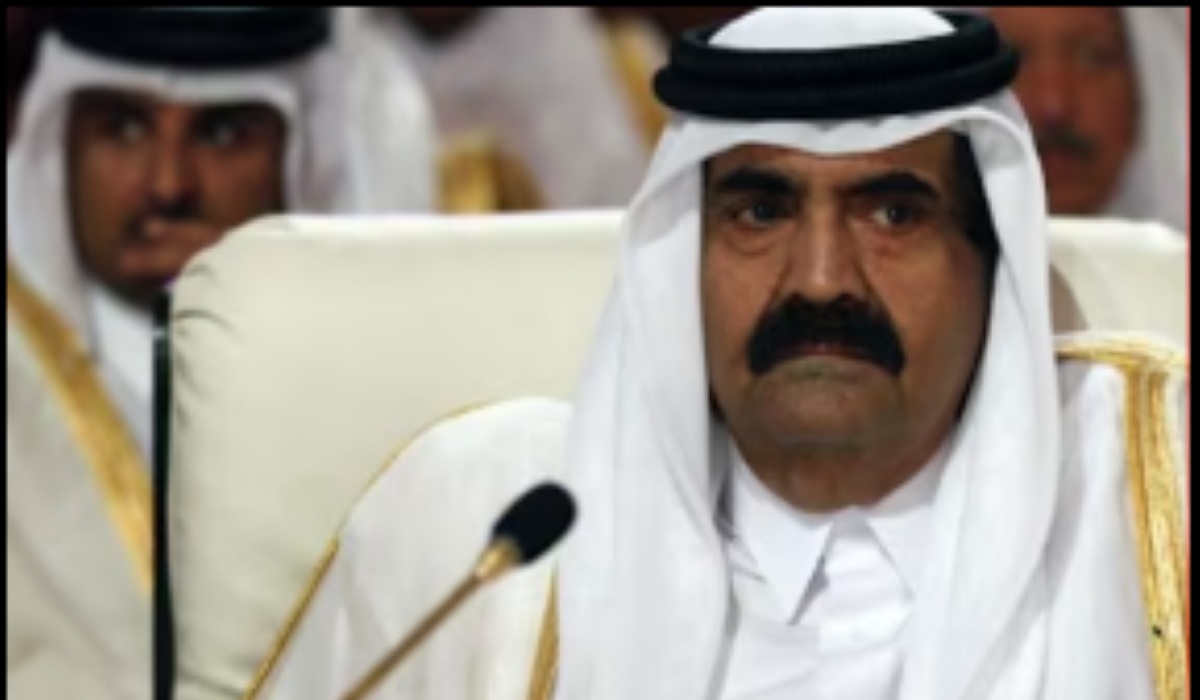
Following the death of the father of Qatar’s Emir, Sheikh Hamad bin Khalifa Al Thani, on Sunday (12/7), his solidarity with the Palestinian people remains one of the most defining legacies of his leadership. He is remembered not only as a regional statesman, but also as a loyal ally of the Palestinian people and the only Arab leader to physically break the blockade that had paralysed the Gaza Strip.
In October 2012, Hamad visited the besieged Gaza Strip, six years after Israel imposed an international blockade that crippled the territory following the 2006 Palestinian elections. Accompanied by his wife, Sheikha Moza bint Nasser, and a high-level delegation, the Emir disregarded the political isolation imposed by Western powers and regional actors, triggering a massive official and popular welcome.
Khaled Meshaal, head of Hamas’s diaspora office, told Al Jazeera that the visit meant that Jerusalem, Gaza and Palestine were mourning his passing.
“He was the first Arab and Muslim leader to visit Gaza, standing by its side with chivalry and generosity, as if officially announcing the severing of the blockade at its darkest hour,” said Meshaal. “He was intelligent, courageous, and a man of principle.”
Ahmed al-Sheikh, a senior journalist and former news director of the Al Jazeera Arabic Channel, said Hamad had a special kind of love for Palestine. He reflected that no other Arab world leader had undertaken a similar visit to Gaza apart from Hamad bin Khalifa.
During that historic visit, Hamad announced an increase in Qatar’s reconstruction grant to the enclave from US$254 million to US$400 million (approximately Rp6.4 trillion). The funds laid the foundation for housing, infrastructure and vital healthcare projects that benefited thousands of Palestinians.
In a speech at the Islamic University of Gaza — which awarded him and Sheikha Moza honorary doctorates — he praised the resilience of the Palestinian people whilst criticising the double standards of the international community.
Hamad’s commitment to the Palestinian cause predated the Gaza blockade. In 1999, he became the first Gulf leader to visit Palestinian territory since 1967, meeting the late Palestinian President Yasser Arafat amid a critical political impasse.
According to al-Sheikh, the Emir viewed the Palestinian struggle through a deeply personal lens. When former Israeli Prime Minister Ariel Sharon besieged Arafat’s headquarters in Ramallah, the Emir felt profoundly affected, likening it to an attack on Qatar itself.
He believed in the strength of the Palestinian people as the spearhead of their own movement. “You will take the principal action, and without this action there will be no liberation,” the Emir once told al-Sheikh.
This stance often put him at odds with regional consensus. During Israel’s war in Gaza in 2008–2009, Hamad called for an emergency Arab summit in Doha and proposed a reconstruction fund of US$250 million as well as a maritime corridor to circumvent the blockade.
Some of the most vital infrastructure projects in Gaza before the outbreak of war in October 2023 were the result of Hamad’s financial commitments. Qatar funded the rehabilitation of main highways and the flagship Hamad City project in Khan Younis, a US$58 million public housing development comprising 53 modern apartment blocks.
In addition, the Sheikh Hamad Rehabilitation and Prosthetics Hospital, opened in April 2019, became a key facility for people with disabilities and children with hearing impairments in the territory.
Although much of the infrastructure Qatar built has been destroyed by the ongoing war, the Sheikh Hamad Hospital has managed to continue its vital services since December, despite direct attacks and severe shortages of supplies. Hamad’s extraordinary efforts in the besieged territory will be remembered by future generations as proof of his unwavering support.