
Religious Riots Erupt, 3 Dead - President Speaks Out
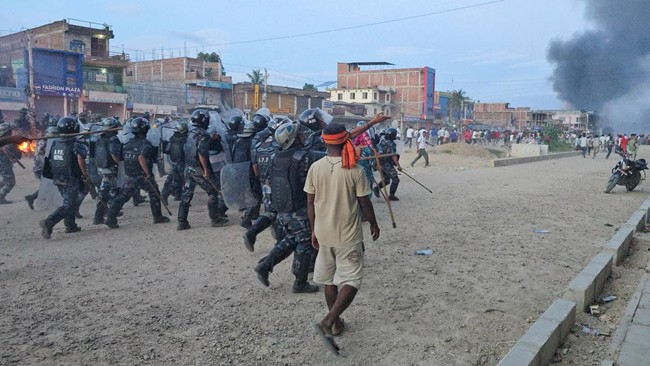
Nepal is once again facing a wave of riots that threatens domestic security stability. At least three people are reported dead following clashes between Muslim and Hindu groups in the southern region of the Himalayan nation, triggering the imposition of curfews in several districts and the deployment of hundreds of security personnel.
According to the Anadolu Agency, the communal violence, which has been occurring since last weekend, represents one of the most serious incidents of religious tension to hit Nepal in recent years. The riots come as the country is still attempting to recover from a wave of massive demonstrations last year that claimed dozens of lives.
Responding to the worsening situation, Nepalese President Ramchula Paudel issued a call to all elements of society to maintain calm and avoid division. “I call upon political parties, civil society, and all brothers and sisters to maintain social unity, inter-community harmony, friendship, and tolerance,” he stated.
The appeal comes as clashes began to spread to several regions, raising concerns regarding national security. Nepalese Prime Minister Balendra Shah issued a similar call. Shah, who has rarely appeared in public since taking office in March, ended his silence on Thursday through his first significant address to the nation. He urged citizens to act responsibly and help “dispel the clouds of unrest.”
“I, on behalf of the government, sincerely urge citizens, civil society, religious communities, all honourable figures, all political parties, and the responsible media to be patient, exercise restraint, and maintain peace, harmony, brotherhood, and national unity,” Shah said. He promised a “fully fair and transparent” investigation, adding that those responsible would be prosecuted under the law.
Regarding the cause of the riots, officials from the affected areas reported that the violence broke out on Sunday night. The initial clashes occurred in the Sunsari District after a dispute during a celebration between two religious communities escalated into violence. Tensions escalated rapidly, triggering retaliatory attacks between the warring groups.
Angry mobs reportedly attacked one another, burning government offices, shopping centres, and police posts. Several public facilities were also vandalised. The increasingly uncontrollable situation forced the government to impose a curfew across much of southern Nepal.
To control the riots, the government deployed hundreds of security personnel to the clash sites. The deployed forces include not only the police but also the Nepalese military. Security forces attempted to disperse crowds and prevent the violence from spreading to other regions. However, during the process, police opened fire on the crowds.
According to reports, police shot at protesters to halt the ongoing clashes. This action resulted in the death of a farmer named Om Prakash Mehata. Additionally, dozens of local residents were injured by gunfire. One of the wounded, Jaya Prakash Mehata, later died while receiving treatment in hospital on Thursday.
The death of Mehata triggered a new wave of anger among Hindu groups, who subsequently organised demonstrations in the Sunsari District and several other areas. The third fatality was reported in the Siraha District, as confirmed by local district administrator Chatraj Baral.
While Nepal is a country where the majority of the population is Hindu, the nation was officially declared a secular state following the abolition of the monarchy in 2008. Since that change, the country has been relatively successful in avoiding large-scale religious conflict; therefore, the emergence of this recent violence has sparked widespread concern. Many fear that the clashes could exacerbate the country’s already fragile political and social situation.