
Religious Flats Urged Not to Be Removed from National Development Priority Programme
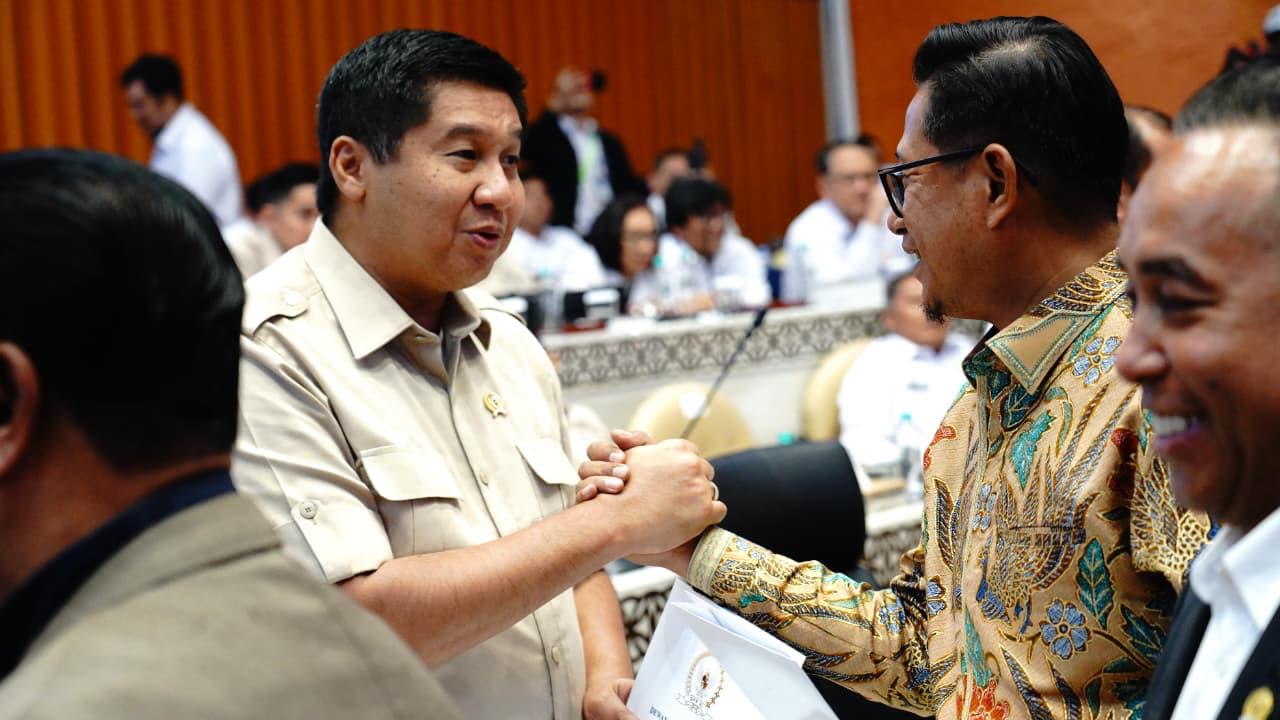
A member of Commission V of the Indonesian House of Representatives (DPR RI) from the National Awakening Party (PKB), Sudjatmiko, is urging the government not to entirely postpone the budget for religious flat (rusun) construction currently in the backlog. Instead, he is pushing for a portion to be allocated within the indicative framework of the 2027 Government Work Plan (RKP).
Sudjatmiko made the statement during a Hearing Meeting (RDP) on the Ministry/Agency Work Plan and Budget (RKA-K/L) and the 2027 RKP at the DPR RI Building in Jakarta on Thursday (25/6). In the forum, he highlighted the backlog of the religious flat programme, which amounts to approximately Rp1.7 trillion. According to him, the programme, which holds high social and religious value, must still be accommodated in the government’s budget planning for the coming year. He proposed that a portion of the backlog value be included in the indicative framework so the programme can continue and receive adequate oversight.
‘Do not put the entire amount into the backlog. The religious flat programme has great benefits for the community and is part of the state’s commitment to supporting decent housing facilities for religious institutions,’ said Sudjatmiko. He noted several options the government could consider, namely allocating about one-third, one-quarter, or around 20 per cent of the total backlog into the 2027 RKP indicative framework. This step is considered capable of maintaining the programme’s continuity without disrupting other national budget priorities.
The PKB politician explained that the construction of religious flats is not only oriented towards providing housing but is also part of strengthening the social and religious life of the community. The programme has been running since before the institutional restructuring of the housing sector and remains a hope for many religious communities in various regions. Sudjatmiko also assessed that including a portion of the allocation in the indicative framework would provide certainty for programme implementation while strengthening the oversight function. With a clear indicative ceiling, both the DPR and the government can monitor construction progress and ensure the programme’s benefits are truly felt by the community.
In the discussion, one scenario that emerged was allocating around 33 per cent, or equivalent to Rp561 billion, into the indicative framework. Other alternatives were 25 per cent, or around Rp425 billion, and 20 per cent, or around Rp340 billion. Each option is considered capable of providing room for the sustainability of the religious flat programme with varying levels of support for its implementation and oversight. Sudjatmiko hopes the government will consider this proposal in the preparation of the 2027 RKP and RKA-K/L. He stressed that the continuity of religious flat construction represents the state’s presence in fulfilling the basic needs of the community while supporting social and religious activities that contribute to national development.
‘A good programme should not disappear just because its entire budget is placed in the backlog. A portion must still be allocated so it can be implemented, supervised, and provide real benefits to the community,’ he asserted. In line with the discussion’s recommendations, allocating a portion of the budget into the indicative framework is deemed important to maintain programme continuity and ensure community expectations remain accommodated in national development policy.