
Religious Affairs Ministry to Expand Zakat Villages and Productive Waqf in 2026
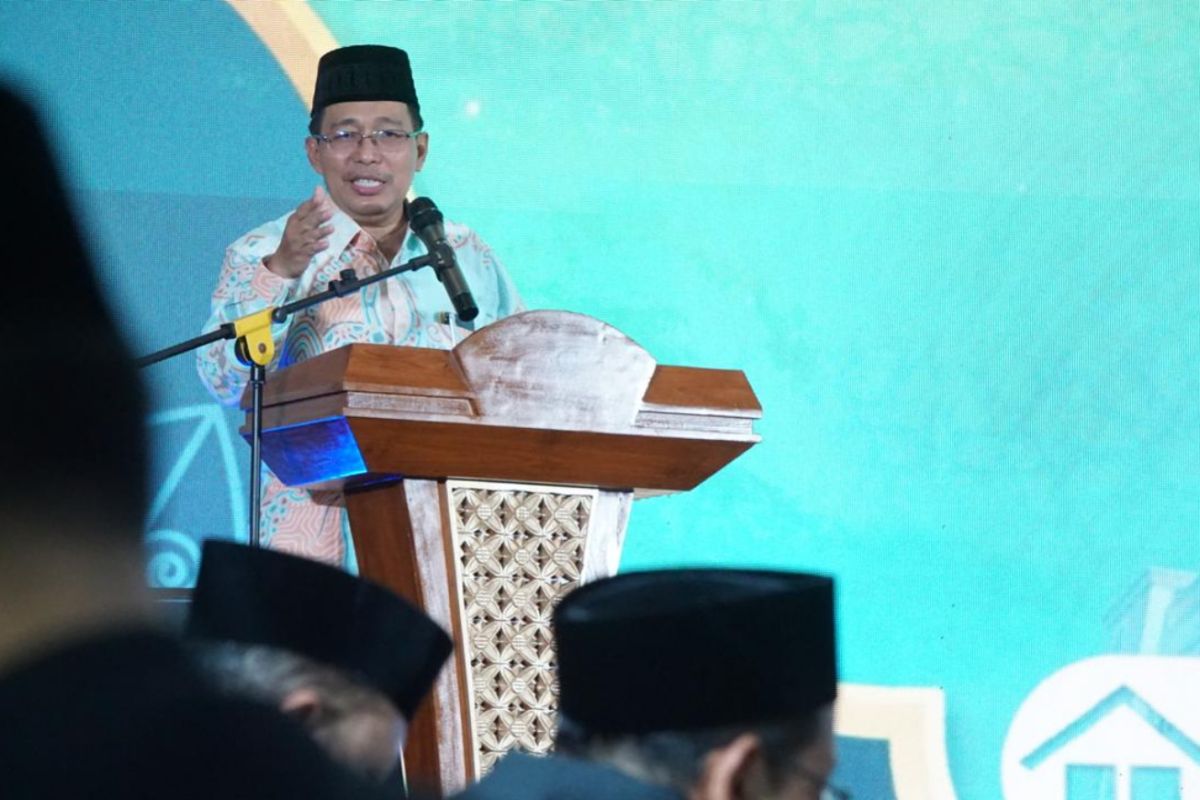
Jakarta (ANTARA) - The Ministry of Religious Affairs is preparing five strategic programmes for 2026 designed to build an integrated community empowerment ecosystem, ranging from improving human resource quality and strengthening community economics to optimising productive waqf assets.
The Director of Zakat and Waqf Empowerment at the Ministry of Religious Affairs, Waryono Abdul Ghafur, stated that the programme includes the development of 1,000 Zakat Villages, 1,000 points of the KUA-based Community Economic Empowerment Programme, 300 recipients of the Indonesia Zakat Scholarship, 24 Waqf Cities, and 514 points of Productive Waqf Incubation.
“We want to build an empowerment model that does not operate in isolation, but is mutually integrated, so that the benefits can be felt more widely and sustainably by the community,” Waryono said in a statement in Jakarta on Saturday.
The programme integrates social, economic, educational, health, and religious guidance services within a single empowerment area.
Furthermore, the KUA-based community economic empowerment programme will be developed across 1,000 locations. Through this programme, the Office of Religious Affairs (KUA) will not only function as a centre for religious services but also serve as a business incubation space for mustahik (zakat recipients) and micro-entrepreneurs through continuous mentoring.
In the education sector, the Ministry of Religious Affairs, together with the National Board of Zakat (Baznas) and Zakat Management Institutions, targets 300 beneficiaries for the Indonesia Zakat Scholarship in 2026. This full scholarship programme is intended for mustahik who possess academic potential to pursue higher education.
In the field of waqf, the Ministry of Religious Affairs aims to develop 24 Waqf Cities to strengthen the productive waqf ecosystem in urban areas. This programme is expected to optimise the use of waqf assets to provide sustainable social and economic benefits.
“The Ministry of Religious Affairs will also develop 514 points of Productive Waqf Incubation to encourage waqf assets to become economic activity centres capable of creating jobs and improving community welfare,” he said.
Waryono noted that the success of these programmes depends on collaboration between various parties. Therefore, the Ministry of Religious Affairs continues to strengthen synergy with Baznas, zakat management institutions, waqf nazirs (managers), local governments, the business sector, and other stakeholders.
According to him, all programmes are directed towards supporting the agenda of extreme poverty alleviation through an approach that does not merely provide social assistance, but also strengthens the economic independence of the community.
“Through these five strategic programmes, the Ministry of Religious Affairs hopes to foster more empowered and independent communities capable of improving their welfare, so that zakat and waqf can be increasingly felt in the development of the nation,” he concluded.
Source: jawawa.id (https://jawawa.id/newsitem/religious-affairs-ministry-to-expand-zakat-villages-and-productive-waqf-in-2026-1781330026)
Originally published by Antara (Indonesian) (https://www.antaranews.com/berita/5606639/kemenag-perluas-kampung-zakat-hingga-wakaf-produktif-pada-2026), translated from Indonesian