
Religious Affairs Ministry Prepares Five Programmes to Strengthen the Future of Santri and Pesantren
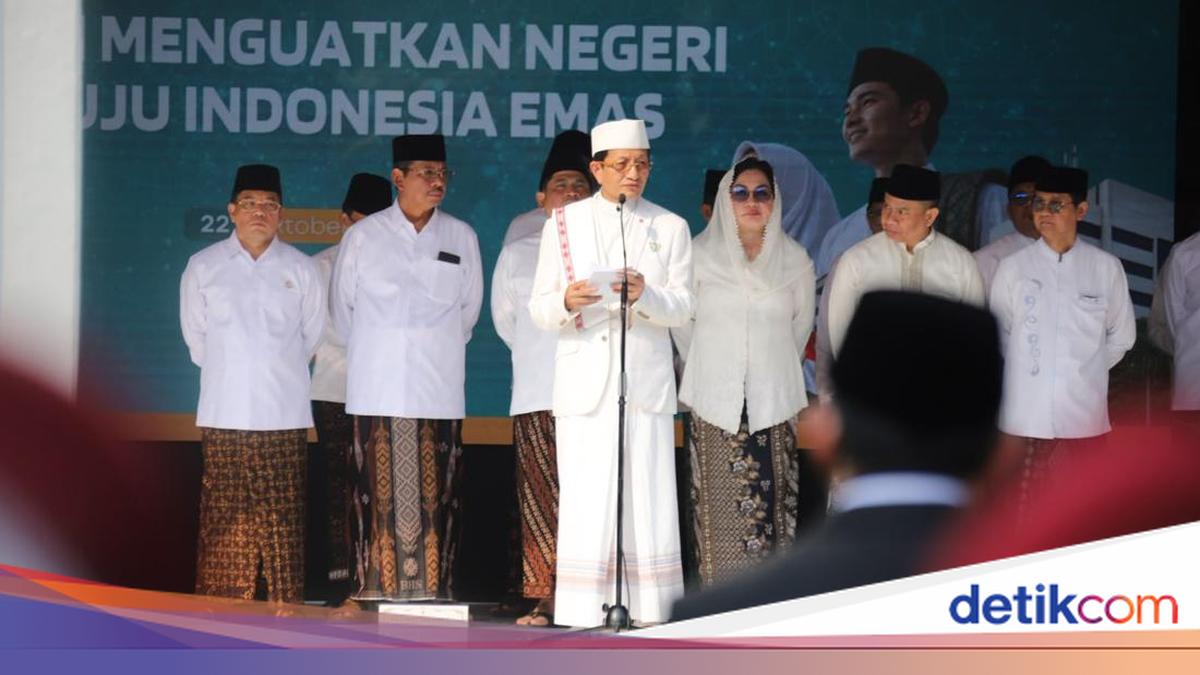
The Ministry of Religious Affairs is preparing five programmes to strengthen the future of santri and pesantren. The programmes were announced by Religious Affairs Minister Nasaruddin Umar at a ceremony marking Santri Day 2026 at the ministry’s headquarters in Jakarta, held under the theme ‘Santri Strengthen the Nation on the Path to a Golden Indonesia’.
Since its designation in 2015, Santri Day has been observed every 22 October to commemorate the struggle of ulama and santri in winning and defending Indonesia’s independence.
On 22 October 1945, Hadratusy Syeikh KH Hasyim Asy’ari, representing pesantren communities, issued the Jihad Resolution. This landmark edict affirmed that defending the Unitary State of the Republic of Indonesia was fardhu ’ain (an individual religious obligation), and that safeguarding independence was the highest form of worship.
“History records in golden ink that when the nation’s sovereignty was threatened, a powerful call to resist arose from within the walls of pesantren, was rallied by the sarungan community, and was sustained by the spirit of the santri,” Nasaruddin said in a written statement on Thursday (22 October 2026).
According to Nasaruddin, that spirit helped drive the people’s resistance, which reached its peak in the events of 10 November 1945, now commemorated as Heroes’ Day. The events taught Indonesians that santri are not only guardians of religious values, but also an important part of the nation’s history.
“Our task is to continue the struggle of the kyai and national heroes through service, work and tangible contributions to Indonesia,” he added.
In line with this, Nasaruddin said he was continuing to strengthen the pesantren education ecosystem. The effort is intended to broaden pesantren’s role and prepare santri to contribute as Indonesia approaches its Golden Indonesia 2045 vision.
Five pesantren programmes
Nasaruddin outlined five programmes being prepared following the issuance of Presidential Regulation No. 18 of 2026, which established the Directorate General for Pesantren. The regulation recognises and supports pesantren and formalises the state’s commitment to them, giving santri greater access to support as they develop their capabilities.
The first programme is Safe Santri, which aims to strengthen pesantren as safe, comfortable and welcoming environments.
“The image of pesantren as safe and comfortable places must be protected from being tarnished by the actions of individuals whose conduct is not in keeping with the spirit of pesantren,” Nasaruddin stressed.
The Ministry of Religious Affairs has established a Safe Santri Task Force, which Nasaruddin formally launched during the 2026 Santri Day ceremony.
“On the occasion of Santri Day 2026, with the words bismillahirrahmanirrahim, I hereby launch the Safe Santri Task Force. May this be a concrete effort to safeguard pesantren as educational institutions that are safe, comfortable and welcoming for all santri,” Nasaruddin said.
The task force will establish mechanisms for preventing and reporting violence in pesantren, providing support, and responding rapidly to cases. A number of pesantren figures have said they are willing to join, including Gus Kautsar.
“The involvement of members of the pesantren community is expected to strengthen collaboration in creating educational environments that are safe, comfortable and welcoming for santri,” he added.
The second programme will strengthen recognition of pesantren qualifications, with the aim of improving acceptance of pesantren education and widening santri’s access to further study across a range of fields.
Greater recognition is also expected to improve graduates’ employment prospects and career development. This would allow santri’s educational achievements and competencies to gain wider acceptance in both the education system and the labour market.
“This programme also addresses the need to ensure that santri’s futures are not held back by limited recognition of the education they have received, rather than any lack of ability or depth of knowledge,” Nasaruddin said.
The third initiative is the Adaptive and Independent Pesantren programme. It focuses on technological proficiency and economic independence, as pesantren face the challenges posed by artificial intelligence and developments in science, technology, engineering and mathematics.
Alongside strengthening technological capacity, the programme covers modernising institutional management and developing pesantren’s economic independence. Pesantren are being encouraged not only to serve as centres of education and Islamic scholarship, but also to create business opportunities, generate employment and stimulate local economies.
“This programme will also support the economic independence of pesantren,” he said.
The fourth programme, Santri 5.0, aims to produce santri who understand the breadth of Islamic scholarship and have skills relevant to the changing needs of society and the labour market.
To that end, skills development, technological literacy, adaptability and religious character will be central to preparing a generation of santri capable of facing future challenges.
“Religious knowledge and practical skills are both important provisions for santri as they look to the future,” he added.
The fifth programme, Digital Preaching, aims to prepare Muslim preachers who are well versed in religious knowledge and understand social media, algorithms, AI and creative content, so that courteous and moderate preaching can better reach young people. The initiative responds to changes in how people access information and religious knowledge.
Pesantren preaching is expected to extend beyond pulpits and conventional study circles to digital spaces, which increasingly shape people’s lives. However, this transformation must remain grounded in deep religious knowledge, religious moderation and the continuity of pesantren’s scholarly traditions.
“Santri must also be present in digital spaces in creative and relevant ways, so that courteous and moderate preaching can be closer to the younger generation,” he concluded.
Source: jawawa.id (https://jawawa.id/newsitem/religious-affairs-ministry-prepares-five-programmes-to-strengthen-the-future-of-santri-and-pesantren-1792659106)
Originally published by detikcom (https://news.detik.com/berita/d-8719069/kemenag-siapkan-5-program-perkuat-masa-depan-santri-pesantren), translated from Indonesian