
Religious Affairs Ministry Designates Pontianak as a Waqf City
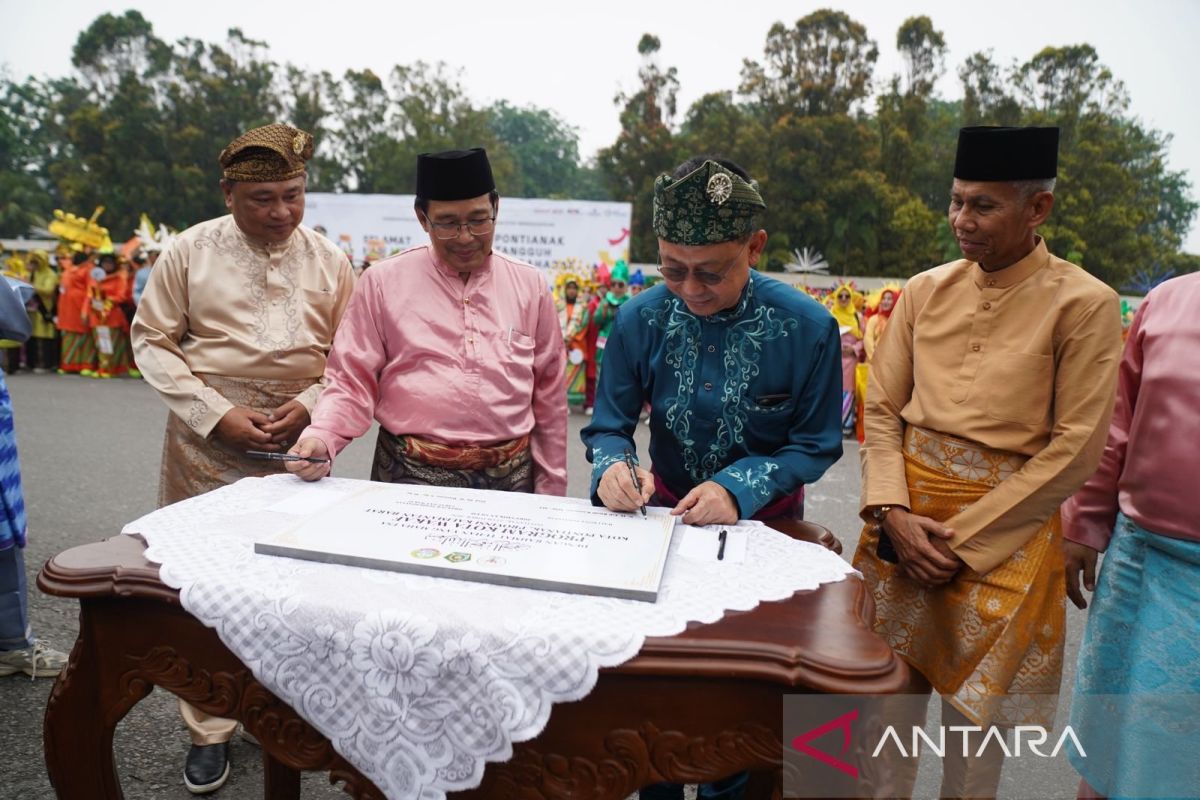
Pontianak (ANTARA) - Indonesia’s Ministry of Religious Affairs has designated Pontianak as a Waqf City to encourage the professional and productive management of waqf assets, strengthening community empowerment and economic self-reliance.
“Waqf should be seen as an instrument for empowering communities. Its management must improve, and its benefits must reach more people,” Pontianak Deputy Mayor Bahasan said in the city on Friday.
Bahasan made the remarks during training for nazir, or waqf managers, following the launch of Pontianak as a Waqf City. The launch was held as part of the celebrations marking the city’s 255th anniversary on 23 October 2026.
He said the designation was a strategic step towards strengthening urban development that focused not only on physical infrastructure, but also on public welfare, religious values and sustainable social development.
Pontianak’s waqf potential could be developed further, he said. Waqf was not limited to land for mosques, prayer rooms and educational institutions; in accordance with the rules, it could also be managed productively to provide economic benefits for the community.
Bahasan therefore called for greater capacity among nazir so they could manage waqf assets professionally, transparently, faithfully and responsibly.
He said training was important to prevent administrative problems and disputes over waqf assets that could arise from misunderstandings between managers and the heirs of wakif, or donors.
“Waqf can sometimes become contentious, with heirs later questioning assets that have already been endowed. We need to minimise such problems through transparency, understanding and amicable resolution,” he said.
Bahasan said the Indonesian Waqf Board and the Ministry of Religious Affairs had an important role in improving public awareness of waqf administration and governance.
He also reaffirmed the Pontianak administration’s commitment to supporting religious life through assistance for Islamic boarding schools, mosques, religious study groups, Quran teachers and those responsible for fardu kifayah, or communal funeral obligations, despite fiscal constraints.
“What is the point of physical development, with tall and magnificent buildings, if the community’s spiritual character is empty? The two must go hand in hand,” he said.
Bahasan said he hoped the Waqf City designation would strengthen cooperation among the government, religious institutions, nazir and the public to make better use of waqf assets.
Transparent and productive management would build public trust and extend waqf’s benefits, he said, strengthening social solidarity and the economic self-reliance of the community for present and future generations.
Source: jawawa.id (https://jawawa.id/newsitem/religious-affairs-ministry-designates-pontianak-as-a-waqf-city-1792749358)
Originally published by Antara (Indonesian) (https://www.antaranews.com/berita/5807375/kemenag-ri-tetapkan-pontianak-sebagai-kota-wakaf), translated from Indonesian