
Religious Affairs Ministry and NUUR+ Plan Steps to Accelerate 1 GW of Solar Power for Mosques
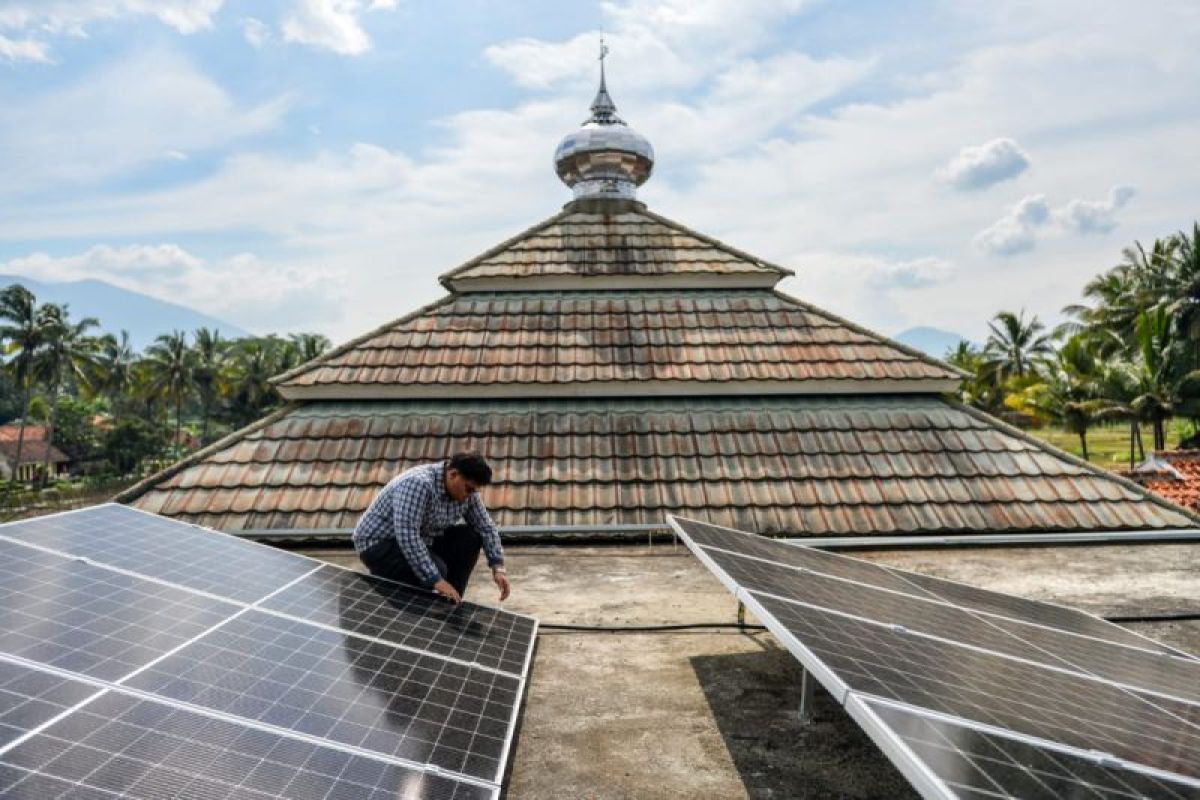
Mosques bring together people from all social classes, making them well suited to become centres for clean-energy education.
Jakarta (ANTARA) – The Ministry of Religious Affairs and a civil society coalition under the NUUR+ initiative have agreed on strategic steps to accelerate the use of solar energy at mosques. The agreement was reached at a workshop to develop national guidelines for a mosque solarisation movement.
The collaboration is expected to support the national target of 100 gigawatts (GW) of solar power capacity, while demonstrating that the clean-energy transition can take firm root in communities through the installation of solar power at places of worship.
“This is an extraordinary initiative because it brings together many different elements. First, it incorporates religious values through eco-theology, alongside technological knowledge of solar energy’s potential, as well as the involvement of philanthropic organisations that connect and encourage broad public participation,” said Muchlis Muhammad Hanafi, acting director of Islamic Religious Affairs at the ministry, in Jakarta on Thursday.
He praised the collaboration on mosque solarisation, saying the movement integrates religious ethics with technology and practical action.
Muchlis also affirmed the ministry’s readiness to amplify messages about clean energy and eco-theology at grassroots level through its network of religious counsellors.
“Our Directorate of Islamic Religious Guidance supports 24,000 Islamic religious counsellors. They are based throughout Indonesia and actively take part in outreach programmes to support government initiatives and raise public awareness,” he said.
M Ali Yusuf, a member of the advisory board of MOSAIC (Muslims for Shared Action on Climate Impact), said mosque solarisation should be viewed comprehensively, going beyond the installation of physical infrastructure.
“Solarising a mosque is not simply a matter of installing solar panels and considering the job done. The most important thing is to raise the community’s awareness of clean energy, sustainable living and fairness,” he said.
Ali added that the guidelines under development were expected to be practical and easy to apply.
They will address four areas: technical standards and electrical safety risk mitigation; inclusive and innovative funding models using blended finance, including ZISWAF [Islamic alms, donations and endowments] and corporate social responsibility (CSR); accountable governance; and strengthening community capacity and participation.
Waryono Abdul Ghafur, the ministry’s director of zakat and waqf empowerment, said mosque solarisation was a strategic approach to advancing Indonesia’s energy transition.
“Mosques bring together people from all social classes, making them well suited to become centres for clean-energy education,” he said.
Chairiman, chair of the Yayasan Wakaf Energi foundation and a representative of NUUR+, highlighted the importance of delivering benefits, as well as establishing sound governance and a digital ecosystem for mosque solarisation.
“Solarisation at places of worship can spark economic activity and generate significant benefits for the environment around mosques,” Chairiman said.
He added that solar technology was complex, requiring thorough planning, accurate installation and regular monitoring.
NUUR+ is promoting integrated digitalisation through the nuurproject.org platform. The public can use it to follow online waqf and donation fundraising, choose a mosque to support, and access transparent implementation and digital reporting.
The potential of places of worship is underscored by NUUR+ technical mapping research, which estimates that mosques and prayer rooms could contribute 1 GW towards the national target – equivalent to one per cent of the 100 GW solar target.
The 1 GW contribution could technically be achieved by installing solar energy and battery systems at more than 400,000 mosques and prayer rooms across Indonesia. The largest share would come from larger congregational mosques and public mosques with high levels of daily activity.
The programme is projected to generate 1,414 gigawatt-hours of clean electricity a year, enough to meet the needs of almost one million households, while reducing carbon emissions by up to 1.1 million tonnes annually.
Through blended financing and collective procurement, the initiative is also projected to deliver electricity savings of Rp47.7 trillion over 25 years of operation.
The collaborative roadmap is expected to begin with a pilot involving 300 model mosques, or eco-mosques, in 2027, before being rolled out progressively at regional and national levels.
Source: jawawa.id (https://jawawa.id/newsitem/religious-affairs-ministry-and-nuur-plan-steps-to-accelerate-1-gw-of-solar-power-for-mosques-1793289263)
Originally published by Antara (Indonesian) (https://www.antaranews.com/berita/5820447/kemenag-dan-nuur-siapkan-langkah-percepat-1-gw-solarisasi-masjid), translated from Indonesian