
Religious Affairs Minister Requests BGN to Expand Free Nutritious Meals Programme in Pesantrens, Currently Reaching Only 10-12 Percent
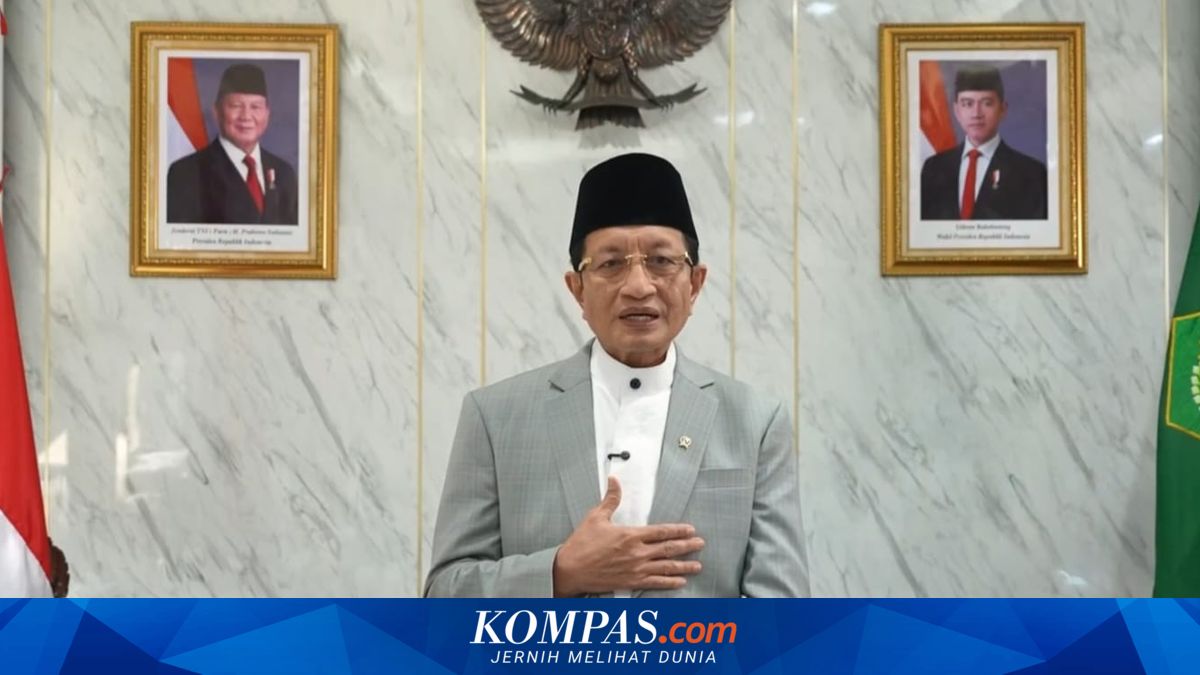
JAKARTA - Indonesia’s Religious Affairs Minister (Menag), Nasaruddin Umar, has requested an expansion of the Free Nutritious Meals (MBG) programme’s reach in pondok pesantrens, which currently stands at only 10-12 percent.
Nasaruddin stated that the MBG coverage in madrasahs and pondok pesantrens remains significantly behind that of public schools, which is projected to reach nearly 80 percent soon.
“Currently, the MBG reach in the madrasah and pondok pesantren environment is only 10-12 percent, far behind public schools which are projected to soon reach 80 percent,” said Nasaruddin, in a statement during the Ministerial Level Meeting (RTM) on Education, held virtually with the Coordinating Ministry for Human Development and Culture (Kemenko PMK), quoted from a press release on Monday (6/4/2026).
Nasaruddin noted that children in madrasahs and santri at pondok pesantrens are considered the group most in need of MBG due to economic factors.
This disparity has drawn the Minister’s attention because madrasahs and pesantrens have long accommodated millions of students from various regions.
Nevertheless, the Minister stated, pondok pesantrens are regarded as one of the educational institutions most ready to implement the MBG programme.
Previously, the Chairman of the House of Representatives Budget Agency (Banggar) DPR RI, Said Abdullah, revealed that they had just held a meeting with BGN to discuss the progress of the MBG programme implementation.
In that meeting, Said said, it was learned that there are now more than 26,000 Nutrition Fulfilment Service Units (SPPG) in Indonesia.
Said acknowledged that there are still several obstacles in implementing the programme, particularly related to governance.
“It must be acknowledged that in its realisation, there are obstacles as we all know. And the Head of BGN has a commitment to resolve aspects of enforcing its governance,” he said.