
Religious Affairs Minister Explains Crypto Tax: Taxation Does Not Mean It Is Deemed Halal
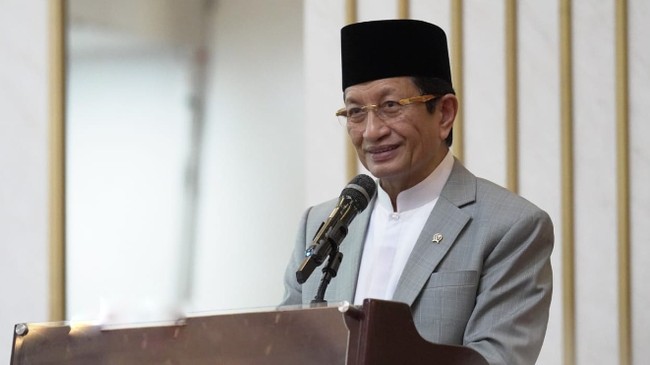
Jakarta — Religious Affairs Minister Nasaruddin Umar said the imposition of tax on crypto transactions does not mean the state supports every activity in the sector. Tax, he said, is simply a tool to record and monitor activity and ensure the state has a role in an area that poses significant risks to the public.
Nasaruddin said that determining whether something is halal or haram is a matter for the Indonesian Council of Ulama (MUI). The MUI issued a decision at its 2021 Fatwa Commission Ulama Ijtima. It ruled that using crypto as currency is haram because it involves uncertainty (gharar) and harm (dharar).
The decision also said that using crypto as currency conflicts with Law No. 7 of 2011 on Currency and Bank Indonesia Regulation No. 17 of 2015 on the obligation to use the rupiah within the territory of the Republic of Indonesia.
“Taxing crypto transactions does not mean the state supports every activity in the sector. Tax is a tool to record and monitor activity and ensure the state has a role in an area that poses significant risks to the public,” Nasaruddin said at the International Seminar on Taxes, the Digital Economy and Cryptoassets: A Sharia Perspective on Thursday (15 October 2026).
However, Nasaruddin said there is an exception for crypto. The MUI permits crypto to be traded as a commodity or asset if it meets the requirements of sil’ah and has clear underlying value and benefits.
At the same event, Finance Ministry Director General of Taxes Bimo Wijayanto said taxation is not a provision of sharia. Therefore, taxing income from crypto does not mean the activity has been declared permissible or that the government is encouraging crypto trading.
“Assessing whether the activity is permissible is the authority of religious bodies, whose views we of course respect,” Bimo said.
Could become halal
Nasaruddin said that rulings on halal and haram depend on objective conditions. Crypto may currently be deemed haram as currency because it involves uncertainty (gharar) and harm (dharar). But if it is found not to pose such problems in the future, it could become halal.
“God willing, if we monitor one another — the government monitoring the ulama and the ulama monitoring the government — that would be good. We are now working well together, the Finance Ministry and the Religious Affairs Ministry,” Nasaruddin said.
Crypto was previously treated as a commodity and therefore as a taxable good subject to value-added tax (VAT). From 10 January 2025, responsibility for regulating and supervising digital financial assets, including crypto, moved from the Commodity Futures Trading Regulatory Agency (Bappebti) to the Financial Services Authority (OJK). The change is set out in Government Regulation No. 49 of 2024 on the transfer of regulatory and supervisory duties for digital financial assets, including cryptoassets and financial derivatives.
Crypto’s classification was also changed from a commodity to a financial asset treated in the same way as a security. This is provided for in Finance Minister Regulation No. 50 of 2025 on VAT and income tax on cryptoasset trading transactions.
Securities are among the categories of goods not subject to VAT. This is in line with Article 4A(2)(d) of Law No. 8 of 1983 on VAT on Goods and Services and Sales Tax on Luxury Goods, as amended several times, most recently by Law No. 7 of 2021 on the Harmonisation of Tax Regulations.
Previously, crypto transactions conducted through Bappebti were subject to final Article 22 income tax at a rate of 0.1% and VAT at an effective rate of 0.11%. Transactions conducted outside Bappebti were subject to final Article 22 income tax of 0.2% and VAT at an effective rate of 0.22%. From 1 August 2025, following the implementation of Finance Minister Regulation No. 50/2025, crypto buying and selling transactions are no longer subject to VAT. They are subject only to final Article 22 income tax of 0.21%, collected by Digital Financial Asset Traders (PAKD).
Source: jawawa.id (https://jawawa.id/newsitem/religious-affairs-minister-explains-crypto-tax-taxation-does-not-mean-it-is-deemed-halal-1792072248)
Originally published by CNBC Indonesia (https://www.cnbcindonesia.com/market/20261015181721-17-776606/menag-jelaskan-pajak-kripto-dipajaki-bukan-berarti-dinyatakan-halal), translated from Indonesian