
Religious Affairs Minister Emphasises Strict Oversight of Religious Fund Distribution
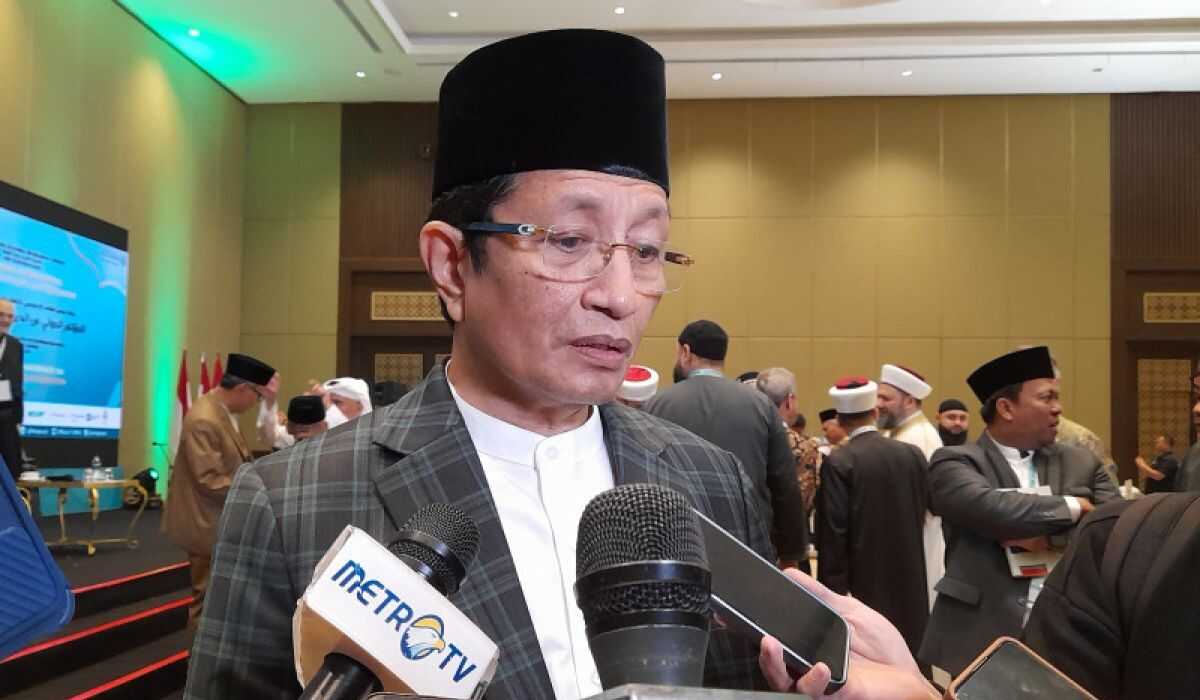
The Minister of Religious Affairs, Nasaruddin Umar, emphasised the importance of macro-level oversight and equitable distribution in the management of religious funds. This followed a significant increase in national zakat collection, which reached Rp40.5 trillion in 2024.
The Minister stated that the main issue now is not just the amount of funds collected, but the distribution pattern, which is considered uneven and potentially overlapping between institutions.
“It should not be the case that those who are good at lobbying or writing proposals are the ones who receive the most assistance. Meanwhile, those who are truly in need but are not good at writing proposals, do not receive anything,” said the Minister, quoted on Wednesday (25/2).
He expressed his concern about the practice of some people receiving double assistance, while others are left out due to a lack of information and support.
“If there is no macro-level oversight, one person can receive funds from Baznas, from Wakaf, and also from the Ministry of Social Affairs. They receive a lot. Meanwhile, on the other hand, there are people who cannot receive anything because they do not know how,” he added.
According to the Minister, this situation highlights the urgency of a comprehensive monitoring system that can monitor the flow of religious funds. He even proposed a monitoring model that has a similar function to the authorities in the financial services sector.
“In the future, we need very strict and thorough oversight. Not only oversight by the leaders of each institution, but also macro-level oversight that monitors the flow. We are currently studying the establishment of what is called the Religious Fund Empowerment Agency (LPDU),” he said.
Furthermore, the Minister assured that the role of the state in the management of religious funds is not to intervene or divert them into the State Budget (APBN).
The government, he said, is actually interested in ensuring transparency and professionalism in management so that the funds truly have an impact on poverty reduction and strengthening the economy of small communities.
“The state is present to support religious funds so that they have an impact on the lower class economy and reduce inequality. It should not be the case that there are indications that the government is using religious funds to finance routine state programs. The presence of the state is to ensure that these funds are managed professionally for community independence,” he concluded. (H-3)
The Minister of Religious Affairs, Nasaruddin Umar, highlighted the process of collecting religious funds, which he considered not yet optimal. Religious funds collected can reach Rp500 trillion per year.
Baznas formed the Indonesian Zakat, Infak, and Sadaqah (ZIS) Association (AAZRI) in order to optimise the collection of zakat, infak, and sadaqah (ZIS) in Indonesia.
As part of this collaboration, Bank Muamalat is committed to providing Rp2 trillion in financing for the development of Muhammadiyah’s Amal Usaha (AUM).
This achievement is not just a number, but a reflection of the dedication and integrity of BMH in managing every rupiah of zakat, infak, and sadaqah entrusted by donors.
The leaders of institutions and zakat administrators need to absorb input from the community about the use of zakat funds. In this case, it is not only about processing internal institutional views.
The National Zakat Agency (Baznas) affirmed that the zakat, infak, and sadaqah (ZIS) collected from muzaki and the community will not be used to fund the MBG program.
The National Zakat Agency (Baznas) presented the Pesantren Jalan Cahaya program during Ramadan 1447 H in 20 locations throughout Indonesia during the holy month.
The National Zakat Agency (Baznas) received a courtesy visit from the Sudanese Ambassador to Indonesia, Yassir Mohamed Ali Mohamed, at the Baznas Headquarters, Jakarta.
Baznas, through Rumah Sehat Baznas, continued the Selter Ojek Sehat (SOS) program, a free health service for the community, especially motorcycle taxi drivers and public transportation drivers.
The National Zakat Agency (Baznas) of the Republic of Indonesia held a joint iftar with flood and landslide survivors in the emergency meunasah, Manyang Cut Village, Pidie Jaya Regency, Aceh.