
Religious Affairs Minister Confirms Istiqlal Sacrifice Meets Sharia and Eco-Friendly Standards
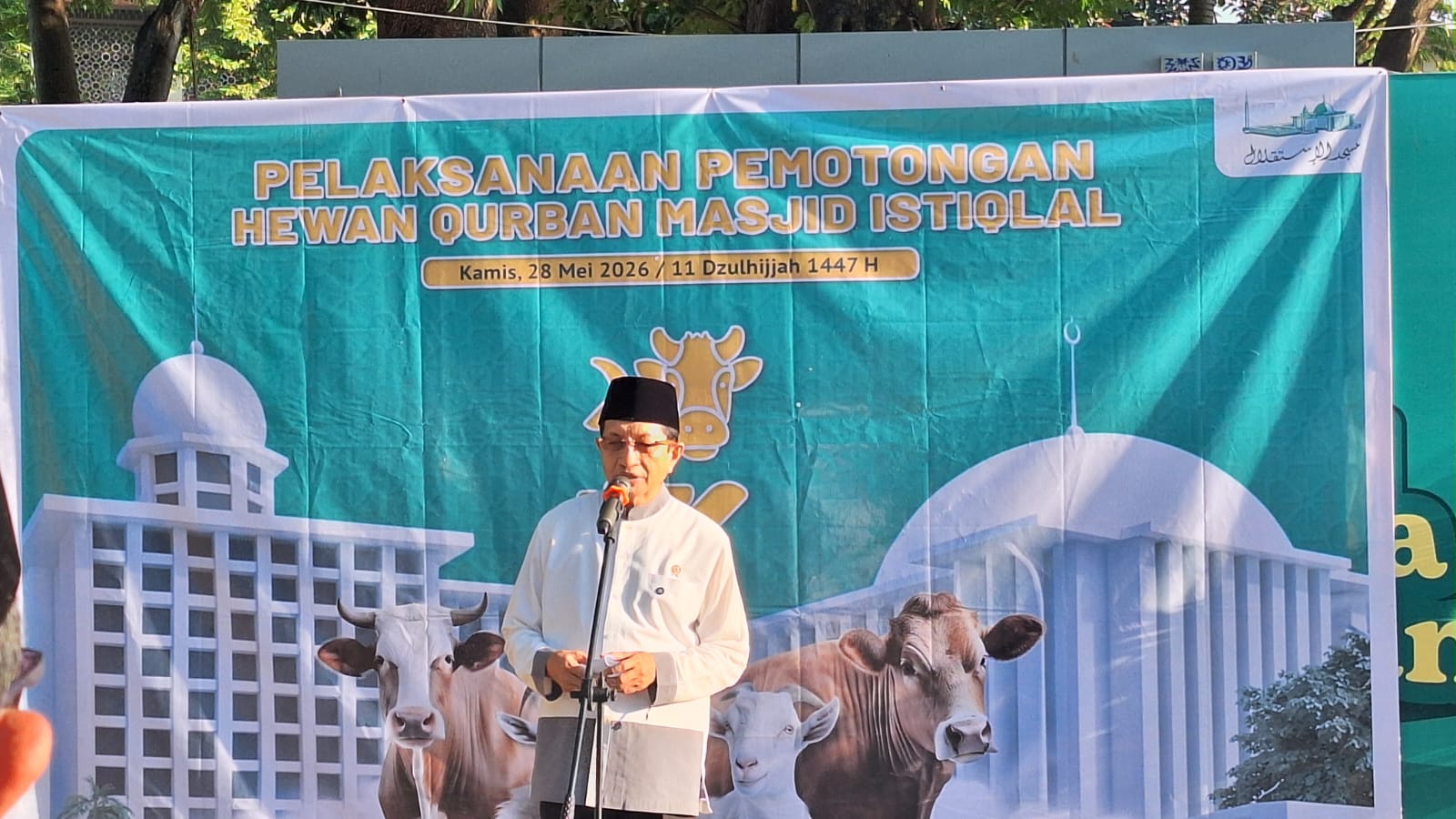
Istiqlal Mosque slaughtered dozens of sacrificial animals on the occasion of Idul Adha 1447 Hijriah on Thursday (28 May). This year, the mosque was entrusted with slaughtering 65 cattle and 13 goats. Among the sacrificial animals received were a presidential gift named Si Loreng weighing 1.3 tonnes and a vice-presidential contribution named Wirabumi weighing 1.2 tonnes. The Idul Adha Committee at Istiqlal Mosque aims to distribute 10,728 packages of meat, each weighing approximately one kilogram, to the public through structured distribution across various regions. Minister of Religious Affairs Nasaruddin Umar emphasised that the entire slaughter process adheres to Islamic Sharia principles and animal welfare standards. He stated that the procedure at Istiqlal is intended to serve as a model for other mosques in Indonesia. ‘Everything here follows standard protocols. First, we observe the sunnah practices, such as facing the head towards the qibla. The animal is cleaned beforehand to ensure no impurities remain on the meat given to worshippers,’ Minister Nasaruddin said on Thursday (28 May). Around 50 officers from the Halal Slaughter Authority (RPH) monitored the slaughter process. The minister also reminded that animals must not be mistreated before being confirmed dead. ‘No animal should be tortured before slaughter. Let it die first,’ he added. In addition to Sharia compliance, Istiqlal’s sacrifice process also prioritises environmental stewardship. Nasaruddin instructed all committee members to maintain cleanliness in the mosque area and ensure safe slaughter without incidents. ‘We have long campaigned on the importance of environmental stewardship. Not a single drop of sacrificial blood should flow into rivers. After slaughter, the surrounding gardens must be cleaned as they were before,’ the minister stressed. Idul Adha Committee Chairman Mas’ud Halimin stated that all field officers were directed to strictly follow Standard Operating Procedures (SOPs). Waste management from the slaughter is handled centrally to prevent environmental pollution, particularly near the mosque’s nearby river streams. Mas’ud explained that thousands of meat packages would be distributed to various community groups to avoid crowds during distribution. The distribution targets 52 foundations, 87 mosques, DKM (mosque management boards), and study groups, 41 institutions, 104 RT/RW (neighbourhood) representatives, and Istiqlal’s community partners across Jabodetabek and parts of West Java. (H-2)
Source: jawawa.id (https://jawawa.id/newsitem/religious-affairs-minister-confirms-istiqlal-sacrifice-meets-sharia-and-eco-friendly-standards-1780024507)
Originally published by Media Indonesia (https://mediaindonesia.com/humaniora/894626/menag-pastikan-penyembelihan-kurban-di-istiqlal-sesuai-syariat-dan-ramah-lingkungan), translated from Indonesian