
Religious Affairs Minister Backs ‘Sarong Tuesday’ Initiative at Ministry
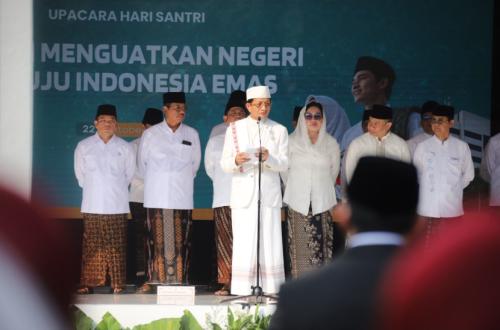
JAKARTA – Religious Affairs Minister Nasaruddin Umar has backed the idea of wearing sarongs and peci caps one day a week at the Ministry of Religious Affairs. The proposal is intended to preserve the cultural identity of the Indonesian archipelago and foster pride in the country’s traditions.
Nasaruddin voiced his support when opening the 2026 Santri Sarong and Peci Festival at the ministry’s office in Central Jakarta on Friday night (23 October 2026). Organised by the Directorate General of Islamic Boarding Schools, the event was part of the 2026 Santri Day commemorations.
“The sarong and peci festival should actually become a regular event at the Ministry of Religious Affairs. I agree that, if colleagues are in favour, we should wear sarongs and peci once a week,” Nasaruddin said in a press release on Saturday (24 October 2026).
However, Nasaruddin stressed that wearing a sarong and peci should not be compulsory. It could be encouraged while taking into account staff members’ circumstances, comfort and needs in carrying out their daily work.
The Grand Imam of Jakarta’s Istiqlal Mosque said the sarong represented togetherness, equality and freedom. The peci, meanwhile, symbolised honour, authority and national identity, and its use had extended beyond religious communities.
“If necessary, perhaps there could also be certain modifications so that sarongs evolve with the times. Who knows, there may be new designs for distinctive sarongs and peci,” Nasaruddin said.
The ‘Sarong Tuesday’ initiative was proposed by the ministry’s Director General of Islamic Boarding Schools, Basnang Said, as a practical way to promote sarong-wearing in the workplace. Tuesday was chosen because sarongs were considered a good match for the white work clothes staff usually wear.
“Hopefully we can call it Sarong Tuesday. Why? Because on Tuesdays we still wear white shirts, and any style of sarong will go with them,” Basnang said.
Basnang said the initiative was not merely a change in clothing, but also an effort to revive the values of pesantren traditions. Sarongs and peci, he said, should not be viewed as symbols of backwardness, since a person’s modernity is measured by their way of thinking and their contribution to society.
“Whether someone is modern or traditional is not determined by the clothes we wear, but by how we think and how we see things,” he said.
Through the 2026 Santri Sarong and Peci Festival, the ministry is also seeking to introduce the diversity of traditional Indonesian clothing while creating opportunities for the development of the creative industry and domestic businesses. Nasaruddin hopes sarongs and peci will not only remain a heritage to be celebrated, but will also continue to evolve and stay relevant to future generations.
Source: jawawa.id (https://jawawa.id/newsitem/religious-affairs-minister-backs-sarong-tuesday-initiative-at-ministry-1792907441)
Originally published by Republika (https://news.republika.co.id/berita/tng4q3416/menag-dukung-gerakan-selasa-bersarung-di-kemenag), translated from Indonesian