
Religion in the Shadow of Ego
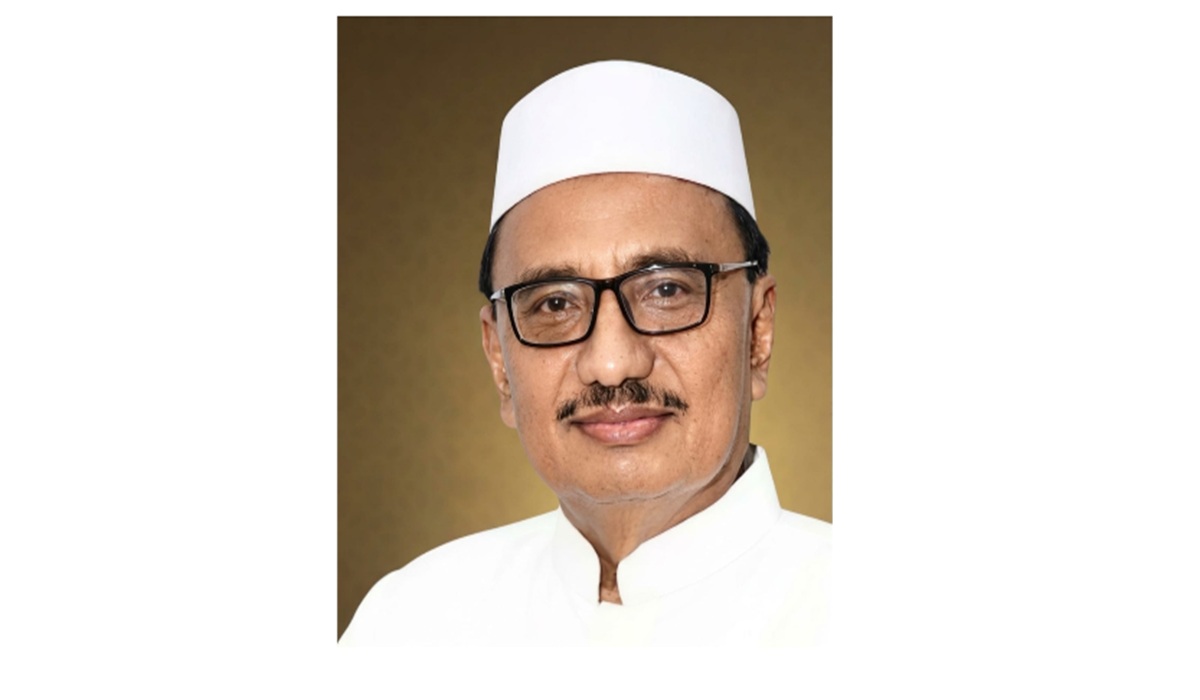
During a session of his study circle, Habib Umar bin Hafiz bin Syeikh Abu Bakar shared his observations on the development of certain religious people. According to him, not a few make extreme interpretations or display egoism, resulting in an atmosphere saturated with the noise of opinions. As a consequence, the value of sanctity is lost amid the turmoil of claims to truth.
Many people claim to defend religion, but what they are truly defending is themselves, their ego, their group, and their own interpretation. Religion, which should be a path of purification, has turned into a stage for self-justification. In the digital world, we can easily see how sacred verses become instruments of attack rather than mirrors for seeing ourselves.
This era has produced a generation that is religious in symbolic terms yet restless in spirit. They seek God outside themselves but refuse to find Him in the quietest depths of their own being.
The author will present the views of two experts in psychology, philosophy and Sufism: Sigmund Freud in his work The Future of an Illusion, and Imam Al-Ghazali, a scholar and leading figure known as the Proof of Islam in his time, in his work Ihya Ulumiddin.
More than a century ago, the father of psychoanalysis, Sigmund Freud, wrote in The Future of an Illusion that religion was born from humanity’s psychological need for protection. According to him, human beings created the figure of God as a projection of their fear of an uncontrollable world.
For Freud, religion is wish fulfilment — the satisfaction of humanity’s deepest desire to feel safe. Although many reject his view, Freud’s critique opens a space for sharp reflection: sometimes we are not actually seeking God, but rather seeking a sense of calm that suits our own desires. Modern religious people practise religion not to submit, but to obtain inner validation.
They interpret scripture as though gazing into a mirror: they only wish to see themselves, not the true God. Freud may not have understood the depths of faith, but he understood human nature extremely well — that the ego often dons the robe of piety to conceal inner wounds and hidden ambitions.
Yet long before Freud, Imam Al-Ghazali had reminded us of the same thing, in gentler but far more profound language. In Ihya Ulumiddin he writes: “The ego loves status, wishes to appear right, and despises truth when it comes from others.”
For Al-Ghazali, religion is not a collection of dogmas or symbols of piety, but a process of purifying the heart. When religious knowledge does not make the heart humble and the soul gentle, that knowledge becomes evidence that will weigh heavily against one in the hereafter. He harshly criticised two groups that remain relevant today: scholars who have lost their hearts, and worshippers who have lost their knowledge. Both are dangerous — one misleads with scriptural proof, the other with fanaticism devoid of wisdom.
Imam Al-Ghazali stated firmly: “Knowledge without manners leads to ruin, and worship without knowledge leads astray.” Today, we see how those words have come back to life. Truth is reduced to argumentation, and piety is measured by appearance rather than humility.
Interestingly, if Freud and Al-Ghazali were to sit in dialogue, they would agree on one thing: human beings are creatures easily deceived by themselves. Freud calls it self-deception. Al-Ghazali calls it ghurur.
One speaks of the ego’s defence mechanisms, the other of the diseases of the heart. Yet both point to the same root: religion can become a mask for the ego when it is not accompanied by self-awareness.
Religion, in this sense, is not merely a system of belief, but a mirror of inner morality. It demands honesty not towards the outside world, but towards oneself. For in truth, the hardest adversary to face is not the enemy without, but the ego within that always wants to win.
We live in an age when people want to be right more than they want to be good. When religion becomes a political weapon, a social commodity, or a stage for spiritual popularity. We live in an age when religion has lost its depth because it has lost its silence. Social media has turned preaching into a stage of competition, and noise has triumphed over quiet remembrance of God.
Freud calls it narcissistic need. Al-Ghazali calls it a disease of the heart. Two different terms with the same meaning: modern humanity thirsts for recognition, not truth.
The way out of this crisis is not to reject modernity, but to return religion to the heart of its awareness. Freud offers the insight of honesty in examining one’s own motives. Al-Ghazali offers muhasabah — the honesty of assessing one’s own heart.
Both are forms of the light of awareness, guiding human beings to recognise that true truth will never be born from an unpurified ego. Religion must return to being a mirror, not a mask. When religion becomes a mirror, people bow their heads and better themselves. When religion becomes a mask, people force others to bow.
We are not losing God. We are simply too busy becoming gods unto ourselves. We have not lost religion. We have only lost honesty in practising it.
As Imam Al-Ghazali said: “Whoever knows himself, knows his Lord.” Man araafa nafsahu fagad arafa rabbahu. And perhaps this is what we must reflect upon today — that before we debate about who is most right, we need first to ask ourselves: have we been honest enough with ourselves before God?
Religion is not for dominating, but for loving; not for winning, but for bringing peace; and not for justifying the ego, but for purifying the soul.