
Reliable electricity supports economic stability and national resilience: MPR
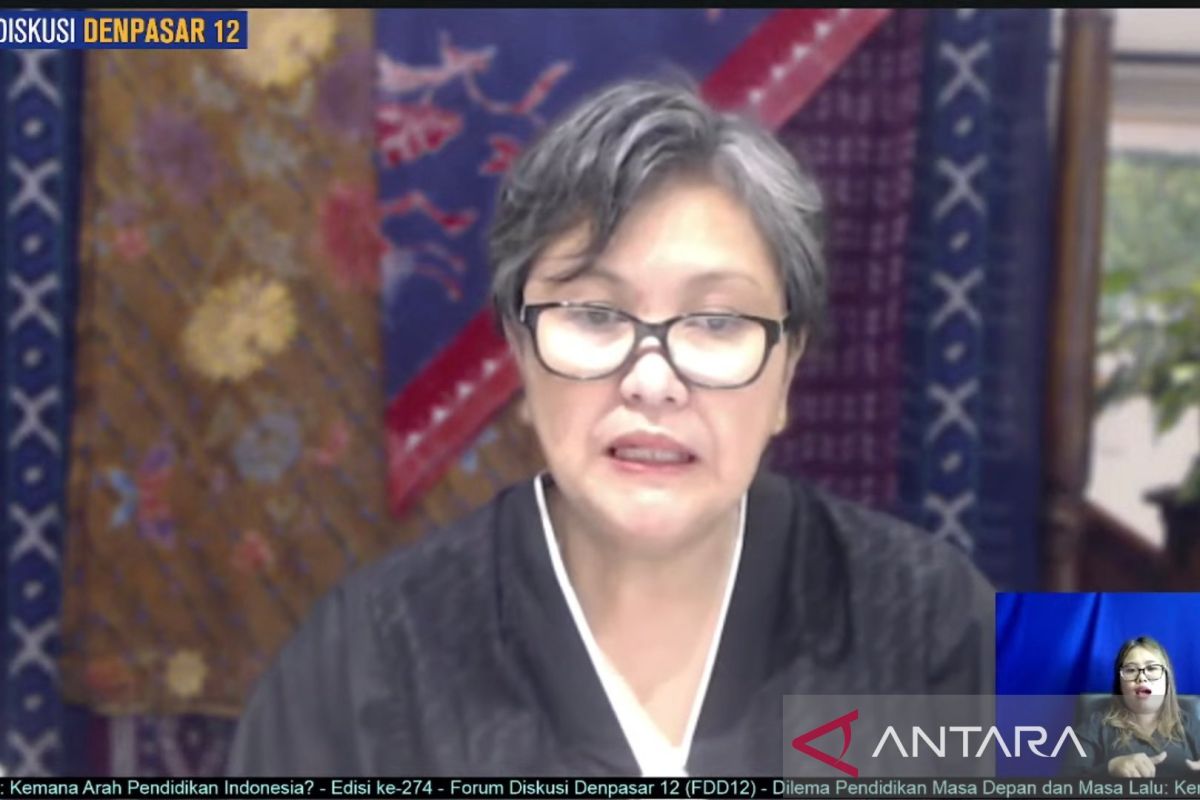
Jakarta (ANTARA) - Deputy Speaker of the People’s Consultative Assembly (MPR) Lestari Moerdijat has asserted that a reliable, stable, and evenly distributed electricity system across the country is a key support for economic stability and security, capable of strengthening national resilience.
“Indonesia faces serious geographical constraints in the form of a spatial mismatch between load centres and abundant renewable energy sources. Careful planning and concrete steps are needed to realise a reliable and equitable electricity supply across the nation,” Lestari said in a statement in Jakarta on Wednesday.
She made the remarks while opening an online discussion themed ‘Building Indonesia’s Electrical Energy System and Infrastructure Renewal Towards 2045’, held by the Denpasar 12 Discussion Forum.
Lestari argued that a stable and widespread electricity supply is a pillar of national economic growth. She added that electricity is also vital for distance learning activities, mobile lifestyles, and other work mechanisms that have increasingly grown in the post-COVID-19 pandemic era.
The member of House of Representatives Commission X assessed that the transition towards a modern electrical energy ecosystem by 2045 demands cooperation from all related parties to build a system that is truly ready to answer future challenges. Rerie, as Lestari is familiarly known, also urged the state to be present in fulfilling its constitutional obligation to provide energy access as a basic need of society, in order to improve welfare and social justice for every citizen.
At the same event, Senior Electricity Inspector at the Directorate of Electricity Engineering and Environment of the Ministry of Energy and Mineral Resources, Yunan Nasikhin, said that the governance of electricity provision, from generation, transmission, and distribution to consumers, is already regulated in a number of regulations. According to Yunan, the government is currently working to increase national electricity capacity and construct supporting infrastructure in several regions of Indonesia.
The Sumatra region is currently seeing the construction of Extra High Voltage Air Line (SUTET) infrastructure as part of increasing generation capacity in the area. Yunan stated that this infrastructure development process also constitutes a weak point in the electricity transmission and distribution process to consumers in Sumatra. He noted that the national electricity operational reserve is currently limited. The recent blackout in Sumatra served as evaluation material, prompting the acceleration of better electrical infrastructure improvements.
Executive Vice President of System Operation at PLN, Jarot Setyawan, revealed that global conflicts have impacted PLN’s operations because a number of power plants in several regions still use primary energy. According to Jarot, the use of fossil energy needs to be studied more deeply to suppress the impact of global turbulence.
The 2025-2034 Electricity Supply Business Plan, Jarot said, has been crafted in greater detail by considering geospatial factors and differences in demand between regions. In addition, power plant development is directed towards using renewable energy and adapted to the conditions of the region where the plant is built.
According to Jarot, various improvement efforts are being made because electricity user demand is increasingly diverse with the advent of electric vehicles and the rising prevalence of digital and mobile lifestyles in daily life.
Director of the Institute for Climate Policy & Global Politics, Eko Sulistyo, said the national energy sector faces quite serious risks, similar to those faced by PLN and Pertamina. Electricity resilience, according to Eko, does not depend solely on energy availability, but also on the economic and political health of a country. The blackout in Sumatra some time ago, Eko argued, was not merely a disruption in electricity availability but also related to national competitiveness and resilience.
“Because the impact of the blackout in Sumatra covered 10 provinces with more than three million inhabitants,” he stated.
Eko said this situation must serve as an important lesson to be mitigated immediately with appropriate measures so that similar incidents do not recur in the future.
Also present, Engagement Lead for the Low Carbon Development Initiative Verena Puspawardani said the electricity system must fulfil aspects of reliability and effectiveness. According to Verena, the national electricity system must be more resilient as planned. She stated that future policy must have minimum operational standards capable of properly anticipating any disruptions.
Furthermore, the reliability of electricity transmission must receive greater public attention, because if a cable is disrupted or broken, electrical energy will not reach the community. “The development of greener power plants must receive support from all parties to answer the challenges of future energy availability,” she said.