
Relations with Neighbouring Countries Strained by Haze: What Can ASEAN Do?
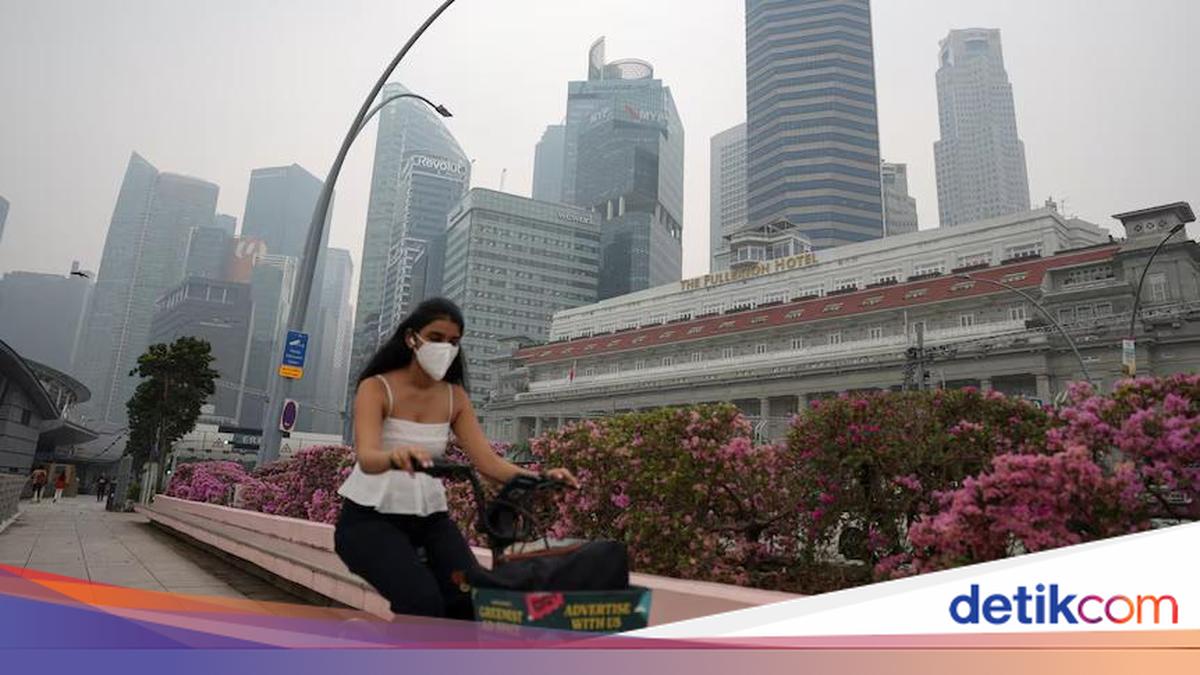
Smoke caused by forest and land fires in parts of Indonesia has prompted frustration in neighbouring countries, including Singapore and Malaysia.
Tnay Heng Hung, an urban planner from Sarawak, Malaysia, who now lives in Singapore, said the haze brought back childhood memories of severe smoke pollution from Indonesia disrupting his daily life.
“It is very worrying, because when I experienced it, I was about the same age as my children are now,” he said. “For generations, this problem has not got any better. I think something needs to be done.”
Ow Tai Pang, a private tutor, said smoke from Indonesia peaked about a week ago, with air quality in Singapore deteriorating to unhealthy levels.
“It felt like breathing in smoke directly,” he said. “I could smell it in the air and my throat became very dry. It was extremely uncomfortable.”
Like many other Singaporeans, they closed their windows, switched on air purifiers and avoided outdoor activities. Tnay said his two sons had to stop some activities, including swimming, playing football and cycling.
“We spent most of our time indoors, which was of course quite boring for the children,” he said.
Ow said his frustration was directed more at the way the Indonesian government had handled the situation. He felt it could have acted sooner, particularly as neighbouring countries had offered assistance.
“If Singapore and Malaysia can feel the effects of the haze this severely, I think people in Indonesia must be affected much more than we are. I actually feel more sympathy for Indonesians.”
The haze has also frustrated people in Malaysia, which several reports say is among the countries that have been exposed to smoke from forest fires for the longest periods.
Kuala Lumpur resident Syed Akramin said the haze had seriously disrupted his family’s life.
“My children could not go to school and my wife had a severe cough that lasted for several weeks,” he said.
He said this year’s haze had become so disruptive that it prompted him to speak out on social media, something he had never done before. “Social media has become a platform for us to express our concerns.”
Some social media users in Malaysia have even called for a boycott of Indonesian products.
The Straits Times reported that Hasnah A.R., a leader of a non-governmental organisation, planned to stop buying several Indonesian products, including instant coffee, drinks and coconut milk.
But Akramin said boycotting Indonesian products was not a solution.
“My frustration is directed at the recurring haze problem and the failure to resolve it, not at the Indonesian people or their products,” he told ABC.
The Indonesian government has previously told ABC that more than 71,000 personnel from various agencies had been deployed to tackle forest and land fires, particularly in Sumatra and Kalimantan.
“The government continues to strengthen mitigation efforts, address the impacts on communities, and enforce the law against companies found to have violated regulations, including through sanctions and the revocation of permits, in accordance with applicable rules,” the statement said.
Diplomatic tensions
Discontent over smoke from Indonesia has also become a political issue between neighbouring countries.
Earlier this month, Syahganda Nainggolan, head of Indonesia’s Government Communications Agency, said Indonesia sent not only smoke but also oxygen to Singapore and Malaysia. He said neighbouring countries should understand that the smoke was “truly natural” and not caused by human actions.
The remarks drew criticism on social media, and Singapore’s Senior Minister K. Shanmugam described them as “disappointing”.
In Malaysia, MP Kalam Salan deliberately switched to Javanese while speaking in parliament about the haze crisis.
“Perhaps the leaders there, most of whom are Javanese, do not understand Malay. So, with the House’s permission, I will speak in Javanese.”
Several Malaysian MPs, including Lim Guan Eng and Syed Saddiq Syed Abdul Rahman, proposed taking tougher action against Indonesia, including diplomatic protests and possible legal measures.
Amid mounting criticism over the transboundary haze, Indonesia is also facing other tensions with Singapore.
Singapore Foreign Minister Vivian Balakrishnan visited Jakarta last week. In a visit Indonesian officials described as “unexpected”, he met Indonesian Foreign Minister Arrmanatha Nasir and sought an opportunity to meet President Prabowo Subianto.
Vivian’s visit came days after Indonesia cut gas exports to Singapore by about 8 per cent, citing domestic energy needs.
The reduction followed a statement by Indonesian Energy Minister Bahlil Lahadalia that the government could review export contracts with countries it considered disrespectful towards Indonesia. The remarks prompted Singapore Prime Minister Lawrence Wong to call on all parties to honour their contractual commitments.
Bahlil later responded that Indonesia “respects contracts and regulations” and urged others not to lecture the country about respecting contracts.
ASEAN’s limitations
Randy Wirasta Nandyatama, a senior researcher at the ASEAN Studies Center at Gadjah Mada University, said the current crisis highlighted a long-standing gap between ASEAN’s commitments and its ability to enforce them.
“We often see a gap between rhetoric and action. ASEAN also allows room for tolerance and understanding when a member state does not fully comply with agreements,” he told ABC.
The haze has raised questions about the effectiveness of ASEAN mechanisms for tackling transboundary smoke, despite the bloc adopting the ASEAN Agreement on Transboundary Haze Pollution in 2002.
Dr Nandyatama said ASEAN decision-making was based on consensus and often reflected the “lowest common denominator” among member states. This made it difficult for ASEAN to take firm action in a crisis, particularly when one of its most influential members was involved.
“Many countries understand there are limits to how far they can pressure another country,” he said.
He added that ASEAN governments tended to favour bilateral engagement over open confrontation, as illustrated by the Singapore foreign minister’s visit to Indonesia.
‘The first victims of the fires are Indonesians’
Malaysia’s Foreign Minister Mohamad Hasan said the haze issue would be discussed at the ASEAN foreign ministers’ meeting in Manila on 12 November.
Dr Nandyatama said, however, that ASEAN members were unlikely to support measures to punish Indonesia. Instead, discussions were likely to focus on cooperation, resilience and prevention.
A meeting between the Singaporean and Indonesian foreign ministers in Jakarta last week resulted in an agreement to establish a joint task force to address the recurring haze crisis.
The task force will facilitate information-sharing and cooperation between the two countries’ authorities, focusing on identifying and preventing the fires and holding companies suspected of causing the haze accountable.
Singapore has also summoned representatives of 10 companies identified by its National Environment Agency (NEA) as potentially connected to the fires.
Under Singapore’s Transboundary Haze Pollution Act, the companies may be required to provide information about their links to activities that contributed to the haze, and could face penalties if they fail to comply.
Tnay said he welcomed Singapore’s decision to summon the companies, but hoped it would lead to practical action to help people directly affected.
As Indonesian Foreign Minister Arrmanatha Nasir said: “The first victims of the fires are the people of Indonesia. Our farmers, our children and our families in Sumatra and Kalimantan are the first to breathe in the smoke.”
He added: “President Prabowo has made tackling fires one of the main national priorities.”
Source: jawawa.id (https://jawawa.id/newsitem/relations-with-neighbouring-countries-strained-by-haze-what-can-asean-do-1793793207)
Originally published by detikcom (https://news.detik.com/abc-australia/d-8738515/hubungan-dengan-negara-tetangga-terdampak-karhutla-asean-bisa-apa), translated from Indonesian