
Rekat Indonesia Chairman Supports President in Eradicating Corruption Among State Officials
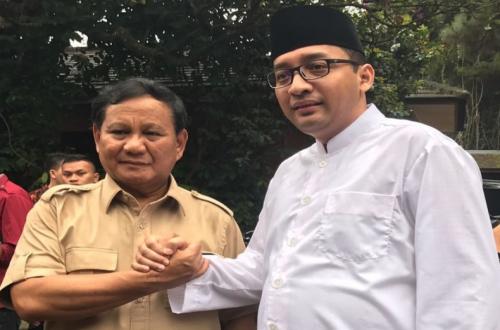
The Chairman of the Central Leadership Council of Indonesian Community Reconciliation (Ketum DPP Rekat Indonesia), Heikal Safar, has expressed support for the Indonesian President’s steps to eradicate corruption and gratification among all state officials. He agreed that law enforcement agencies should take action against those who embezzle large sums of state money.
“DPP Rekat Indonesia, together with all elements of Indonesian society, strongly supports Commission III of the House of Representatives in requesting that the Prosecutor’s Office form a team to investigate three major cases with Febrie Adriansyah, the former Junior Attorney General for Special Crimes at the Attorney General’s Office, as a suspect,” said Heikal in a press statement in Jakarta on Saturday (11/7/2026).
Heikal also supported the swift move by Commission III of the House of Representatives, led by Habiburokhman, to form a working committee to uncover the major cases directed at the former Junior Attorney General for Special Crimes. This came after Febrie stepped down from his position and was named a suspect by the Indonesian National Police’s Anti-Torture and Special Crimes Task Force (Kortastipidkor Polri).
Given these circumstances, Heikal expressed concern and regret that state officials are still involved in corruption and caught up in gratification. He therefore called on all Indonesian people to unite and play an active role in a total, structured evaluation of the powers and conduct of a number of state officials.
“I certainly hope that in the future there will be no more behaviour from state officials hoarding hundreds of billions, even trillions, of rupiah, or other valuable assets that harm the people’s money,” said Heikal.
He also urged the government to take firm action against corrupt state officials. In addition to pushing for the death penalty, Heikal wants the assets of corrupt officials to be seized until they are left impoverished, and for them to be punished as severely as possible. “This is to provide the maximum deterrent effect on officials or state apparatus proven to be corrupt,” Heikal explained.