
Rejang Lebong Rice Fields to Trial PM-AAS Planting Method
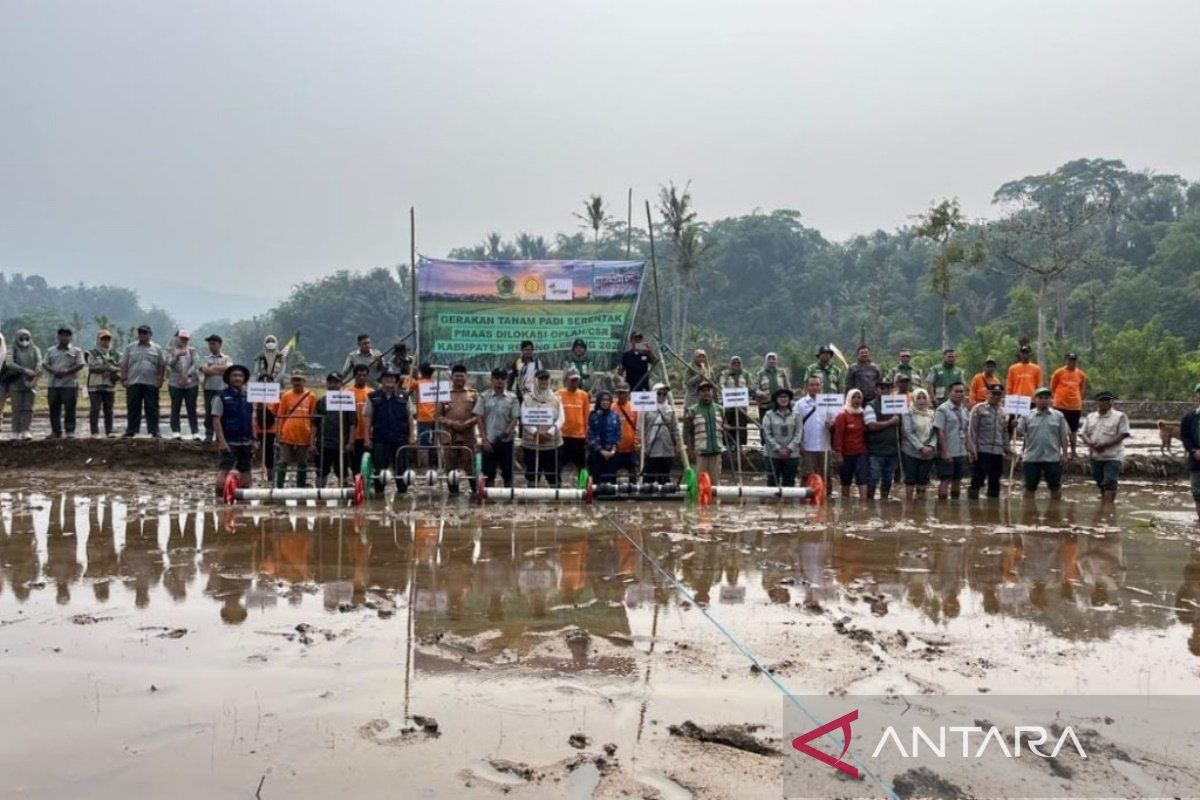
Rice fields belonging to the Setia Kawan Farmers’ Group in Kampung Baru Village, Selupu Rejang Sub-district, Rejang Lebong Regency, Bengkulu Province, have become a pilot site for the Agriculture Modern Advanced Agriculture System (PM-AAS) rice-planting method.
“The PM-AAS simultaneous planting campaign is part of the Agriculture Ministry’s programme to encourage modern rice cultivation among farmers, with the aim of increasing production while maintaining the sustainability of national food self-sufficiency,” said Didik Ari Supeno, head of the Rejang Lebong Regency working team at the Bengkulu Provincial Centre for the Application of Agricultural Modernisation (BBPMP), in Rejang Lebong on Monday.
He explained that the activity in Kampung Baru was the second phase, following an earlier self-funded planting to test the reliability of PM-AAS across two hectares.
“One of the main advantages of PM-AAS is its potential to increase rice productivity by up to twofold, from the previous four to five tonnes per hectare to eight to 10 tonnes per hectare,” Didik said.
As well as increasing harvests, PM-AAS is designed to save cultivation time and costs, while raising the cropping index to two or three times a year, depending on water availability and land conditions.
Didik added that increasing plant density is a key factor in the method. Whereas the jajar legowo planting system previously had limited plant populations, PM-AAS can double plant density, allowing one planting to produce as much as two plantings using conventional methods.
The PM-AAS programme in Rejang Lebong Regency is targeted to cover 883 hectares. Kampung Baru was selected because of its extensive rice fields and potential to serve as an example for other farmers’ groups adopting modern agricultural technology.
The Agriculture Ministry has held regular simultaneous planting campaigns since April 2026 to maintain continuity in national food production following the achievement of rice self-sufficiency in 2025.
Didik said maintaining food self-sufficiency required the involvement of multiple sectors, from the central and regional governments to agricultural extension workers and farmers.
“We recognise that planting will eventually be followed by harvesting. Production therefore needs to be maintained continuously so that it can meet national needs,” he said.
Meanwhile, R. Ade Fitriyeni, head of the Food Crops and Horticulture Division at the Rejang Lebong Agriculture and Fisheries Office, said the office was committed to supporting farmers’ groups through its extension workers.
“The PM-AAS planting campaign is a national programme. We provide support and distribute production inputs from the Agriculture Ministry, including seeds, fertiliser, pesticides and agricultural machinery,” Ade said.
She hoped that farmers’ groups in Selupu Rejang Sub-district would make effective use of the production inputs and optimise PM-AAS technology to strengthen regional food security and support national rice self-sufficiency.
Source: jawawa.id (https://jawawa.id/newsitem/rejang-lebong-rice-fields-to-trial-pm-aas-planting-method-1792417896)
Originally published by Antara (Indonesian) (https://www.antaranews.com/berita/5797381/sawah-di-rejang-lebong-jadi-percontohan-penerapan-metode-tanam-pm-aas), translated from Indonesian