
Regulatory Uncertainty, Not Just Labour Costs, Stifles Labour-Intensive Investment in Indonesia
Economist Ariyo DP Irhamna from the Institute for Development of Economics and Finance (Indef) has stated that the lack of investment flowing into labour-intensive industries is not solely due to high labour costs. According to him, regulatory uncertainty is the main factor causing investors to hold back on expansion into Indonesia.
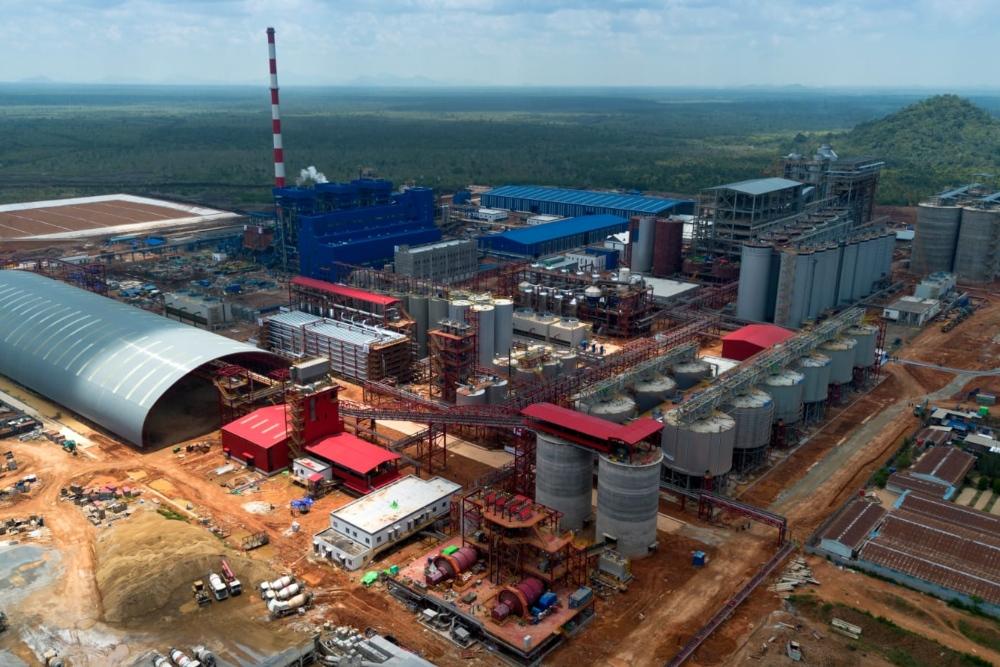
This assessment aligns with data from the Ministry of Investment and Downstreaming/BKPM, which shows that investment realisation in the second quarter of 2026 was still dominated by capital-intensive sectors. Of the total investment of Rp511.8 trillion, downstream projects absorbed Rp152.5 trillion, or nearly 30% of the total realisation. This investment largely flowed into the bauxite, nickel, copper, iron and steel, silica sand, and other downstream commodity industries. Conversely, labour-intensive industries received a much smaller share, with investment in the textile industry at only Rp182.23 billion, leather goods and footwear at Rp222.85 billion, rubber and plastics at Rp184.17 billion, wood at Rp348.09 billion, and machinery, electronics, and electrical equipment at Rp122.91 billion.
Ariyo stated that investors currently prioritise policy certainty over merely calculating the size of investment costs. He explained that over the past three years, the government has changed import policies several times, from Minister of Trade Regulation No. 36/2023, to Minister of Trade Regulation No. 8/2024, and then nine new ministerial trade regulations that came into effect on 30 June 2025. On the other hand, Minister of Manpower Regulation No. 7/2026 also limits outsourcing practices to six job categories, while discussions on the Draft Labour Law were still ongoing as of the end of July 2026. According to him, repeated regulatory changes make it difficult for businesses to project long-term investment certainty.
Beyond regulation, Ariyo believes the wage issue is also often misunderstood. He stressed that the problem is not the high national minimum wage, but rather the disparity in labour costs in several industrial areas that does not align with productivity. He cited the example of the Karawang Regency Minimum Wage in 2026 reaching Rp5.89 million, or about US$326, while Vietnam’s Region 1 minimum wage is around US$202. However, the productivity of Indonesian workers is only about 1.12 times that of Vietnam. Conversely, the Central Java Provincial Minimum Wage of Rp2.33 million and the Jepara Regency Minimum Wage of Rp2.76 million are actually still lower than Vietnam’s Region 1. He added that the wage formula itself has changed again through Government Regulation No. 49/2025, which revises Government Regulation No. 36/2021 on Wages.
Ariyo also believes that energy issues need to be separated between electricity and gas. According to him, Indonesia’s industrial electricity tariffs are actually still competitive compared to Vietnam. The I-3 category industrial electricity tariff is around 6.2 US dollar cents per kWh, not much different from Vietnam’s normal hour tariff of around 7 US dollar cents per kWh. However, the problem arises with industrial gas prices. The Specific Natural Gas Price programme only covers seven industrial sectors, so textiles, footwear, and furniture do not receive this facility. As a result, labour-intensive industries must purchase gas at around US$9.60 per MMBTU in Java, more expensive than HGBT recipient sectors which pay only around US$6.5 to US$7 per MMBTU. At the same time, the realisation of gas supply in West Java has also continued to decline, from 88.72% of allocation in 2023 to just 46.36% as of April 2026.
Furthermore, Ariyo assessed that fiscal incentive policies have also not favoured labour-intensive industries. He noted that the textile, footwear, and furniture industries are not yet included in the list of 18 pioneer industries receiving tax holiday facilities, while the base metal industry is a top priority. He compared this condition with Bangladesh, which provides a corporate income tax rate of 12% specifically for export garment manufacturers, whereas Indonesia still applies a general rate of 22% without sectoral treatment. In addition, funding costs are also a barrier. Ariyo mentioned that investment credit interest rates in Indonesia are around 7.9%, almost double that of Malaysia or Thailand. From a logistics perspective, Ariyo assessed that while it is a challenge, it is not the main factor explaining Indonesia’s low competitiveness. He noted that Bangladesh and Cambodia remain capable of being large garment exporters despite having lower Logistics Performance Index scores than Indonesia.
Source: jawawa.id (https://jawawa.id/newsitem/regulatory-uncertainty-not-just-labour-costs-stifles-labour-intensive-investment-in-indonesia-1785851441)
Originally published by ekonomi.bisnis.com (https://ekonomi.bisnis.com/read/20260804/257/1993540/ketidakpastian-regulasi-disebut-hambat-investasi-industri-padat-karya), translated from Indonesian