
Regulations Alone Are Insufficient: Parents' Role Deemed Key to the Success of PP TUNAS
Mental health among Indonesian children is increasingly becoming a serious concern as the number of children experiencing psychological pressure rises. The latest data from the Ministry of Health as of March 2026 shows a worrying situation where more and more children are struggling with psychological pressure, often unnoticed by those around them.
“Imagine a classroom with 30 students. Statistically, around three of them are experiencing anxiety or depression. This picture is not just an illustration but a reflection of the results from the Free Health Check Programme (CKG) screening of around 7 million children aged 7-17 across Indonesia,” stated the Ministry of Communication and Digital Affairs (Komdigi) team in a written statement on Wednesday (1/4/2026).
“The results show that 363,326 children (4.8%) are experiencing depressive symptoms and 338,316 children (4.4%) show signs of anxiety. These figures are even five times higher than in adult and elderly groups, indicating that psychological pressure is most acutely felt by the youngest generation,” it added.
These findings serve as an alarm that Indonesian children’s mental health is in a condition requiring serious attention.
Unseen Psychological Wounds
Unlike physical illnesses, mental health disorders in children often go unnoticed by the naked eye. Many parents only realise the condition when it has reached a serious stage.
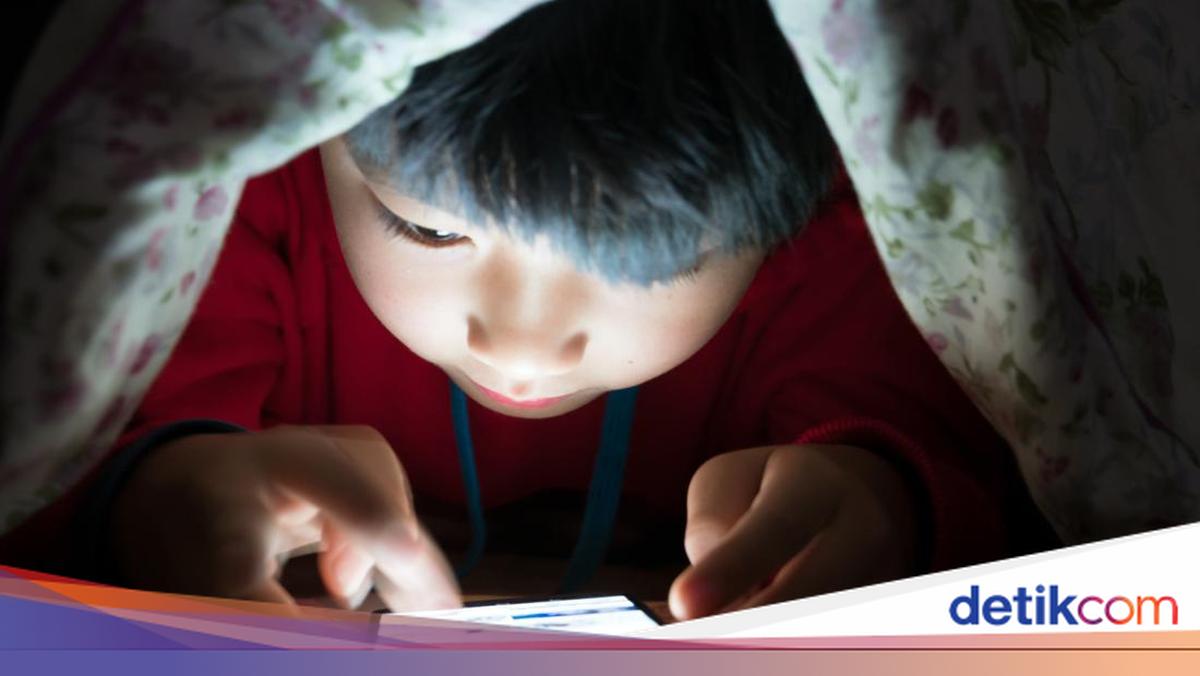
Symptoms often appear subtly, such as a child suddenly losing interest in previously enjoyed activities, withdrawing from social environments, becoming easily irritated, or spending hours in front of screens as a form of escape from unexpressed pressure.
Data from the Indonesian Child Protection Commission (KPAI) and Healing119.id shows that the main triggers of children’s mental health crises often come from their immediate environment. Family conflicts and unhealthy parenting patterns contribute to around 24-46% of psychological pressure cases.
Additionally, bullying contributes 14-18%, followed by individual psychological issues around 8-26%, and academic pressure at 7-16%. This situation indicates that children’s mental health is closely linked to family dynamics, school environments, and the social demands they face.
The Digital World as a Pressure Amplifier
The development of digital technology further amplifies the pressure experienced by children. Social media is not only a means of communication but also a space where social pressure occurs relentlessly.
Digital platforms with algorithms designed to increase user engagement can have varying impacts on children. They are potentially exposed to unrealistic body standards, violent content, and interactions with strangers without supervision.
Moreover, bullying now also occurs in the digital space in the form of cyberbullying, which can happen around the clock. Several studies show that children using social media for more than two hours a day have a higher risk of experiencing depression and anxiety.
Phenomena such as fear of missing out (FOMO), constant social comparison, and sleep disturbances due to screen use at night become additional factors that worsen children’s psychological conditions.
The surge in suicide attempts among teenagers also shows a worrying trend. Based on data from the global school health survey, there was an increase from 3.9% in 2015 to 10.7% in 2023, nearly three times over eight years. This increase coincides with the era of massive smartphone and social media penetration among teenagers.
Children Need a Safe Space to Be Heard
Various developmental psychology studies show that the quality of relationships with parents is the strongest protective factor for children’s mental health. Children who feel heard, accepted, and non-judged tend to have higher resilience. Conversely, closed or critical communication can push children to seek escape, including into the digital world.
Ironically, data shows that family conflicts are one of the biggest factors in children’s mental health crises. Overly demanding parenting patterns, one-way communication, or minimal time between parents and children can weaken the emotional bonds that are actually very much needed during growth.
When this relationship weakens, children often seek validation on social media, which is not actually designed to provide healthy emotional support.
PP TUNAS as an Umbrella of Protection
Seeing the complexity of these challenges, the Indonesian government has introduced Government Regulation Number 17 of 2025 on the Governance of Electronic Systems in Child Protection (PP TUNAS).
This regulation aims to ensure that digital platforms no longer allow children to access risky services without adequate protection. Starting from 28 March 2026, several platforms such as YouTube, TikTok, Instagram, Facebook, and similar services cannot be accessed by users under 16 years old without age verification mechanisms.
The sanctions in this policy are not directed at children or parents, but at digital platforms that do not provide adequate protection systems. PP TUNAS serves as an umbrella of protection, but does not replace the family’s role in building healthy emotional relationships with children.
Parents’ Role as the Key to Effectiveness
The effectiveness of this policy greatly depends on the role of the family. The government is also strengthening efforts through the Joint Ministerial Decree (SKB) on Child Mental Health, signed by nine ministries and institutions on 5 March 2026, which positions the family as the first line of defence.
The role of parents includes various aspects, from building positive parenting patterns, recognising changes in children’s behaviour early, to obtaining first aid training.
Source: jawawa.id (https://jawawa.id/newsitem/regulations-alone-are-insufficient-parents-role-deemed-key-to-the-success-of-pp-tunas-1775040657)
Originally published by detikcom (https://news.detik.com/berita/d-8425425/tak-cukup-regulasi-peran-orang-tua-dinilai-jadi-kunci-berhasilnya-pp-tunas), translated from Indonesian