
Regulation No. 9/2026 strengthens the quality of national scientific journals
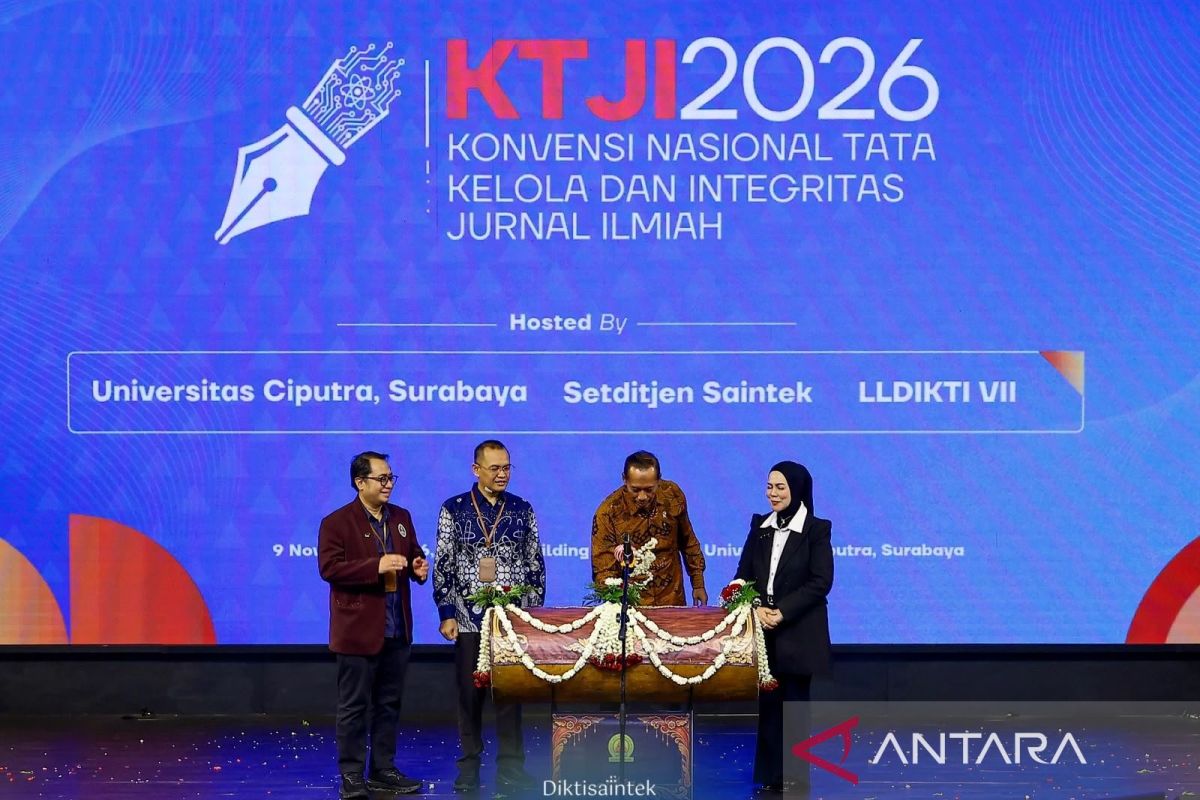
Jakarta (ANTARA) – The Ministry of Higher Education, Science and Technology (Kemdiktisaintek) launched Ministerial Regulation No. 9 of 2026 on the Accreditation of Scientific Journals at the opening of the 2026 National Convention on Scientific Journal Governance and Integrity (KTJI).
Higher Education, Science and Technology Minister Brian Yuliarto said that the quality of scientific publications must be built through a rigorous peer-review process.
“We want to build genuinely high-quality journals, so that ultimately we can ensure integrity in journal management,” he said at the KTJI 2026 event, which was attended online in Jakarta on Monday.
The minister stressed that developing high-quality scientific journals must provide the foundation for ensuring integrity in their management.
He also cautioned that scientific publications should not be focused merely on meeting the requirements for promotion, but should make a genuine contribution to the development of knowledge.
Scientific journals, he said, are the public record of science and play an important role in testing, debating, correcting and passing on knowledge to the next generation.
“Publication is a link in the knowledge cycle, moving from research and dissemination to use, and then to publication that becomes an invention, patent or intellectual property, which is subsequently applied in real-world applications and products used by the public,” Brian said.
He also highlighted how the development of artificial intelligence (AI) is creating increasingly complex challenges for safeguarding the integrity of scientific publications.
Academic honesty, editorial ethics, journal managers’ accountability, the quality of peer review, and the prevention of plagiarism and unethical publishing practices must therefore be continually strengthened and consistently upheld.
“Let us work together as part of one ecosystem with one goal: to build Indonesian scholarly communication that is principled, high-quality and trusted, and ultimately contributes to the advancement of society,” Brian said.
Regulation No. 9 of 2026 establishes two accreditation standards: journal governance and the quality of scientific articles. It simplifies the accreditation system from six grades to four, with accreditation valid for five years.
Publishers may apply for reaccreditation no later than six months before their accreditation expires. If they do not apply before the expiry date, the journal will be declared unaccredited.
Monitoring will be conducted periodically and, when necessary, in response to verified public complaints and/or other verifiable information. Evaluation findings may form the basis for downgrading a journal, temporarily suspending its accreditation or revoking its accredited status.
Regulation No. 9 of 2026 also revokes and replaces Minister of Research, Technology and Higher Education Regulation No. 9 of 2018 on the Accreditation of Scientific Journals. Accreditation grades awarded under the previous regulation will remain valid until their expiry dates.
Source: jawawa.id (https://jawawa.id/newsitem/regulation-no-9-2026-strengthens-the-quality-of-national-scientific-journals-1794228737)
Originally published by Antara (Indonesian) (https://www.antaranews.com/berita/5842111/permendiktisaintek-9-2026-perkuat-mutu-jurnal-ilmiah-nasional), translated from Indonesian