
Regular Eye Exams Help Elderly Maintain Quality of Vision
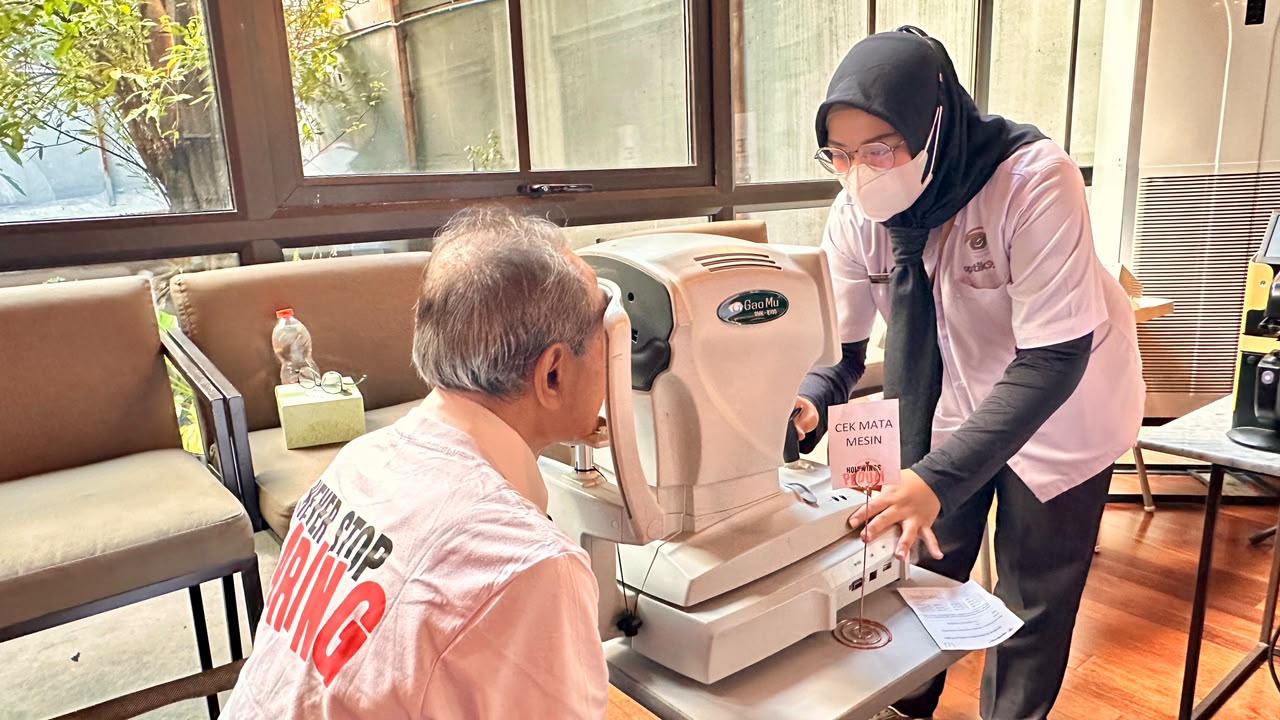
Declining vision function is one of the most common health issues experienced by people as they age. Unfortunately, many eye disorders develop without symptoms in the early stages, so they are only noticed when the condition has become severe. Regular eye examinations can help detect various diseases earlier and prevent a decline in the quality of life in old age. This awareness is one of the main reasons why expanding access to eye health examinations is important for the community, especially the elderly. Besides helping to assess vision conditions, examinations also ensure that a person uses glasses with the correct prescription so they can continue carrying out daily activities independently. In an effort to support elderly health, Holywings Peduli held a free eye examination event, an educational seminar on eye health, and distributed free reading glasses at Cecilia Bar, Jakarta, on Saturday (11/7). The event, themed ‘Healthy Eyes, Happy Seniors’, was attended by elderly residents from Petogogan Village, South Jakarta. Participants underwent a series of examinations, from visual acuity tests and consultations with Refractionist Opticians (RO) or optometrists, to refraction tests to determine their vision correction needs. After the examination, participants who needed them received reading glasses directly according to their examination results. In addition to the examination services, participants also attended a seminar titled ‘The Importance of Maintaining Eye Health in the Elderly’. The session explained that while declining vision function is a part of the ageing process, various eye disorders can still be detected early through routine check-ups, thereby reducing the risk of vision loss. Andrew Susanto, President Commissioner of Holywings Group and Chair of the Holywings Peduli Programme, said that access to eye examinations and visual aids is an important need for the elderly. ‘We hope this activity can help the elderly gain access to good eye examinations and obtain glasses that suit their needs. Good vision will allow them to remain independent, productive, and enjoy daily activities more comfortably. Through Holywings Peduli, we will continue to present social programmes that provide real benefits to the community,’ said Andrew. Optometrist Level VI Zakaria Efendi, S.Tr.Kes., S.KM., M.M., explained that individuals aged 40-64 are advised to undergo a complete eye examination every one to two years, even if they have no complaints. Meanwhile, those over 65 should have their eyes checked at least once a year. The frequency of examinations can be higher for people with diabetes, hypertension, a family history of glaucoma, high myopia, or those who have undergone eye surgery. ‘The consideration is that many eye diseases in old age develop slowly without symptoms in the early stages. Routine examinations help detect diseases earlier, so the chance of preserving vision is better,’ he said. According to Zakaria, there are several eye disorders most commonly found in the elderly in Indonesia. The first is presbyopia, or old-age sight, a condition where the eyes begin to have difficulty seeing near objects. This disorder is experienced by almost everyone after the age of 40 and can generally be overcome with the use of reading glasses or multifocal lenses. Another is cataracts, a leading cause of blindness that is actually treatable. Cataracts occur when the eye’s lens becomes cloudy, making vision appear foggy, colours look dull, and sufferers often feel glare when looking at light. Treatment is mainly through surgery if the condition interferes with activities. Another disorder to watch out for is glaucoma, often called the ‘thief of sight’ because it develops without symptoms in the early stages. This disease is caused by damage to the optic nerve, often associated with high eye pressure, and can cause permanent blindness if treated too late. The elderly are also at risk of age-related macular degeneration (AMD), which attacks the centre of vision, making it difficult for sufferers to read, recognise faces, or see straight lines normally. For people with diabetes, diabetic retinopathy is a serious threat due to damage to the retinal blood vessels caused by high blood sugar levels. This disease also often shows no symptoms in its early stages. Another common disorder is dry eye, which occurs due to reduced tear production, causing the eyes to feel gritty, sore, tire easily, and sometimes vision becomes blurry. Zakaria reminded that changing spectacle lenses should not be based on a fixed schedule, but rather on the results of an eye examination. Lenses should be replaced when the prescription changes, vision becomes blurry again, complaints of headaches or eye fatigue appear, or when the lenses are damaged and heavily scratched. Therefore, regular eye examinations are far more important than simply replacing lenses every year. He also corrected several misconceptions still prevalent in the community. One is the belief that reading too much can worsen nearsightedness or farsightedness. According to him, reading does not cause myopia or presbyopia to become more severe. What can happen is eye fatigue if lighting is poor, the reading position is uncomfortable, or the glasses prescription is no longer appropriate. In fact, reading remains a good activity for maintaining cognitive function in the elderly.