
Regional Subsidy Collaboration and the TransJakarta Tariff Formula in Jabodetabek
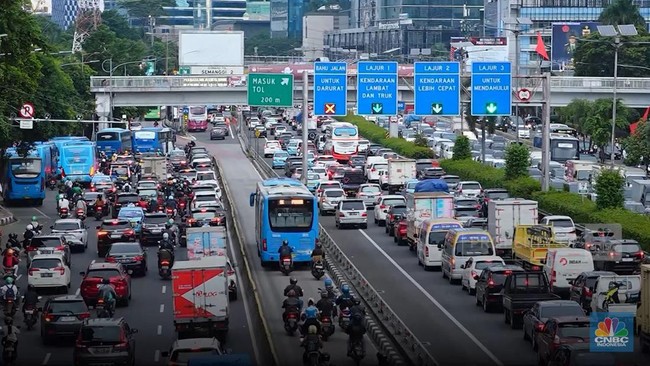
The discussion regarding the planned adjustment of TransJakarta tariffs has resurfaced in the public sphere. Amid the increasing mobility needs of the Jabodetabek community, the DKI Jakarta Provincial Government is reviewing a more rational tariff scheme, particularly for Transjabodetabek services covering long-distance routes such as Blok M-Soekarno-Hatta International Airport and Bogor-Blok M. This discourse has elicited various responses, ranging from public concern over rising transport costs to support for efforts to maintain the sustainability of public transport services.
This discussion cannot be viewed merely as a matter of tariff increases. Behind the debated figures lies a more fundamental issue: how to ensure public transport remains affordable for the community while being fiscally sustainable for the regional government. Since commencing operations on 15 January 2004, TransJakarta’s base fare of Rp3,500 has remained practically unchanged. For over two decades, the public has enjoyed relatively cheap public transport services compared to other modes. However, economic conditions, operational costs, energy prices, inflation, and network expansion have changed significantly since TransJakarta was first launched.
The DKI Jakarta Provincial Government has been shouldering a substantial subsidy burden. In the current fiscal year, total transport subsidies reached Rp4.77 trillion, with approximately Rp3.75 trillion allocated specifically for TransJakarta operations. On average, each passenger journey receives a subsidy of around Rp12,258, meaning the fare paid by users only reflects a small fraction of the actual service cost. This data demonstrates that TransJakarta’s success has been supported not only by ticket revenue but also by a massive fiscal commitment from the regional government. The question is how long this burden can be borne by a single regional government, especially as the benefits of the service are increasingly enjoyed by residents from various buffer zones around Jakarta.
This question becomes more pertinent when examining the characteristics of Transjabodetabek services. The Bogor-Blok M corridor, for example, spans a journey length of over 113 kilometres with a travel time of about 90 minutes. Meanwhile, the Blok M-Soekarno-Hatta Airport route covers approximately 65 kilometres, with travel times ranging from 60 to 120 minutes depending on traffic conditions. Both routes are currently subject to the same tariff as regular inner-city corridors.
From a transport economics perspective, a uniform tariff scheme offers advantages in simplicity and ease of implementation. However, as service coverage expands and journey distances become more varied, a flat tariff for all routes risks creating an imbalance between service costs and operator revenue. Nevertheless, the solution to this problem should not be solely placed on the public through fare increases. Public transport is a basic service with social, economic, and environmental functions. A poorly designed tariff increase could reduce public interest in using public transport, encourage a return to private vehicle use, worsen congestion, increase fuel consumption, and degrade urban air quality.
One solution worth considering is building a synergistic financing scheme among the regions within the Jabodetabek agglomeration area. The benefits of Transjabodetabek services are not only felt by Jakarta residents but also by the people of Bogor, Depok, Tangerang, and Bekasi, who commute daily to the capital for work, study, and other economic activities. This mobility generates significant economic added value that is mutually beneficial for the entire metropolitan area, so the burden of financing public services should not be borne by a single region.
In this context, it is relevant to borrow the ‘Anak Ayam Grip Theory’ introduced by IPDN Professor Djohermansyah Djohan. According to him, the state must be present with the right grip: firm enough to maintain direction and ensure the common interest, yet loose enough to give regions room to develop according to their authority. Ultimately, the goal of regional autonomy is neither to enlarge the power of regional governments nor to excessively strengthen central government control. If the grip is too tight, autonomy loses its meaning. Conversely, if it is too loose, the state risks losing its ability to maintain integration and the effectiveness of public services.
From a fiscal authority standpoint, the central government needs to play a role as a facilitator and mediator in formulating equitable tariff policies. The Ministry of Transportation, along with institutions possessing coordination and ‘debottlenecking’ functions such as the Executive Office of the President (KSP), should encourage the creation of a collaborative financing mechanism among regional governments. This way, subsidies and fiscal support for Transjabodetabek services can be shared proportionally based on the benefits received by each region. This approach not only reflects the principle of fiscal justice but also strengthens the spirit of inter-regional cooperation in managing shared challenges within the Jabodetabek agglomeration area. Therefore, the debate on adjusting Transjabodetabek tariffs should not stop at the choice of raising or maintaining them.