
Regional Spatial Plan Regulation Serves as Shield for Cianjur Regency to Minimise Land Conversion
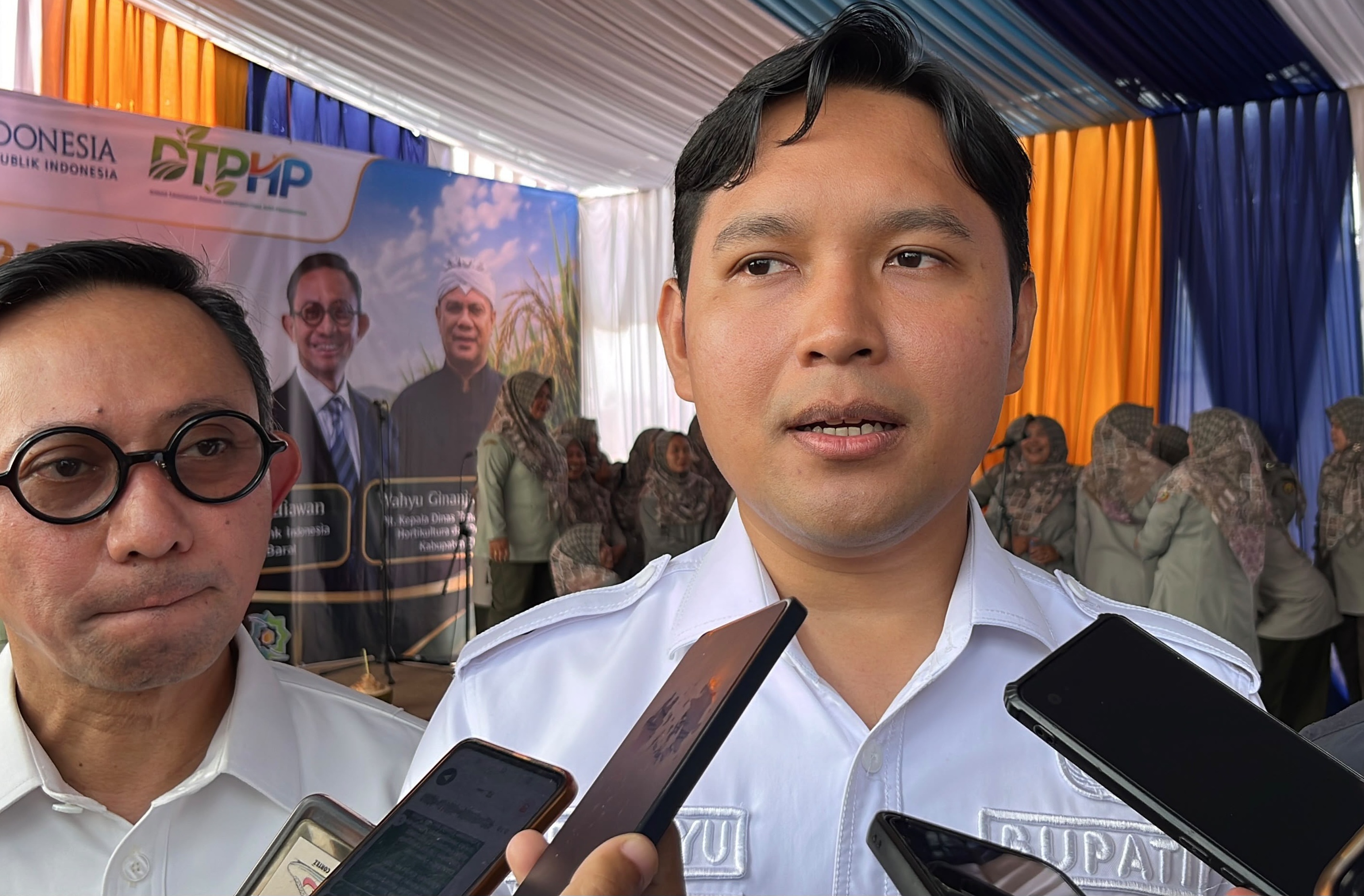
The Cianjur Regency Government, West Java, is strictly monitoring land conversion for industrialisation needs. One of these efforts is formalised through the issuance of Regional Regulation (Perda) Number 7/2024 concerning the Regional Spatial Plan (RTRW).
The Regent of Cianjur, Muhammad Wahyu Ferdian, stated that preventing land conversion is a priority that aligns with both provincial and central government objectives. Consequently, the legal framework has been revised through the re-issuance of Perda Number 7/2024 regarding the RTRW, alongside the Detailed Spatial Plan (RDTR).
“This (RTRW and RDTR) is an implementation to limit land conversion, especially sustainable paddy fields,” said Wahyu on Sunday (2/8).
Wahyu emphasised that the local government continues to strive to ensure that productive and superior rice fields are not ‘encroached upon’ for industrial needs. Cianjur Regency also possesses the Regional Regulation on Sustainable Food Agricultural Land (LP2B), which serves to protect against the threat of conversion.
“For example, with Pandanwangi rice, we continue to protect this superior variety so that its land is not eroded by conversion. This ensures its long-term sustainability,” he asserted.
Local authorities have strictly regulated the compensation for land used for industrialisation. According to the regulation, land replacement must be three times the size of the land utilised.
“In addition to land replacement, we are also opening or creating new rice fields,” he added.
Amidst the threat of drought due to the impact of the dry season, the Cianjur Regency Government is working to maintain targets for rice productivity or harvested dry grain. Various efforts are being undertaken, including increasing production indices through the use of organic fertilisers.
Recently, a grand harvest of organic rice was conducted at a demonstration plot (demplot) in Sukamulya Village, Warungkondang District. On a 5,000-hectare area, the organic rice production exceeded expectations.
The Acting Head of the Food Crop, Horticulture, and Plantation Service (DTPHP) of Cianjur Regency, Wahyu Ginanjar, noted that there are five organic rice demonstration plots in Cianjur Regency. In addition to Warungkondang District, other sites are located in Cilaku, Cibeber, Karangtengah, and Cianjur Districts.
“Management is carried out by farmer groups. Each plot covers 5,000 square metres. Therefore, these are demonstration plots and have not yet been implemented on a large scale,” said Wahyu.
Despite being demonstration plots, Wahyu noted that productivity can reach 8 tonnes per hectare, indicating highly satisfactory results. “In Sukamulya Village, Warungkondang District, for instance, average productivity is usually 5-6 tonnes per hectare using inorganic fertilisers,” he explained.
The organic rice farming pattern in the Regency is also supported by Bank Indonesia. Wahyu mentioned that efforts to expand organic rice planting areas are currently undergoing further study.
“If we are to scale up or expand, we will conduct further studies,” he concluded.