
Regional gaps in climate change reporting remain high
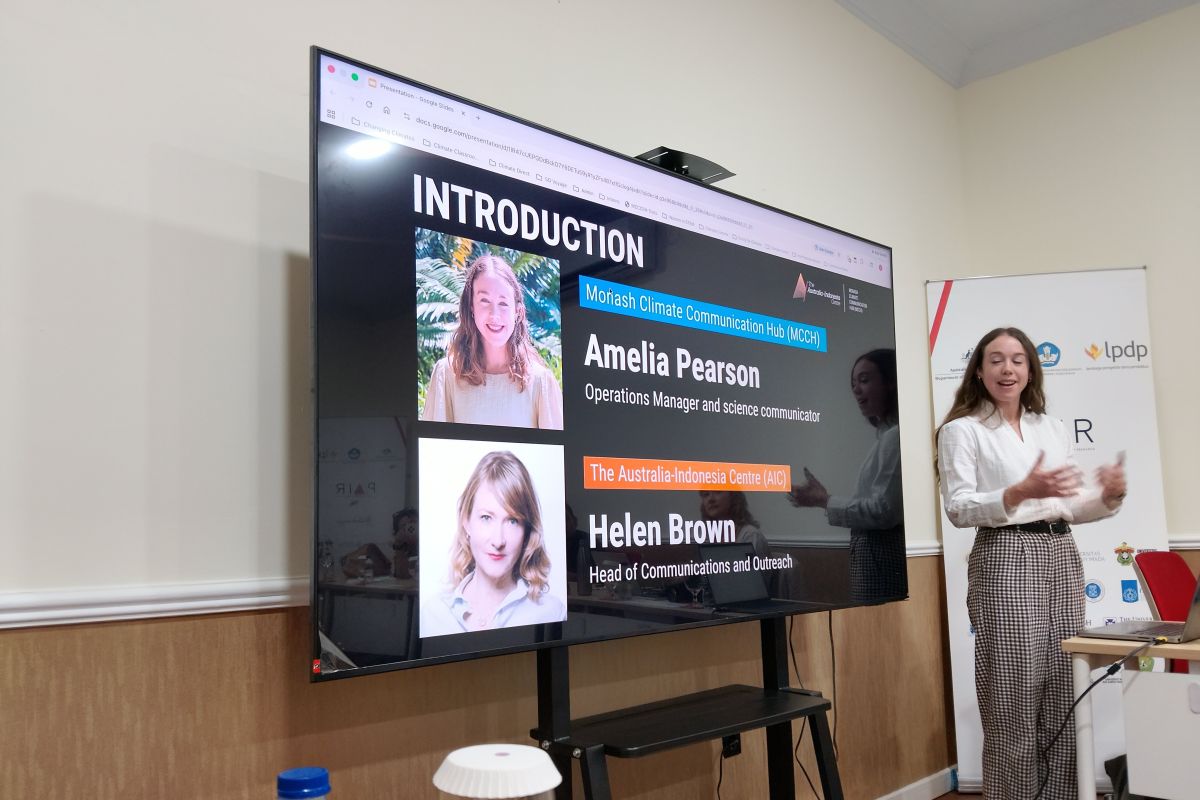
One of the gaps identified is that regional media still rarely links extreme weather to climate change caused by human activities. Makassar — The results of a collaborative study by the Monash Climate Communication Hub (MCCH), the Australia-Indonesia Centre (AIC), and Hasanuddin University (Unhas) indicate that gaps in regional climate change reporting remain high. ‘One of these gaps shows that regional media still rarely link extreme weather to climate change caused by human activities,’ said MCCH Operations Manager and Science Communicator Amelia Pearson in Makassar on Wednesday.
She said that most regional reporting focuses more on the impacts of disasters and their handling, rather than examining the long-term causes driving climate change.
According to Amelia, journalists’ understanding of climate and energy issues remains not commensurate with the needs of increasingly complex reporting. The situation is compounded by a lack of training in climate and energy concepts available to journalists.
She revealed that scholarly sources are still very rarely used in reporting. Of the entire body of news stories studied, only about five per cent of information came from scientists or experts on climate change.
Nevertheless, Amelia said journalists have a strong interest in deepening their understanding of climate and energy issues. They are seen as needing easier access to scientific information, research data, and networks of trusted sources to elevate reporting quality.
These findings underpin the implementation of the ‘Supporting Climate Reporting in Indonesian Newsroom’ programme initiated by MCCH, AIC, and Unhas. The programme involves 15 journalists from South Sulawesi to strengthen regional climate journalism capacity.
The study findings also show that climate reporting in Indonesia to date has relied more on government sources (45 percent) and the business sector (40 percent).
Meanwhile scientific perspectives and the voices of affected communities still receive relatively little space in reporting.
In the programme, journalists participate in a range of activities, from discussions in Makassar to field visits to Laikang coastal village in Takalar Regency.
At the site, participants directly observe the climate change challenges faced by fishermen and seaweed farmers. Some selected journalists also had the opportunity to undertake intensive training in Melbourne with climate experts from Monash University, including Professor Andrew Watkins.
They took part in solution-based journalism training and discussed with researchers and Australian journalists about climate reporting. The collaboration among the three institutions is regarded as successfully opening up opportunities to strengthen the relationship between journalists and the scientific community.
The programme is expected to boost journalists’ confidence in delivering climate coverage that is more in-depth, data-driven, and impactful for Indonesian society.