
Regional Employee Spending Limit of 30% Requested to Be Relaxed
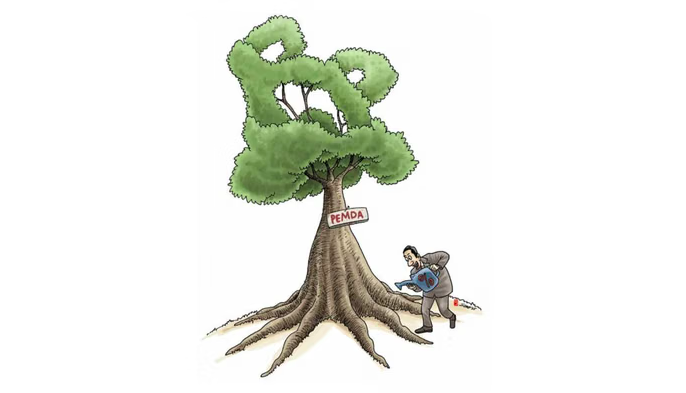
The central government is requested to relax the provision on maximum employee spending of 30% from the Regional Revenue and Expenditure Budget (APBD) for regional governments in 2027. This is because regional governments are deemed unprepared to implement it next year.
Autonomy expert and IPDN Professor Djohermansyah Djohan assesses that the 30% maximum employee spending provision from the APBD, as stipulated in Law No. 1/2022 on Financial Relations between the Central Government and Regional Governments (HKPD), will burden regional governments amid the current developing situation.
The law, enacted four years ago, assumes no specific dynamics that could alter regional policies and financial conditions. However, in recent years, many regional governments have added numbers of Government Employees with Work Agreements (PPPK), and there have been cuts to Transfer Funds to Regions (TKD).
“But suddenly, the intake of PPPK has surged, allowed by the ASN Law No. 30/2022, the amendment. Then, honorary employees were transferred to PPPK. That was promised by the central government during Joko Widodo’s administration: PPPK salaries would be funded from the APBN through TKD. It turns out, later on, the PPPK spending from the APBN was not provided, and it must be borne by the APBD,” said Djohermansyah when contacted on Monday (6/4).
The increasing burden of employee spending on the APBD, he continued, further pressures regional finances because in 2025 and 2026 the central government is cutting TKD funds. Thus, regional governments are in a squeezed position as they are not allowed to terminate PPPK arbitrarily since their status has become ASN.
“So it’s all tangled up. Meanwhile, opportunities to increase Local Own-Source Revenue (PAD) from taxes and levies are somewhat difficult. Because the economy is tough, if raised, it will get protests from the public,” explained Djohermansyah.
He assesses that if the maximum 30% employee spending obligation from the APBD is still implemented in 2027, instability will occur in the regions. Because the HKPD Law also regulates sanctions for regions unable to meet the provision, namely TKD cuts. If so, regional finances will be even more pressured.
Besides TKD cuts, another sanction regulated in the HKPD Law if regional governments cannot suppress employee spending to a maximum of 30% from the APBD is the postponement of the head of region’s financial rights. That, said Djohermansyah, will cause impacts on stability in the regions.
Therefore, he requests the central government to review or provide tolerance for the timeframe of implementing the regional employee spending provision. “If we want something more rational, to better safeguard regional stability, the 30% should be reviewed, given tolerance, relaxed. So there should be relaxation from the central government, the Ministry of Finance together with the Ministry of Home Affairs and the National Civil Service Agency to sit together and decide on the relaxation. Don’t implement it first in 2027. Meaning there is still room to adjust that policy,” stated Djohermansyah.
“Another thing is (regional governments) stop recruitment first, don’t accept PPPK yet, hold it off, postpone it first, that’s important to warn about. In addition, also stop building office buildings, stop proposals for regional splits first. That needs to be stopped first. So stop accepting ASN, stop building offices, stop split proposals,” he concluded.