
Regent: Urban drainage development could reduce flooding by 45 per cent
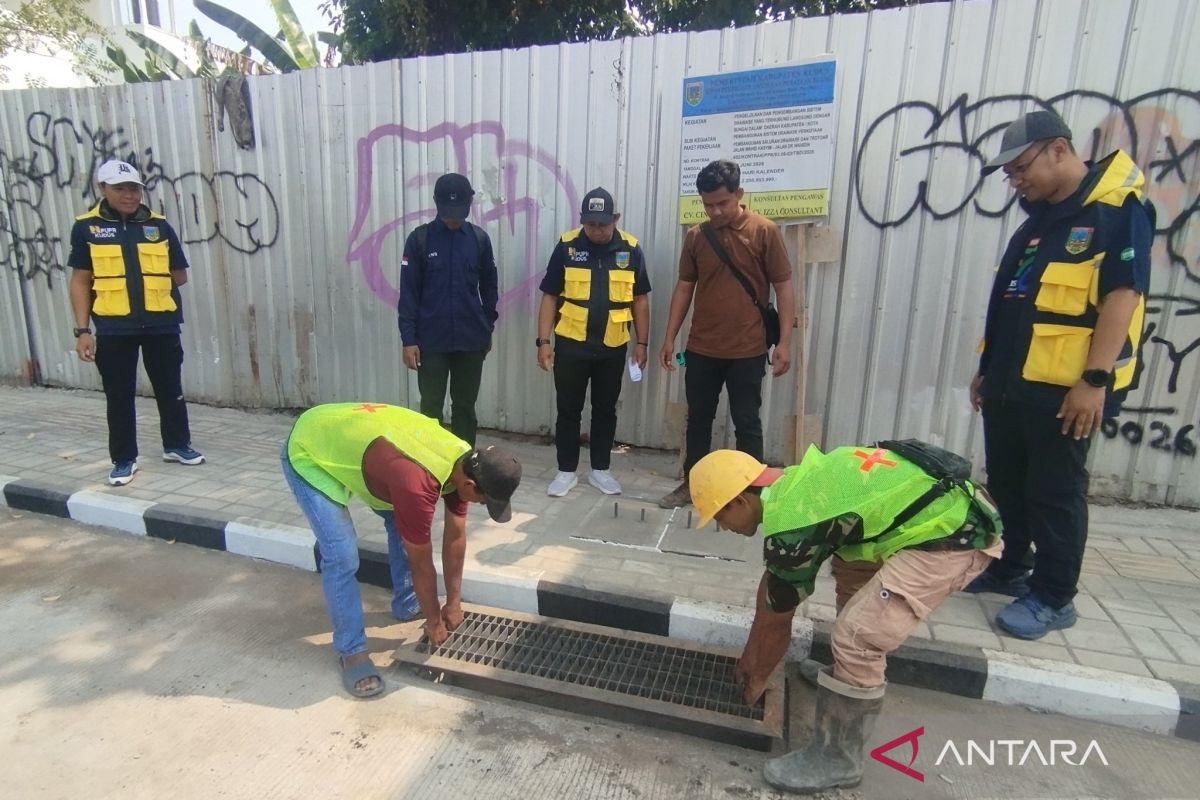
The Kudus Regency Government, Central Java, is strengthening the urban drainage system through the construction and revitalisation of drainage channels, which is estimated to be able to reduce the potential for flood accumulation by up to 45 per cent, stated Kudus Regent Sam’ani Intakoris.
“The construction and revitalisation of drainage channels are not limited to this year, as efforts began in previous years to reduce the potential for flooding in various locations,” he said in Kudus on Friday.
According to him, drainage development continues this year, including increasing channel capacity to accommodate and divert water during periods of high rainfall. With larger channel capacities and connected disposal systems, it is hoped that the stagnant water that has long disrupted community activities can be suppressed.
The Regent also urged the public to help maintain the function of the drainage system by not disposing of rubbish in the channels, as they will not function optimally in diverting water if they are blocked by waste.
Meanwhile, the Head of the Building and Drainage Division of the Kudint Kudus Public Works and Spatial Planning Office (PUPR), Hammad Riza, stated that there are approximately 30 locations targeted for new drainage construction or revitalisation this year.
“There are approximately 30 points in total. All of these are underway, and the average progress of the work is above 50 per cent,” he said.
He explained that one of the projects currently nearing completion is located on the Wahid Hasyim and Wahidin road sections. The progress of work at these locations has reached 96 per cent.
On the Wahidin road section, the drainage is being built using u-ditch measuring 1x1 metre, while on Wahid Hasyim road, 60x60 centimetre (cm) u-ditch is being used. The current stage involves the installation of inlet grills, followed by tidying and cleaning.
Hammad explained that the construction on these sections is part of an effort to integrate drainage flows from several road sections so they can be directed towards the river. In the future, these channels can support the drainage systems on Jalan Mangga, Lukmono Hadi Ramelan, and Ahmad Yani, with the final discharge point being the Gelis River.
He noted that not all drainage networks in Kudus Regency are currently integrated with rivers. For urban areas, most channels are already connected, but there are still several points that require attention.
One area that still requires handling is around the western part of Jalan Wahidin, starting from the Nur Hadi intersection. However, budgets have been proposed through both the Regency and Provincial Budgets (APBD) to address several flood-prone points, including the Jalan Kiai Telingsing area.
According to him, budget constraints mean that drainage management cannot be carried out simultaneously across the entire region, so it is being done in stages, prioritising urban areas and starting from the downstream sections.
Hammad added that, overall, about 60 per cent of the drainage network in Kudus Regency is now integrated with disposal channels or rivers. Several areas outside the urban zones still have drainage channels that are either unavailable or not yet connected to disposal systems.