
Regenerative Agriculture Used to Save Fireflies in Bali's Taro Village
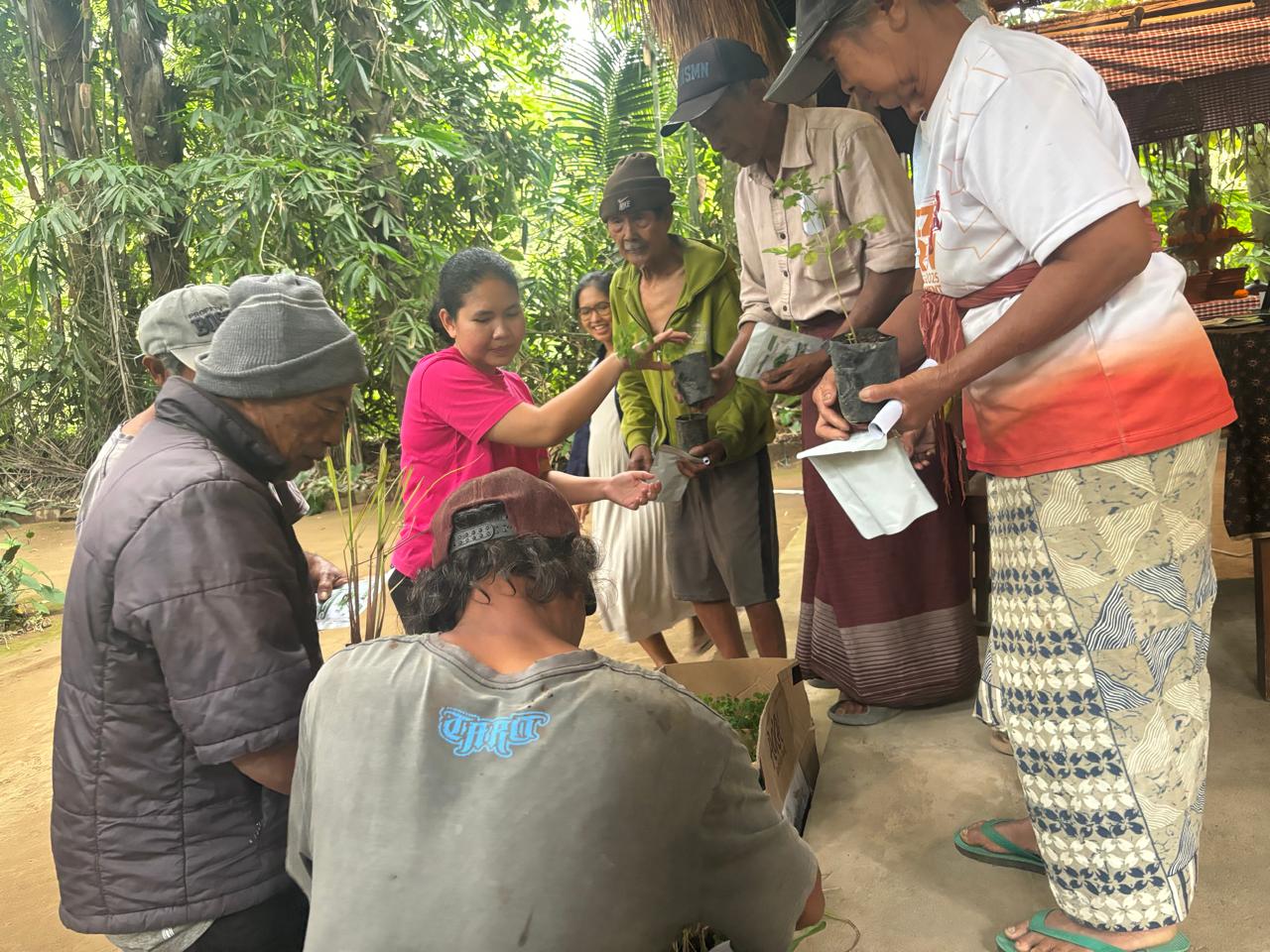
Firefly conservation efforts in Taro Village, Tegallalang District, Gianyar Regency, Bali, are being carried out through strengthening community-based regenerative farming. This step is taken to protect firefly habitats that are threatened by land conversion as well as excessive use of pesticides and chemical fertilisers.
The programme is run through Community-Based Empowerment funded by the Directorate of Research and Community Service of Warmadewa University. Mentoring with the Tegal Dukuh Organic Farmers Group in Taro Village has been ongoing since 24 May until 8 August 2026.
The head of the service team and academic from the Faculty of Agriculture, Science, and Technology at Warmadewa University, Desak Ketut Tristiana Sukmadewi, said fireflies are a natural indicator of environmental conditions.
“Fireflies are natural bioindicators. When soil and water ecosystems are polluted by pesticides, their population will decline sharply,” said Desak when confirmed in Denpasar on Thursday (13/8).
According to her, regenerative farming is not only directed at restoring soil fertility and reducing production costs, but also at building a buffer zone that is safe for firefly habitats.
PROGRAMME IMPLEMENTATION
The programme began with the preparation of baseline data on the biophysical condition of the soil through laboratory testing. The examination included soil pH, organic matter content, NPK nutrients, Cation Exchange Capacity, pesticide residues, and soil microbial diversity.
The data was used as the basis for applying the Soil Health Index to monitor land conditions regularly every six months. The team also created a demonstration plot of 1,000 square metres as a learning facility for farmers.
At the site, farmers received mentoring on environmentally friendly cultivation, reducing chemical input use by at least 30 percent, making organic fertiliser, and biological pest control.
“We are not only inviting farmers to switch to environmentally friendly practices intuitively, but proving it through scientific data calculations and farm business cost analysis,” said Desak.
In addition to improving soil quality, the programme includes the preparation of a conservation area masterplan based on adaptive landscape architecture. The agricultural and conservation area of Taro Village is designed in three zones: a core habitat zone, a buffer zone, and a regenerative farming zone.
The synergy between academics, farmer groups, and applied research funding support is expected to make Taro Village a model for community-based conservation. The programme is also directed at increasing the area’s resilience to climate change while supporting the development of ecotourism in Bali.
Source: jawawa.id (https://jawawa.id/newsitem/regenerative-agriculture-used-to-save-fireflies-in-balis-taro-village-1786704685)
Originally published by Media Indonesia (https://mediaindonesia.com/nusantara/921893/pertanian-regeneratif-jadi-upaya-selamatkan-kunang-kunang-di-desa-taro), translated from Indonesian