
Regarding Illegal Hiking on Mount Merapi, DPR RI Stresses That Safety Aspects Are Non-Negotiable
Social media platforms are believed to be able to prevent age falsification by children.
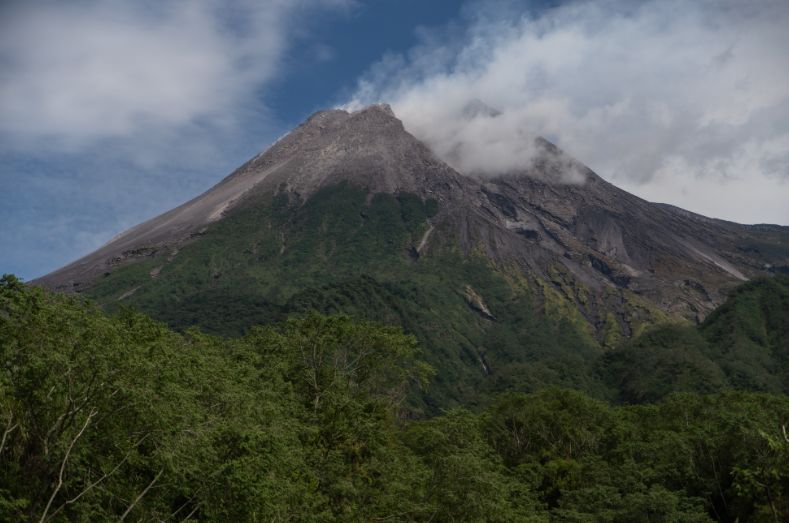
Alex Indra Lukman, Deputy Chair of Commission IV of the House of Representatives (DPR RI), has affirmed that safety is the foremost consideration for human activity in the disaster-prone zone of Mount Merapi. His remarks came in response to the prevalence of illegal climbing activity at the summit of Mount Merapi.
“Safety is the primary aspect that cannot be compromised,” he asserted during a Specific Working Visit to the Mount Merapi National Park Office (Balai TNGM) on Friday (10 July).
He also affirmed that, with regard to illegal mining and other violations, he is encouraging the Directorate General of Law Enforcement at the Ministry of Forestry to act proactively and cooperate with law enforcement agencies.
According to him, central and regional governments are also obliged to work together to consider safe alternative livelihood options for local residents, because banning activities without providing welfare solutions is unacceptable. This means that law enforcement against illegal activity within the Mount Merapi National Park (TNGM) area must go hand in hand with economic solutions for local communities.
Meanwhile, the Head of the Mount Merapi National Park Office, Tutut Heri Wibowo, outlined a number of management problems currently facing the park. There are at least five crucial challenges in managing the conservation area and its buffer zone that require intensive cross-sectoral handling.
“At present we face complex dynamics, ranging from escalating human-wildlife conflict, rampant illegal mining of volcanic materials, to a surge in illegal climbing and unlicensed commercial open trips to the summit of Mount Merapi,” he explained.
According to him, efficient management of natural tourist attractions in the TNGM area remains hampered by limited budgets and human resources. Weekend security of tourist sites still relies on a civil servant duty roster assisted by non-permanent daily workers (THL).
On the other hand, he highlighted the untapped potential of environmental utilisation such as bioprospecting, which has yet to run optimally due to the absence of clear regulations on trade governance, marketing and downstream product processing.
Notably, the Geological Agency has currently set Mount Merapi’s activity level at SIAGA (Level III). Based on official recommendations, hazards in the form of lava falls and pyroclastic flows still threaten the south-southwest sector, covering the Boyong River up to a maximum of 5 kilometres, and the Bedog, Krasak and Bebeng rivers up to a maximum of 7 kilometres. In the southeast sector, potential hazards cover the Woro River up to a maximum of 3 kilometres and the Gendol River up to a maximum of 5 kilometres.
In the event of an explosive eruption, volcanic material ejections could reach a radius of up to 3 kilometres from the summit. (H-2)