
Reformulating the Hajj Ritual: From Ceremonial to Substantial
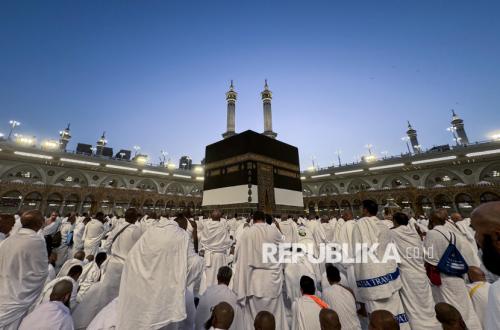
Sociologist Thomas F. Oídea characterises religion as a unifier of the most sublime human aspirations; as a source of morality, social order, and individual inner peace; and as something that ennobles and civilises humanity. Every religion possesses a system of rituals and values, and Islam is no exception. The Hajj is one such ritual system and a fundamental pillar of Islam. Performing the Hajj without delving into its underlying values risks reducing the pilgrimage to a mere holiday, failing to leave a lasting impact on the pilgrim upon their return.
It is unsurprising, then, that some individuals who have completed the Hajj continue to engage in corruption, unjust decision-making, or oppression. This is a direct consequence of failing to internalise the values inherent in the Hajj ritual. As commanded in the Quran (QS al-Hajj [22]: 27), Allah calls upon humanity to perform the Hajj, even if it requires arduous travel on foot or via lean camels. The purpose of the Hajj is to fulfil the call of Allah by commemorating the series of activities performed by Prophet Ibrahim, the progenitor of Islamic law.
Every year during the month of Dzulhijjah, millions of Muslims travel to the Baitullah in Makkah. They are willing to leave behind families, relatives, and livelihoods to answer the divine call. One of the most frequent prayers offered is an expression of submission to Allah’s will, a chant that resonates across the desert heat, bringing a sense of spiritual coolness to the pilgrims.
The high annual interest in performing the Hajj statistically indicates a rising level of community welfare, as people find the means to meet their daily needs and subsequently save for the pilgrimage through various methods, such as monthly savings, communal funds (arisan), or investments in land and gold. Notably, the Hajj quota for the next five years is already fully occupied. Due to the computerised registration system, which strictly follows the order of registration and payment of the Hajj operational costs (ONH), it is impossible for new applicants to secure immediate departure unless a vacancy arises due to an emergency.
As noted by Farid Esack in ‘On Being a Muslim’, the Hajj represents a convergence of genealogical, religious, and spiritual roots. It is genealogical because Adam and Eve met at Arafah; religious because the Cave of Hira marks the beginning of Islam; and spiritual because the Kaaba symbolises the presence of Allah. While a pilgrim may officially acquire the title of ‘Hajji’ after the standing at Arafah, the true significance lies in the meaning they carry back to their home communities. A ‘Hajj Mabrur’ (an accepted pilgrimage) is achieved when the pilgrim remains obedient to divine commands and avoids prohibitions.
The Hajj is unique as it combines physical and financial worship, effectively encompassing all pillars of Islam. Key symbols such as the Kaaba, Ihram, Sa’i, and Wukuf at Arafah must be understood deeply. The Ihram—the white, unstitched cloth—represents the shedding of social status and the removal of arrogance, symbolising the equality of all humans. The white colour represents absolute purity, reminding pilgrims that they must approach God with a pure heart and intention, free from any ulterior motives.