
Reforming MBG Governance: Upholding Trust and Implementing Maqashid Syariah
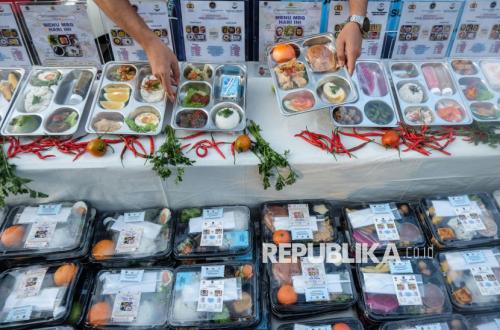
On 3 June 2026, the Attorney General’s Office named the former Head of the National Nutrition Agency (BGN) along with two of his deputies as suspects in an alleged corruption case involving the management of the Free Nutritious Meals Programme (MBG) for the 2025–2026 fiscal year. The move followed a decision by President Prabowo Subianto the previous day to dismiss the three officials.
The alleged irregularities involve questionable procurement: tens of thousands of electric motorcycles worth approximately Rp1 trillion, tens of thousands of pairs of shoes and tablets, and thousands of 75-inch televisions. Meanwhile, as of 10 May 2026, the Ministry of Health had recorded 445 suspected food poisoning incidents linked to the programme, affecting 37,673 victims across 210 regencies and cities, with 2,348 requiring hospitalisation.
These figures strike at the nation’s conscience. A programme born from the noble intention of providing nutritious meals to children, pregnant and breastfeeding women, and other vulnerable groups has become entangled in serious governance failures. The question now is not merely who is to blame, but how to redesign the programme so it remains faithful to its original purpose. It is here that the perspective of Islamic economics, particularly the maqashid syariah framework, offers both a moral compass and relevant operational principles.
A Noble Purpose That Must Not Be Betrayed
At its core, MBG is an investment in human capital. Its objectives are clear: to improve the cognitive development of children through adequate nutrition, to reduce stunting rates that threaten the nation’s demographic future, and to enhance the nutritional status of pregnant and breastfeeding mothers. Scientific evidence confirms that adequate nutrition during the first thousand days of life determines brain development, immune resilience, and learning capacity. In the long term, it shapes a nation’s productivity and even its civility.
The programme’s scale is massive. As of January 2026, it reportedly reached around 55.1 million beneficiaries across 38 provinces. Such scale represents both significant capital and significant risk: if governance is weak, the losses are not only financial but also involve the safety and trust of millions of families. Indonesia does not lack good intentions or budget allocations to combat malnutrition; what is often missing is a system that ensures those intentions arrive intact on children’s plates. Therefore, fixing MBG is not about defending or attacking the programme, but about saving its purpose.
Reading the Root Causes
At least three core issues are evident. First, centralisation and over-reliance on third parties. MBG is operated through Nutritional Fulfilment Service Units (SPPG) managed by third-party vendors, unlike in many countries where meal provision is entrusted to schools and local communities. Several studies, including those from the Nalar Institute, have highlighted the potential for monopolistic practices in kitchen management and the minimal involvement of micro, small, and medium enterprises (UMKM). A command-based model that distances itself from schools and local governments creates a long, costly, and difficult-to-monitor implementation chain.
Second, weak quality control. The repeated food poisoning cases demonstrate that food safety controls—from ingredient selection and cooking processes to distribution—are not functioning properly. In a programme of this magnitude, food safety is not an accessory; it is a prerequisite. A single contaminated plate is not just a statistic; it represents a sick child and a collapse of public trust.
Third, a massive budget without a commensurate governance foundation. The 2026 MBG budget was initially allocated at Rp335 trillion before being cut to Rp268 trillion in the name of efficiency. Amidst these enormous sums, procurement of items of questionable urgency—electric motorcycles, tablets, and televisions—has become the subject of investigation. A civil society coalition has even petitioned the Constitutional Court for a judicial review of the 2026 State Budget Law, arguing that its budgeting basis is flawed. The Corruption Eradication Commission (KPK) had also warned of corruption loopholes in the programme’s management as early as 2025.
MBG in the Mirror of Maqashid Syariah
In Islamic economics, every public policy is measured by the extent to which it achieves maslahah (public good) and averts mafsadah (harm). The benchmark is maqashid syariah, the higher objectives of Sharia encapsulated in five essential pillars (al-kulliyat al-khams): the protection of religion (hifz al-din), life (hifz al-nafs), intellect (hifz al-’aql), progeny (hifz al-nasl), and wealth (hifz al-mal). Interestingly, MBG touches upon nearly all these pillars simultaneously.
Providing nutritious meals is a tangible manifestation of hifz al-nafs, safeguarding life by meeting basic nutritional needs and preventing malnutrition-related diseases. Efforts to enhance children’s intelligence through nutrition that supports brain development constitute hifz al-’aql, protecting the intellect as the primary asset of civilisation. Attention to pregnant women, breastfeeding mothers, and toddlers—groups that are now a renewed focus of BGN—represents hifz al-nasl, preserving the quality and continuity of future generations. If executed correctly, MBG is a social act of worship on a national scale.
Yet herein lies the irony. The fifth pillar, hifz al-mal, the protection of wealth, including public wealth, is the one most violated. In Islam, managing public funds is a sacred trust (amanah) demanding accountability before both humanity and God. Corruption of wealth that rightfully belongs to the people is classified as ghulul (embezzlement) and fasad fil-ardh (spreading corruption on earth), a sin that destroys the foundations of justice. When children’s nutrition budgets are misappropriated for unnecessary procurement, what collapses is not merely the state treasury, but the trust itself. Governance reform, therefore, is not just an administrative matter; it is the re-establishment of true maqashid syariah.
Even the first pillar, hifz al-din, is present here. A state that fulfils its responsibility to feed the weak is upholding the values of justice and social compassion that lie at the heart of religious teaching. Conversely, a state that is negligent in this duty, or allows the mandate to be corrupted, is undermining the very ethical foundation of its legitimacy.