
Refocusing of Free Nutritious Meals Programme Must Target Stunting Hotspots
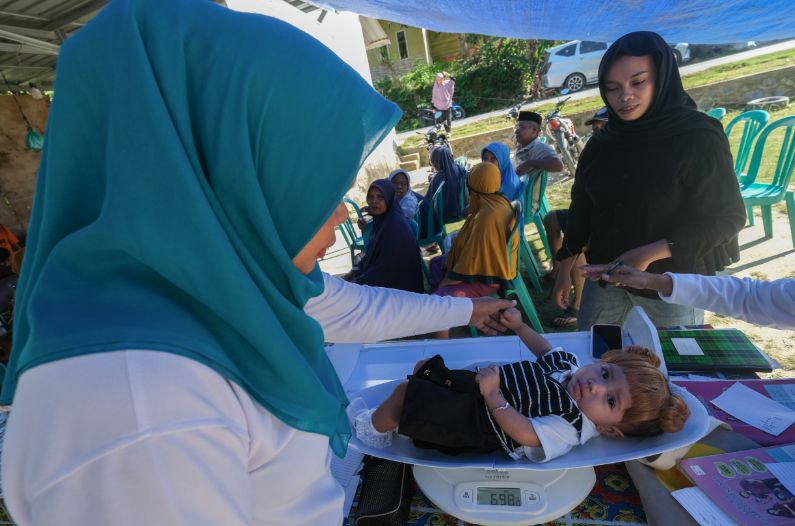
The Free Nutritious Meal (MBG) programme’s targets should be based on a scale of priority. Sri Raharjo, a Professor at the Faculty of Agricultural Technology, Gadjah Mada University (UGM), believes the government’s move to refocus the MBG programme is appropriate.
However, evaluation should not merely involve changing the target beneficiaries; it must also address governance, food provision, and evaluation systems to ensure the programme effectively reduces stunting rates. Sri Raharjo noted that a distinction must be made between stunting intervention programmes and providing nutritious meals for students. If the primary goal of the MBG is to combat stunting, implementation must be concentrated in areas with the highest stunting prevalence.
“If the intention is to remain faithful to the goal of overcoming stunting, then facilities for providing nutritious meals should be prioritised in stunting hotspots. What is currently happening is inconsistent with that objective,” he stated on Tuesday (7/7).
He cited several regions in Eastern Indonesia, such as Papua, Maluku, and East Nusa Tenggara, which still have relatively high stunting prevalence. However, the development of Nutrition Fulfilment Service Units (SPPG) is currently more prevalent in areas where infrastructure is more prepared and accessible.
According to Sri Raharjo, the government has been too ambitious in pursuing targets for expanding beneficiaries in the first year without ensuring the readiness of infrastructure, food safety standards, sanitation, human resources, and supply chains. “The target was too ambitious from the start. After numerous cases of food poisoning occurred, the government finally began making improvements. Such readiness should have been established before the programme was implemented on a large scale,” he said.
He assessed that the scheme for developing MBG kitchens, which involves foundations and investors, is contributing to inequality. Investors tend to choose regions with adequate access to electricity, raw materials, and human resources, while underdeveloped areas struggle to obtain services.
“If the mechanism is investment-based, investors will naturally choose locations where food supplies are easy to access, electricity is available, and human resources are present. Consequently, the areas that need it most are left behind,” he remarked.
Sri Raharjo proposed that the government utilise existing school kitchens and canteens to avoid the need for constructing new facilities. This approach is considered more efficient and would simplify coordination with local governments and the education sector.
Furthermore, he warned that food safety must not be ignored. He noted that large-scale food production requires not only nutritionists but also food technology experts to ensure that processing and distribution processes meet safety standards.
“The issue is not just whether the nutrition is sufficient, but whether the food is safe. This is a core competency of food technology,” he said.
Sri Raharjo proposed three focus areas for refocusing the MBG. First, prioritising groups that truly require nutritional intervention, particularly communities in stunting hotspots. Second, evaluating food provision mechanisms, especially in underdeveloped, frontier, and outermost (3T) regions, with the government taking a larger role if investment schemes fail to function. Third, measuring programme success based on changes in the nutritional status of beneficiaries through baseline data and periodic evaluations, rather than just the volume of food distributed.
“If the goal of this programme is to improve nutritional status, then its success must be measured by the change in the nutritional status of the recipients. There must be baseline data, which is then re-measured after one year. That is the indicator of success,” he emphasised.
Comprehensive evaluation of operational aspects, including the management of MBG kitchens, is necessary to ensure the programme achieves its set objectives.