
Refinery Development and the Remaining Homework
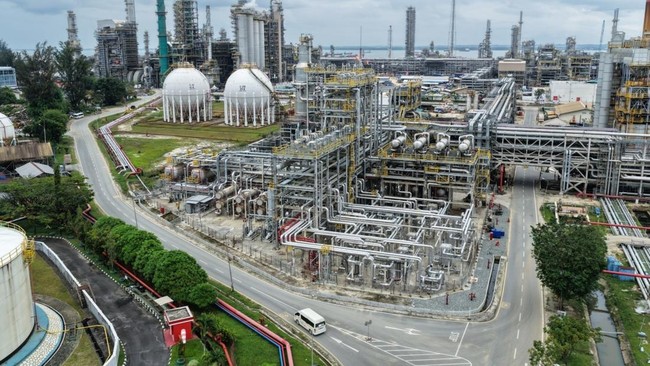
The success of the Balikpapan Refinery Development Master Plan (RDMP) brings a breath of fresh air, as Indonesia now has a modern oil refinery capable of reducing the foreign exchange deficit from fuel imports. However, several other refinery projects listed as National Strategic Projects under Presidential Regulation 56/2018 remain unrealised due to various obstacles. The key question is what lessons can be learned from this experience and how the process can be improved going forward.
Refinery projects are long-term, high-risk ventures requiring commitment that spans a decade, not just one or two years. In practice, maintaining consistency amidst political and bureaucratic changes is a significant challenge. The Balikpapan project proved that such an undertaking can be completed successfully, thanks to a combination of consistent support, a mature funding scheme, and solid coordination among stakeholders.
The policy framework for refinery and petrochemical development rests on three main pillars: technical feasibility, commercial viability, and political acceptability. While these criteria deem the projects necessary, they are not sufficient on their own. Other critical considerations must be confirmed before construction begins, including market conditions, raw material availability, funding and partnership schemes, technological readiness, human resource availability, and overall economic feasibility. Once these six aspects are met, the project can proceed immediately.
The success in Balikpapan should be a momentum to create a system that allows future strategic projects to run more smoothly. Without systemic improvements, one project’s success will not automatically be replicated. A crucial mechanism is needed to ensure strategic projects do not depend on specific individuals, as changes in officials should not cause a project to lose its driving force, especially when refinery projects require a decade to complete.
Furthermore, funding and partnership schemes must be more structured, given that refinery investments reach tens to hundreds of trillions of rupiah, making reliance solely on the state budget or state-owned enterprises insufficient. Long-term strategic partners are necessary. Although negotiations with foreign partners take time, trust can be built with thorough feasibility studies and clear business schemes. Full support and coordination among all stakeholders—ministries, state-owned enterprises, investors, regional governments, and communities—are also crucial. The Balikpapan project demonstrated that tight monitoring, tracking, and collaboration on progress are vital.
The government has outlined the next refinery projects in Presidential Regulation 12/2025 on the 2025-2029 National Medium-Term Development Plan, including the Balongan RDMP, Cilacap RDMP, Cilacap Biorefinery, and the Tuban Oil Refinery. These projects have a significant chance of success if the lessons from Balikpapan are applied. More important than merely completing projects is creating an ecosystem that allows strategic projects to proceed without hindrance. Past experiences must serve as learning material, not to assign blame, but to understand what needs to be fixed. Without systemic improvement, Balikpapan’s success risks remaining the only success story among a long list of unfinished projects.