
Refill Stations: Time to Start a Plastic-Free Lifestyle
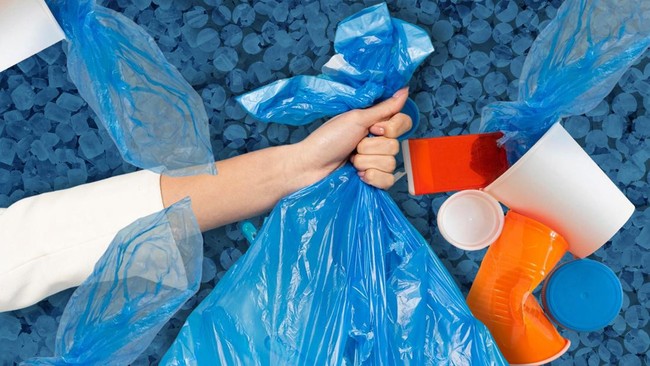
Plastic waste has become one of the biggest environmental issues of this century. The problem goes beyond landfill accumulation, raising questions about how plastic moves through the global economic system, is used for just a few minutes, and then persists in the environment for decades or centuries.
According to a report by the Ellen MacArthur Foundation and the United Nations Environment Programme (UNEP), companies in the Global Commitment represent about 20% of the world’s plastic packaging production. In recent years, they have been encouraged to reduce their reliance on single-use plastics through a circular economy approach. However, the latest progress report shows that the adoption of reusable packaging remains very low. As of 2024, the share of truly reusable packaging among these companies was only around 1.2% of the total packaging used. The world is increasingly serious about discussing the circular economy, but transformation on the ground is proceeding more slowly than the growth of plastic consumption itself.
Amid this situation, a more fundamental question arises: does the main solution lie in more sophisticated recycling technology, or in changing everyday human behaviour? Research involving 511 consumers in Italy sought to understand the factors that make someone willing to buy products made from recycled plastic. A second study from Arizona State University examined how water bottle refill stations can shape consumption habits that produce less plastic waste. Both studies, though from different contexts, reveal that the plastic problem is deeply linked to human behaviour.
For years, environmental campaigns have focused on raising public awareness. The logic was simple: if someone understands the environmental impact of plastic pollution, they will change their behaviour. The problem is, reality does not always work that way. The Italian consumer study found that while concern about plastic issues does increase a positive attitude towards recycled products, this concern does not automatically translate into a purchasing decision. Consumers need to feel that their actions have an impact, see others doing the same, and find the products easily accessible. Social norms proved to be one of the strongest factors influencing the decision to buy recycled plastic products. This finding is interesting because it shows that behavioural change is not born from information alone; the social environment plays a significant role.
A similar pattern emerged in the Arizona State University research. The study started with a simple question: why do many people still buy bottled water when alternatives like reusable bottles and water refill stations are available? The answer turned out to be related to daily routines. Many people understand the environmental impact of single-use bottles, yet they continue to buy them for practical reasons. They forget to bring a tumbler, do not know the location of refill points, or simply find buying a new bottle easier. In other words, the biggest barrier is often not a lack of information, but habit.
In the circular economy hierarchy, the best strategy is not recycling. The most effective approach is to reduce the need for plastic from the outset, a concept known as the ‘reduce, reuse, recycle’ principle. ‘Reduce’ sits at the top because it prevents waste from appearing in the first place. ‘Reuse’ extends the life of existing packaging. ‘Recycle’ becomes the next option only when the two previous approaches are no longer possible. For this reason, refill stations hold a very strategic position. A refill station allows one container to be used repeatedly without generating new packaging for every transaction.
According to the Ellen MacArthur Foundation, a shift from a single-use model to a reuse and refill model is estimated to cut more than 20% of plastic waste leakage into the ocean globally. The organisation calls the reuse system one of the biggest opportunities to reduce plastic pollution in the coming decades. The urgency is even clearer when looking at the development of global packaging waste. The ‘Breaking the Plastic Wave’ study shows that the packaging sector is the largest contributor to the world’s plastic waste. About a third of global plastic waste comes from packaging, most of which is used once and then discarded. Without significant change, the volume of plastic pollution is projected to continue rising until 2040. In this context, refill stations offer a different approach, focusing on the stage before waste is created.
The Arizona State University research found that the presence of easily accessible refill stations can help form consumption habits that produce less waste. Factors such as location, ease of use, perceived cleanliness, and the presence of various behavioural ‘nudges’ influence the frequency of facility use. For consumer behaviour researchers, this finding is important because it shows that environmental design can influence daily decisions without having to rely on massive campaigns. This change is beginning to be seen in various countries, and according to the Ellen MacArthur Foundation, the reuse model is now developing globally.