
Referred to by Purbaya on Under-Invoicing, Wilmar's Profits Astound
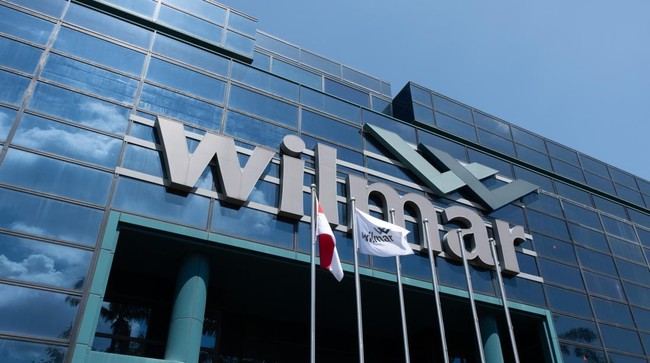
Wilmar International Limited, founded in 1991 and headquartered in Singapore, has grown into one of Asia’s largest agribusiness groups with a massive market capitalisation on the Singapore Exchange (SGX). Finance Minister Purbaya Yudhi Sadewa has disclosed the names of several companies detected by the Ministry of Finance’s system as engaging in under-invoicing and transfer pricing practices on Crude Palm Oil (CPO) exports. Purbaya initially hesitated to reveal the names of the CPO companies, but ultimately listed several from a list of 10 firms. The ten companies include Wilmar International Limited, Musim Mas Group, PT Salim Ivomas Pratama Tbk, and Golden Agri-Resources.
Conceptually, Wilmar’s business model is designed to be highly integrated, controlling the entire commodity chain from upstream to downstream. Their global operations are supported by more than 1,000 manufacturing facilities across 36 countries. In 2025, Wilmar completed a strategic restructuring by taking full ownership of its venture partners, the Adani Group in India (now AWL Agri Business) and PZ Cussons in Nigeria, to expand its distribution grip on staple goods in densely populated markets.
However, behind its multinational image, the foundation of Wilmar’s wealth is deeply rooted in natural resource extraction in Indonesia. Indonesia is the world’s largest producer of Crude Palm Oil, and herein lies the operational paradox of Wilmar. They control hundreds of thousands of hectares of oil palm plantations in Indonesia, employ local workers, and burden the local environmental carrying capacity, while their main trading hub and largest profit accumulation are securely placed in Singapore.
Financially, the company has shown an exponential growth trajectory over the past decade, albeit marked by an anomaly in its latest report. In the first quarter ending 31 March 2015, Wilmar posted revenue of US$9.41 billion. Net profit attributable to shareholders at that time was recorded at US$241.20 million, with a core net profit of US$263.32 million. Ten years later, at the close of the full fiscal year 2025, these figures had swelled fantastically. Wilmar’s total revenue throughout 2025 reached US$70.41 billion with a solid net profit of US$1.41 billion. Corporate assets touched US$65.64 billion with shareholders’ equity soaring to US$21.86 billion.
However, the first quarter 2026 report, closed on 31 March 2026, showed an interesting operational shock. Although quarterly revenue surged 21.9% to US$19.75 billion, the issuer’s net profit actually slumped 22.8% to US$265.60 million from the previous year’s earnings. Management argued that this decline was purely due to unrealised mark-to-market losses on commodity hedging instruments caused by the outbreak of geopolitical tensions in Iran, which triggered extreme market price volatility.
The key to understanding how Wilmar manipulates cash flow lies in the division of their business segments. The upstream part, covering plantation areas, oil palm estate management in Indonesia, and sugar milling factories, is grouped under the Plantation and Sugar Milling segment. In the full year 2025, this primary segment only recorded revenue of US$3.52 billion from 4.03 million metric tonnes of palm harvest. The raw materials from Indonesia are then sold internally and refined into derivative products. The largest commercial value is not recorded in Indonesia, but is pumped into two giant downstream segments: the Feed and Industrial Products segment (generating US$42.87 billion in revenue) and the Food Products segment (reaching US$30.88 billion). With this construction, the burden of land permits, social friction, agrarian conflicts, and peatland ecosystem damage due to deforestation occurs in Indonesian territory, while the highest profit accumulation is centred on processing and trading segments affiliated with their global entities abroad.
Closed supply chain control (intercompany) provides a large loophole for corporations to exploit pricing structures, known as transfer pricing manipulation practices. At the end of May 2023, Indonesian authorities, through a statement by Finance Minister Purbaya Yudhi Sadewa, uncovered an alleged mega-scandal of export fraud involving 10 giant palm oil companies, with Wilmar and Musim Mas specifically named in public. Based on analytical tracing investigated jointly with the Financial and Development Supervisory Agency (BPKP) and the Attorney General’s Office, a scheme of reporting invoice prices below actual value (under-invoicing) was discovered. In this scheme, Wilmar’s operational companies in Indonesia sell CPO to affiliated companies or their own intermediaries (trading hub) in Singapore. The loophole is that the export price reported to Indonesian customs authorities is indicated to be only about 50% of the actual fair international market price. The physical volume of palm oil transported by ship remains massive, but the value on the invoice documents is shrunk. This practice is a systematic trick to avoid domestic income tax deposit obligations and aggressively cut levy costs and export duties that are the right of the Indonesian state. The unreasonable margin difference does not evaporate, but is recognised as profit belonging to the parent entity or its affiliates in Singapore. Responding to this shock, Wilmar’s management issued a disclosure on the SGX on 28 May 2026, claiming they had not yet received a formal investigation letter.