
Referencing Tom Lembong Case, Nadiem Makarim: Whether Imprisoned or Not, It Is in God's Hands
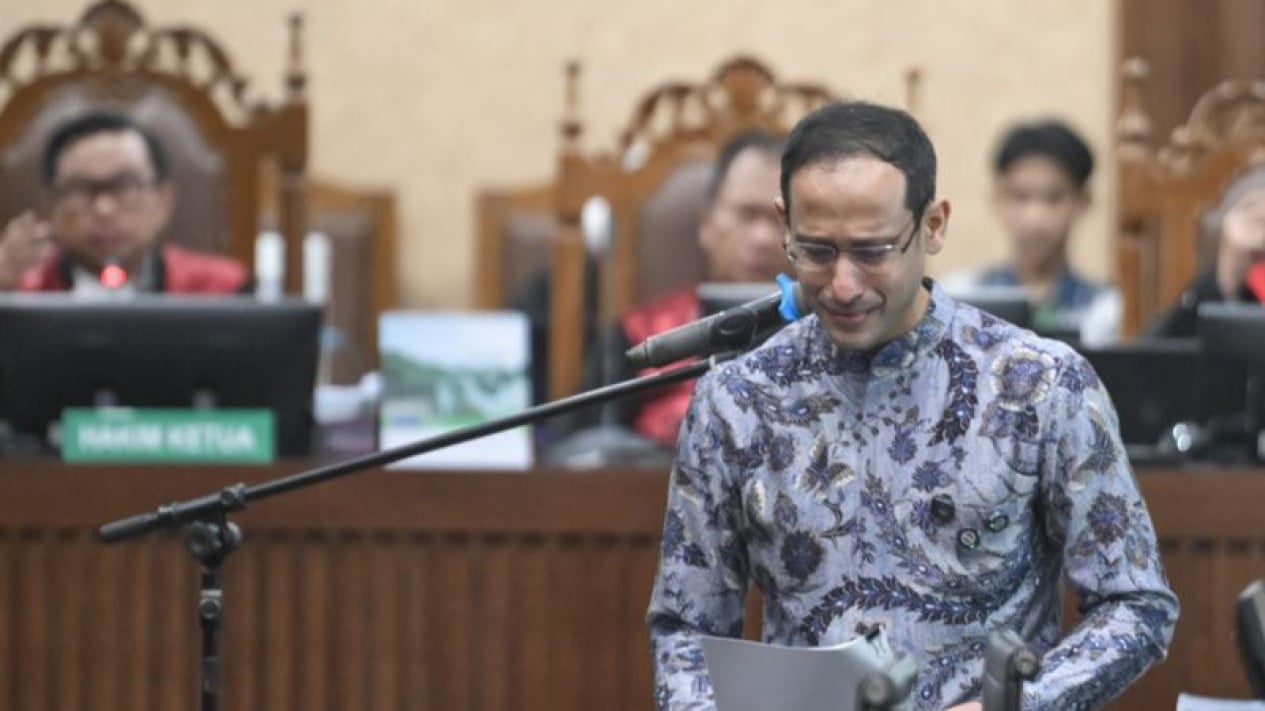
Jakarta, VIVA – The Minister of Education, Culture, Research, and Technology for the 2019–2024 period, Nadiem Anwar Makarim, addressed the legal case involving Tom Lembong while delivering his plea in court. According to Nadiem, the case against the 2015–2016 Minister of Trade, Thomas Trikasih Lembong, regarding sugar import corruption, is part of a series of criminalisation cases.
“The train of criminalisation began long before me. Mr Tom, Mrs Ira, Amsal, Ibam, and dozens of others who have not been released to this day,” Nadiem stated during the hearing at the Corruption Court of the Central Jakarta District Court on Tuesday, 2 June 2026.
With this, Nadiem asserted that the public outcry outside the courtroom did not originate solely with his own case involving alleged Chromebook corruption. He noted that reports of various irregular cases in Indonesia have gained international attention. He remarked that he had never seen so many anti-corruption activists simultaneously sounding a loud alarm for Indonesia’s law enforcement agencies as they are doing now.
Consequently, he expressed his belief that Allah SWT intended for him to stand and read his defence not as a victim, but as a witness to what is happening to too many good people in Indonesia. Nadiem emphasised that the alleged Chromebook corruption case is no longer just about one individual being wronged.
“Whether I am imprisoned or not, whether I am impoverished or not, that is in the hands of God and in the hands of the honourable panel of judges,” he said.
He added that all parties, including young professionals, state officials, and investors, are currently waiting anxiously for the judges’ verdict. Nadiem warned that legal uncertainty is one of the factors contributing to the decline of the stock market and the value of the rupiah. He further noted that the business community views the Chromebook case as a bad precedent, as they do not understand the grounds upon which such a case could reach the courtroom.
“Legal certainty is a primary pillar of economic growth, and this case is one of its greatest tests,” Nadiem said. Therefore, he stated that the judges’ decision could either restore public anxiety and provide new hope, or further erode the already fragile public trust.