
Reducing Stunting as the Top Priority for NTT Governor's Development
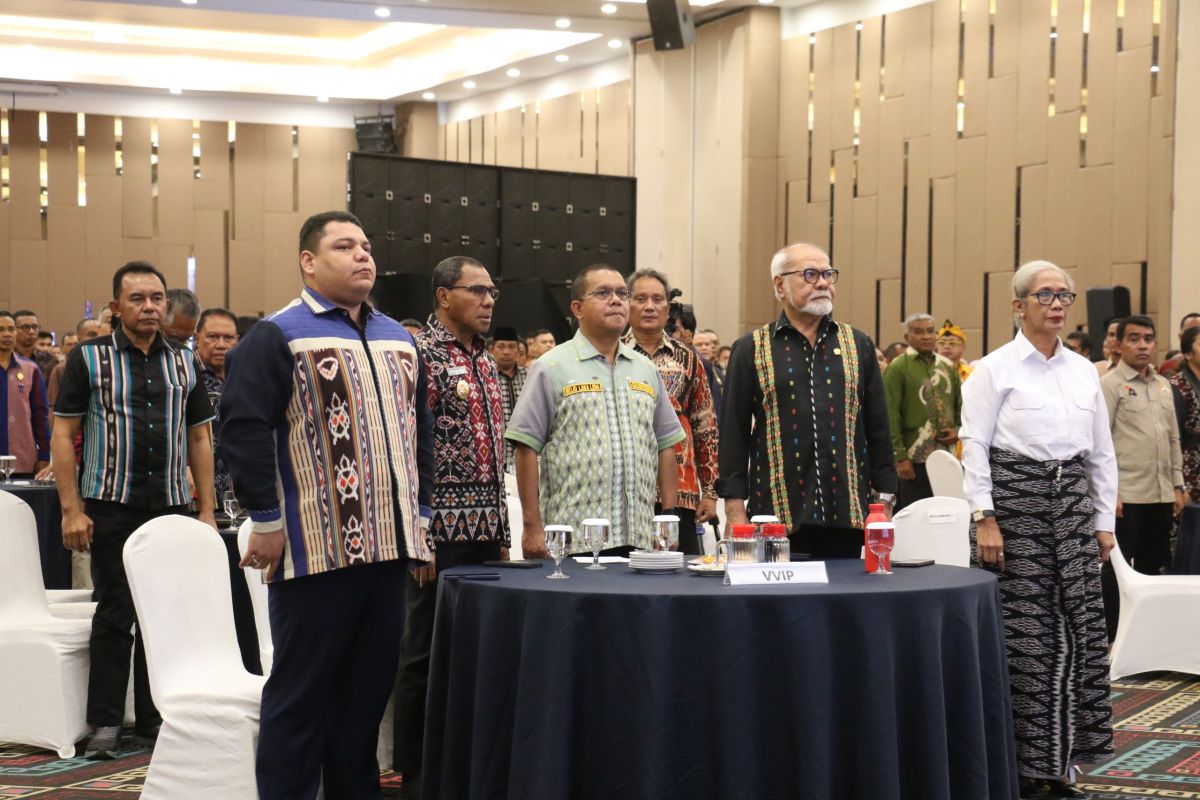
Kupang (ANTARA) - East Nusa Tenggara Governor Emanuel Melkiades Laka Lena has made reducing stunting the top priority for development initiatives to be implemented in 2027.
At the Provincial Development Planning Consultation (Musrenbang) forum in Kupang on Thursday, the Governor outlined five development priorities for 2027, including improving the quality of basic services and strengthening human resources through accelerating stunting reduction, enhancing health services, education quality, vocational education, social protection, and poverty alleviation.
“We continue to strive to lower stunting rates with a target prevalence of around 30.70% in 2027 from the 2024 achievement of 37% based on SSGI. This can only be achieved through synergy between government, families, the education sector, businesses, and society,” he said.
The second priority is increasing productivity and economic transformation based on regional flagship potentials. The East Nusa Tenggara Provincial Government will promote downstreaming in agriculture, livestock, fisheries, forestry, and tourism sectors, as well as strengthening MSMEs, cooperatives, village-owned enterprises, and the creative economy.
According to Melki, regional economic development will also be bolstered through OVOP (One Village One Product), OCOP (One Community One Product), and OSOP (One School One Product) programmes.
“We want regional flagship products not to stop at raw material production but to be processed, marketed, and add value. Therefore, we strengthen marketing through NTT Mart in 22 regencies/cities and digital-based marketplaces,” he stated.
The third priority is enhancing connectivity and equitable distribution of basic infrastructure. As an archipelagic region, connectivity is seen as the key to East Nusa Tenggara’s development.
The government will focus on strengthening inter-regional transportation and logistics, providing clean water, sanitation, electricity, housing, as well as developing strategic areas and border regions.
The fourth priority is strengthening environmental resilience and sustainable natural resource management. Local government views climate change, water crises, and disaster threats as challenges that must be anticipated seriously.
Therefore, development is directed towards strengthening adaptation and mitigation of climate change, sustainable waste and wastewater management, food and water resilience, and increasing regional capacity in facing disaster risks.
Meanwhile, the fifth priority is strengthening governance and regional fiscal capacity through optimising regional revenue, strengthening asset management, accelerating government digitalisation, and integrating development data.
“We want every policy and programme to be implemented on target, efficiently, and accountably,” he emphasised.
Governor Melki is optimistic that implementing these various development priorities will drive stronger, more inclusive, and higher-quality economic growth in East Nusa Tenggara.
He stated that East Nusa Tenggara’s economic growth in 2027 is expected to increase above the 2025 achievement of 5.14%, with construction, agriculture, forestry, fisheries, processing industries, and accommodation and food-beverage sectors as the main drivers of regional economic growth.
In addition, the government also targets the open unemployment rate to be in the range of 2.30 to 2.89%, and to press the poverty rate lower than the 2025 achievement of 17.5%.
According to Melki, the Musrenbang serves as a strategic forum to unify development aspirations from the village to provincial level to align with the national development agenda.
“This Musrenbang must be able to produce innovative, measurable, realistic programmes with real impacts for society,” he said.