
Reduce Fuel Imports, Lampung Bioethanol Project Ready to Become Indonesia's New Energy Weapon
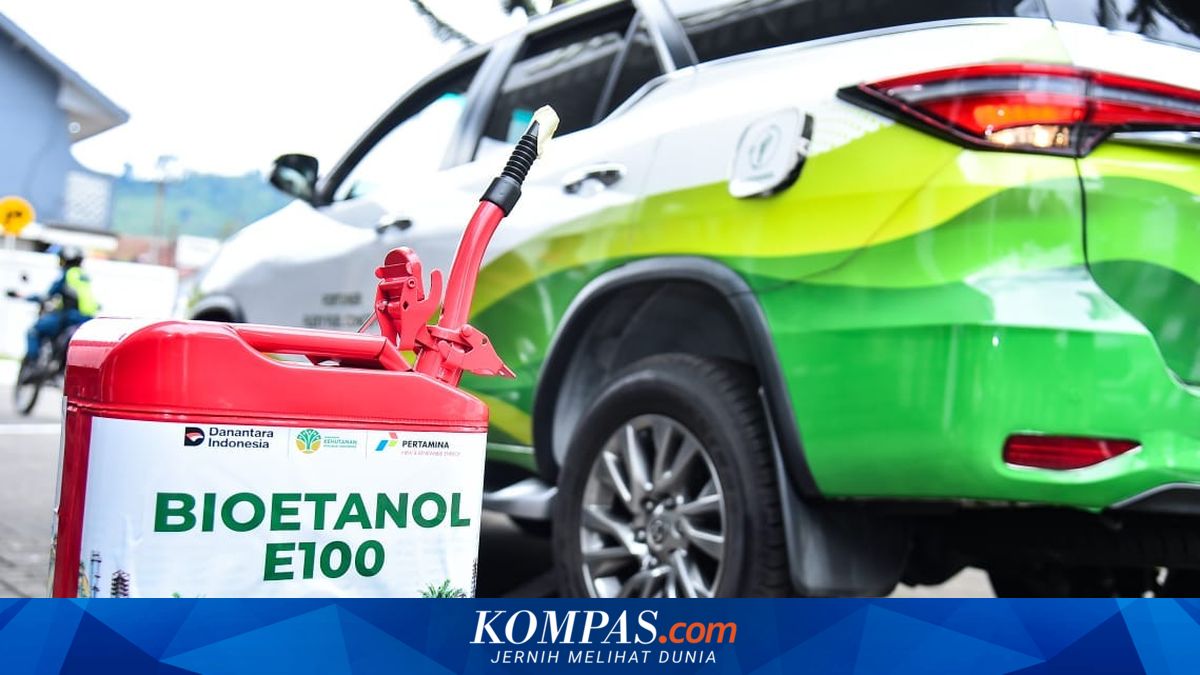
The government, through the Ministry of Investment and Downstreaming/Investment Coordinating Board (BKPM), continues to promote the formation of strategic agreements in the development of the bioethanol project in Lampung as part of efforts to accelerate the national energy transition. Construction of the project, expected to start in the third quarter of 2026, involves Toyota, PT Pertamina New and Renewable Energy (PNRE), and Danantara Investment Management. Deputy Minister of Investment and Downstreaming/Deputy Head of BKPM Todotua Pasaribu stated that the government has been running the programme since a year ago. “However, we have indeed been silent in its development,” he said in a written statement received by Kompas.com. He made this remark after leading a meeting with the CEO of Toyota Motor Asia in Jakarta on Monday (20/4/2026). Todotua said that coordination is currently underway between PNRE and the Japanese Group. In this case, Toyota Tsusho has been appointed as the partner. Todotua explained that the project is being built for the first time in Lampung due to its strong feedstock supply, such as sugarcane, cassava, sorghum, and others. In addition, the Ministry of Investment and Downstreaming/BKPM has also provided guidance since the end of 2025 to early 2026 through a series of concrete steps. These steps include cross-ministerial/institutional coordination and state-owned enterprises (BUMNs), facilitation of meetings with technology partners from Japan, to direct assistance in field visits and project site identification. The bioethanol development project being explored with Toyota, PNRE, and Danantara Investment Management is designed in two phases. The initial phase (pilot project) targets a capacity of 60 kilolitres (kl) per year in the third quarter of 2027. The second phase is commercial, with a capacity of 60,000 kl per year in the fourth quarter of 2028. The development adopts a multi-feedstock approach, including the utilisation of palm oil biomass waste, maize, and sorghum, supported by second-generation (2G) technology to increase supply flexibility while ensuring long-term sustainability. The development also includes gradual sorghum cultivation, starting from a 10-hectare (ha) pilot in 2026 to commercial development reaching 6,000 ha in 2027. The project will be located in Lampung with land support from PTPN. On the policy side, the government has strengthened its commitment through a mandatory bioethanol blending roadmap in fuel, namely E5 in 2026-2027, increasing to E10 in 2028-2030, up to E20 in the long term.