
Rediscovering Lost Music in Blok M Square's Basement
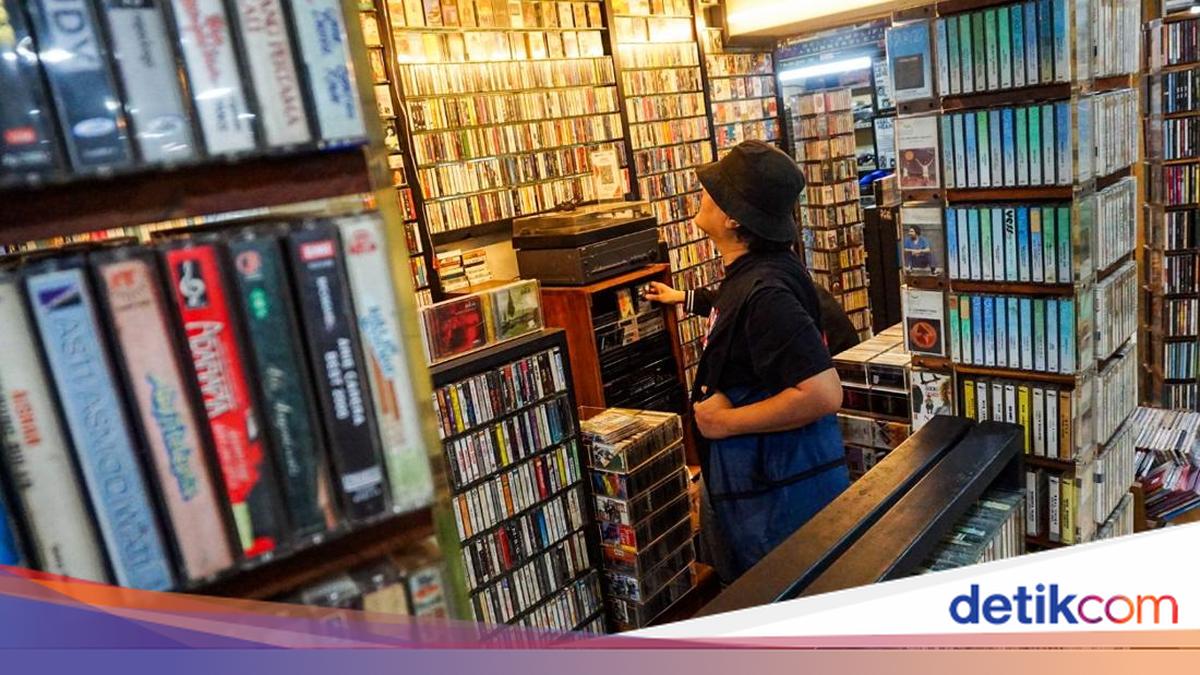
The footsteps descend slowly into the basement of Blok M Square in South Jakarta’s Kebayoran Baru district, feeling like stepping into another era. Outside, the area buzzes with trendy new cafes, long queues, and young faces glued to phone screens. But stepping into the basement, the atmosphere shifts dramatically. This place resembles a labyrinth of memories. Amid narrow corridors piled with vintage items stands a man who has kept it alive for a decade. Untung, owner of Hysteria Music, runs a small store packed with thousands of stories wrapped in transparent plastic and magnetic tape. In a digital world, these small square objects persist — neatly arranged in plastic, others yellowing with age. ‘I’ve been selling here for 10 years,’ Untung said at his stall on Tuesday, 12 May 2026. Ten years is no short time, especially for a business many consider dead. But for Untung, cassettes are more than merchandise; they’re an extension of his life, something he’s known since childhood. ‘Since primary school, I listened to songs on the radio, even though it was bad. Back then, radios were tied up, battery-powered. But because of my music hobby, I kept listening, learning about Indonesian music developments,’ he explained. The interest persisted even when he worked in an office. But corporate life didn’t offer the same space. ‘In the office, I hated conflicts, always getting blamed in meetings. So I resigned.’ Shelves in Hysteria Music are crammed with cassettes stacked vertically, horizontally, and haphazardly. Some labels are faded, others still fresh. All share one thing: they were once the sound of someone’s past. ‘There are thousands — tens of thousands. Both domestic and international, all genres. Can’t pinpoint which is most common. Maybe rock and dangdut,’ Untung said, starting the business in 2015. No boundaries here: dangdut alongside rock, jazz with pop, Indonesian with foreign. All mixed, like untidy memories. What’s changed isn’t the collection, but the customers. A decade ago, buyers were serious collectors; now, the landscape has shifted dramatically. Younger generations, possibly never raised with cassettes, dominate. This has birthed a new phenomenon: nostalgia meeting digital trends. ‘Now it’s mostly Gen-Z and millennials. Before, it was adult collectors,’ he said. This shift brings new dynamics. Some come out of curiosity, others following trends, some falling in love with physical formats for the first time. As Untung observes, some only seek songs trending on social media, not full albums or understanding an artist’s work. But others take time, opening stacks, reading unfamiliar names, asking questions. Conversations about music, eras, and once-popular sounds unfold. Players for each cassette type are available. Here, Untung’s role evolves. He’s not just a seller but a guide, knowing what’s often sought, what’s rare, and what suddenly resurfaces without clear reason. Names like Utha Likumahuwa, Fariz RM, and Chrisye resurface. Bands such as Dewa, Sheila On 7, and Naif follow. A new trend: younger generations are exploring Indonesian jazz, a genre once far from the mainstream. Cassettes’ value has transformed. Once seen as cheap, easily available items, they’re now collectibles with rising prices. Rarity, condition, and market demand make each cassette’s value distinct. ‘Used to be Rp15,000–35,000; now cheapest is Rp40,000,’ Untung explained. ‘Dara Puspita cassettes go for Rp400,000–500,000 each. Sheila On 7’s rare releases or others in high demand fetch high prices.’ Some even exceed this, especially hard-to-find releases. In certain cases, cassettes reach hundreds of thousands of rupiah, not just for the music but as artefacts. Intriguingly, this resurgence occurs despite digital music’s ease. While songs are just a tap away on phones, some choose the more complex physical format.