
Red Dwarf Radiation Suspected of Eroding the Atmosphere of a Sub-Neptune Planet
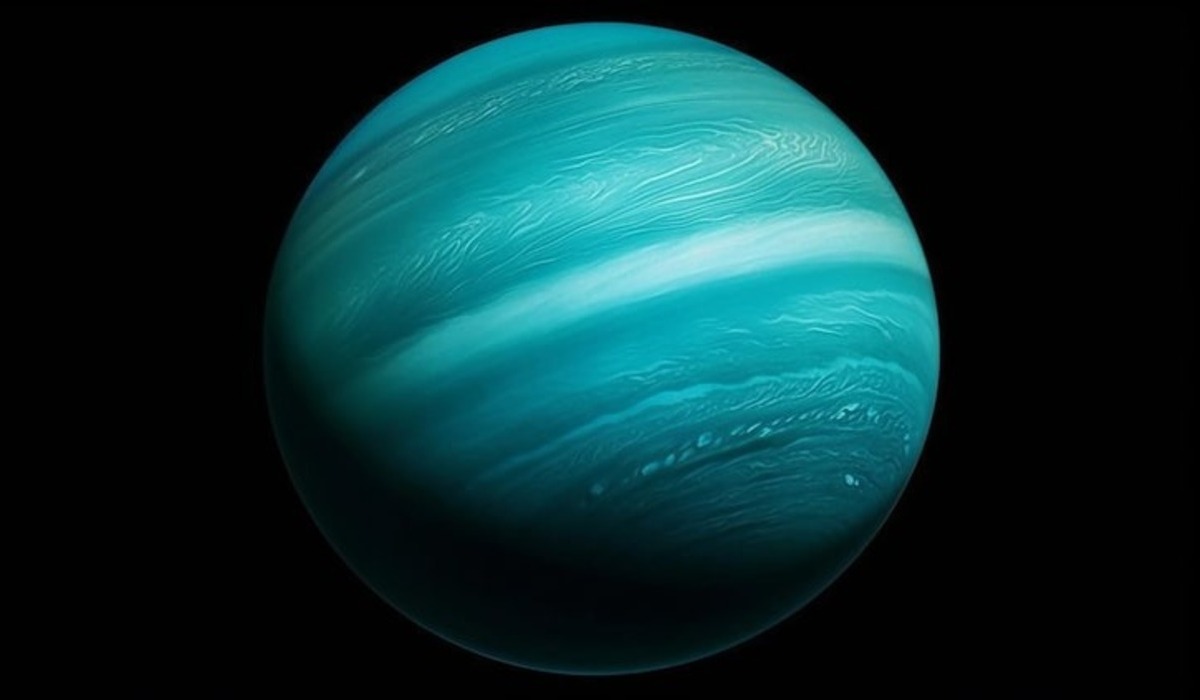
PLANET sub-Neptunus is one of the most common types of exoplanets in the Milky Way. It is larger than Earth but smaller than Neptune, with a radius about two to four times that of Earth. However, astronomers have noted an intriguing anomaly while studying red dwarf star systems. They identified a unique region called the Neptunian Desert, an orbit zone very close to the host star where planets of sub-Neptune size are almost absent due to extreme heat and radiation. Despite red dwarfs being the most abundant type of star in the galaxy, sub-Neptune planets are extremely rare in orbit around these small stars. This finding has sparked extensive discussion among scientists about the causes of this scarcity. Data from the Kepler Space Telescope and the Transiting Exoplanet Survey Satellite (TESS) indicate that the number of sub-Neptunes around red dwarfs is far below initial estimates. Recent studies show that the host star’s extreme radiation is a key factor. In the early stages of formation, red dwarfs exhibit very high magnetic activity and emit copious ultraviolet (UV) radiation. This triggers a phenomenon known as atmospheric mass loss or atmospheric erosion due to evaporation. Sub-Neptune planets, initially with thick gaseous envelopes, gradually lose their atmospheres as they are continually exposed to intense radiation. Once the gas layer is depleted, only a rocky planetary core remains, and the object is no longer classified as a sub-Neptune. Although most planets are destroyed, notable exceptions exist, such as NGTS-4b, which remains in the extreme region. Scientists suspect this planet has a very dense core or migrated to a different orbit after the active radiation phase of its host star began to subside. Studies of planetary systems around red dwarfs also suggest that surviving sub-Neptunes likely possess extremely thick atmospheres or an ice layer beneath their surface that shields them from radiation erosion. Investigations into the impact of red-dwarf radiation are deemed crucial to supporting future missions in the search for potentially habitable planets. By understanding how atmospheres endure or fail, astronomers can map which star systems are more likely to host environments capable of supporting life. This understanding helps scientists forecast the long-term evolution of a planet, guiding future telescopes to more accurate targets in the search for biosignatures beyond our solar system.