
Red Chilli Prices in Aceh Soar to Rp60,000 per Kg During Eid 2026
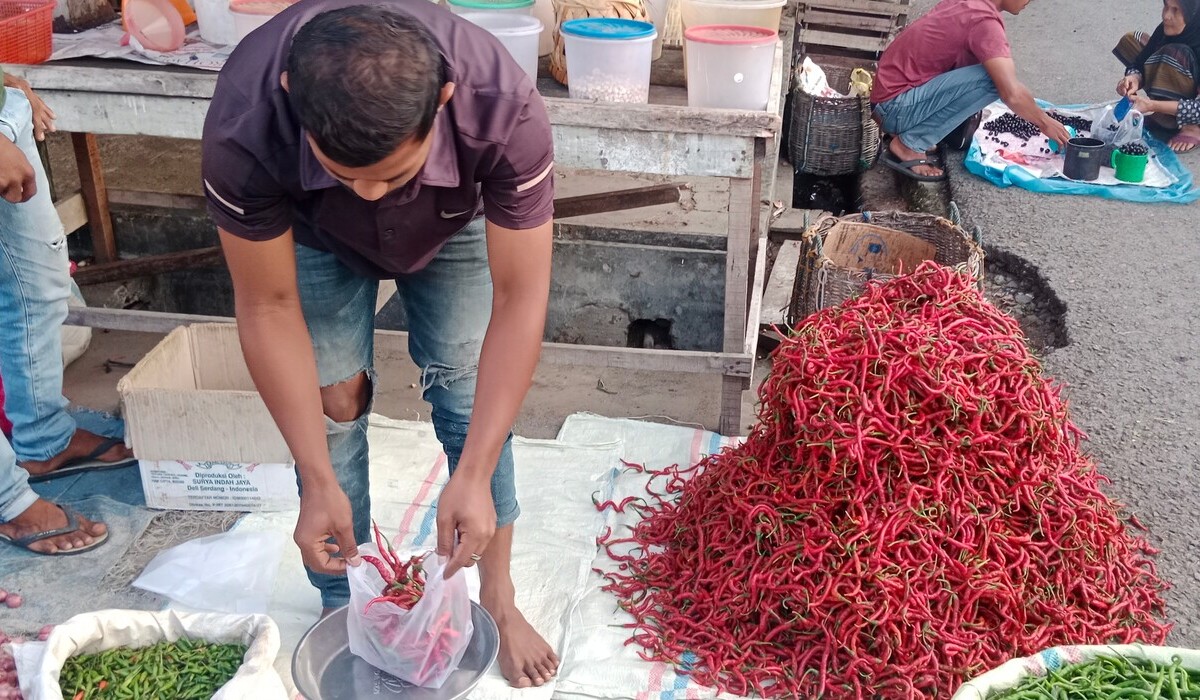
The high demand for kitchen ingredients during the 2026 Eid celebrations has significantly impacted the price surge of chillies in Aceh Province. In addition to increased consumption, the limited activity of farmers in the fields during the early days of Eid has contributed to the restricted supply in markets.
Based on Media Indonesia’s investigation on Wednesday (25/3) at the Pante Teungoh Sigli vegetable market centre in Pidie Regency, the price of premium quality red chillies has now reached Rp60,000 per kilogram (kg). This figure represents a sharp increase compared to pre-Eid prices, which were around Rp40,000 per kg.
Meanwhile, for standard or medium quality red chillies, prices that were previously Rp35,000 per kg have now climbed to Rp45,000 per kg. To date, traders cannot confirm whether prices will return to normal within the next week or instead soar even higher.
Fadli, one of the retail chilli traders at Pante Teungoh Sigli Market, revealed that the daily increase in capital costs is the main reason traders are adjusting selling prices to consumers. “Our capital is getting higher almost every day. Naturally, we have to raise the selling price,” said Fadli.
According to Fadli, this price increase trend has been felt since three days before Idulfitri. It was triggered by a surge in public demand, especially to meet the Meugang tradition (the tradition of cooking meat), which is a hallmark of Acehnese society two days before Eid.
Although the peak of Idulfitri has passed, demand for red chillies and other kitchen spices is predicted to remain high. Fadli explained that after the Eid period, Acehnese people usually begin holding various customary and social events.
“After Eid, there is usually a lot of demand for red chillies and other cooking spices. Because after Eid, there are often thanksgiving feasts and wedding parties. The needs are certainly greater,” added Fadli.
This situation makes fluctuations in food prices in Aceh, particularly horticultural commodities, highly dependent on smooth distribution and the return of harvesting activities by farmers in production centres after the long holiday.