
Red and White Village Cooperatives to be Equipped with Women's and Children's Complaint Posts
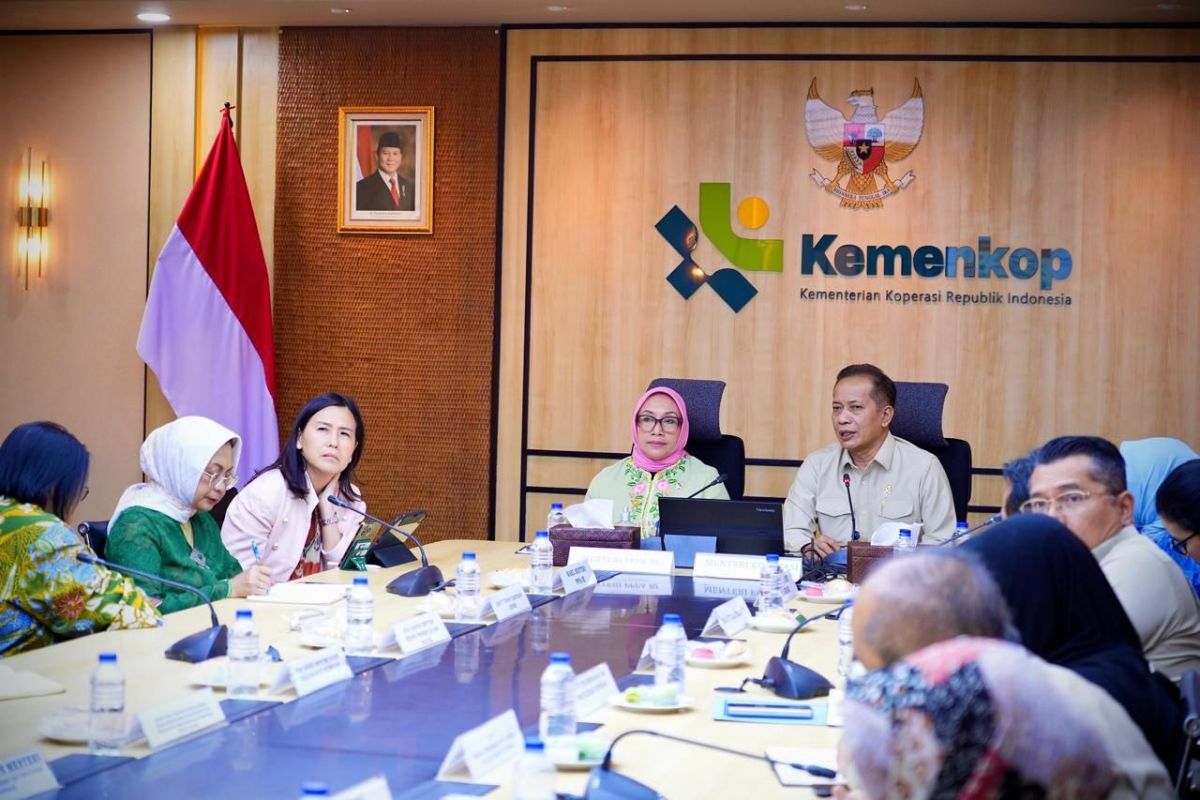
Jakarta (ANTARA) - Cooperatives Minister Ferry Juliantono stated that Red and White Village/Urban Village Cooperatives (Kopdes Merah Putih) will not only function as economic drivers but will also be equipped with complaint posts for women and children in the future.
In an official statement in Jakarta on Wednesday, Ferry explained that each Kopdes Merah Putih outlet or clinic will provide a dedicated space as a complaint post for cases involving women and children.
“This is our affirmative action to protect the interests of women and children in regions, villages, and urban villages,” said Ferry during a meeting with the Minister of Women’s Empowerment and Child Protection (PPPA), Arifah Fauzi, at the Ministry of Cooperatives office in Jakarta on Tuesday (31/3/2026).
The meeting discussed collaboration to strengthen women’s roles and social protection at the village and urban village levels.
According to Ferry, the presence of these complaint posts is essential to bring protection services closer to the community.
In addition to protection aspects, the cooperation between the Ministry of Cooperatives and the Ministry of PPPA is also focused on strengthening women’s economy through the integration of the Kopdes Merah Putih programme with the Ruang Bersama Indonesia programme.
Ferry added that his ministry will encourage productive women’s groups mentored by the Ministry of PPPA to transform into cooperatives.
He assured that the support will not only include mentoring but also financing through the Revolving Fund Management Institution (LPDB).
Ferry further noted that both ministries have agreed to promote active participation of women in villages and urban villages to join Kopdes Merah Putih and other cooperatives.
Meanwhile, PPPA Minister Arifah Fauzi welcomed the plan to provide complaint posts at cooperative outlets.
She assessed this step as strategic for bringing violence prevention services closer to rural communities, given that current regional technical implementing units are only available at the city/regency level.
“It is very appropriate if one of the outlets is used as a place for handling and, more importantly, for preventing violence against women and children,” said Arifah.
She added that this collaboration aligns with the Ruang Bersama Indonesia programme, which aims to collectively address various village issues, from economy and health to food security.
As an initial step, both ministries agreed to immediately implement a pilot project in several regions without waiting for the completion of a memorandum of understanding (MoU).
“We can start directly in areas where village cooperatives are already operational and women’s movements are in place,” said Arifah.